
Chief Justice's partisan remarks risk judicial independence, analysts warn
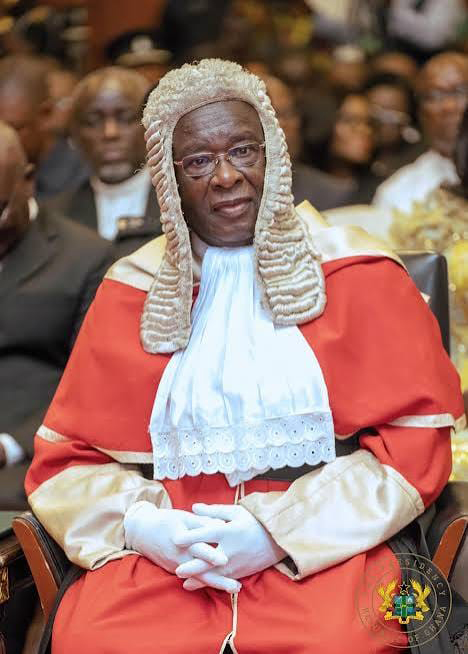

Ghana's highest judicial officer has sparked significant debate over institutional independence after remarks that opponents argue blur the line between judicial duty and political endorsement. Chief Justice Paul Baffoe-Bonnie's September 2 visit to state institutions, where he praised improvements under the current administration and referenced "the past eight years," has triggered concerns about whether Ghana's Judiciary can maintain public confidence in its neutrality.
During visits to the Minerals Income Investment Fund and SSNIT, Baffoe-Bonnie commended what he termed improved performance and asked what Ghana "has been doing in the past eight years," while urging MIIF managers to support President John Mahama's development agenda. He also questioned how Ghana could have "sunk so low" regarding earlier plans involving assets like Labadi Beach Hotel.
The constitutional concern
The controversy centres on what political observers call the unmistakable partisan meaning embedded in the Chief Justice's language. In Ghana's fiercely polarised political landscape, references to "the past eight years" are widely understood as criticism of the preceding Akufo-Addo administration. While judges typically enjoy freedom of expression, the 1992 Constitution establishes that the Judiciary must be subject only to the Constitution and cannot be controlled or directed by any person or authority.
Constitutional scholars and governance organisations have responded with caution. Professor Kwaku Asare urged restraint, warning that the Chief Justice's words carry unmistakable partisan political meaning. The Centre for Democratic Development (CDD-Ghana) has similarly called for discretion in his public engagements to protect judicial credibility. However, Franklin Cudjoe of IMANI Africa argues that Baffoe-Bonnie merely expressed an opinion and committed no constitutional offence.
The opposition NPP has accused the Chief Justice of conduct that risks eroding confidence in judicial neutrality, with former Information Minister Kojo Oppong Nkrumah questioning what he described as an unprecedented institutional tour by a sitting Chief Justice. Supporters of Baffoe-Bonnie have countered by pointing to former Chief Justice Gertrude Torkornoo's public praise of former President Akufo-Addo, arguing standards should apply equally regardless of which political side benefits.
Why it matters for Ghana
The stakes of this debate extend far beyond one official's remarks. Ghana's Judiciary functions as the nation's institutional anchor when democratic processes become contested and political tensions run high. A judiciary perceived as partisan rather than neutral undermines the rule of law and citizen confidence in courts to deliver justice fairly.
International judicial ethics standards, including the UN-backed Bangalore Principles of Judicial Conduct, recognise judges' freedom of expression whilst requiring that such freedom be exercised in ways preserving the dignity, impartiality and independence of judicial office. These principles caution against inappropriate involvement in public controversies and political debate.
The fundamental problem is perceptual rather than technical. If citizens begin to believe the Chief Justice applauds one political administration whilst condemning another, the Judiciary's constitutional authority weakens irreparably. The damage would not belong to individual political actors but to Ghana's democratic institutions as a whole. When governments change hands and political fortunes shift, Ghana's courts must remain the one institution above partisan suspicion—a refuge when politics fails and citizens need neutral arbitration of their disputes.
Source: The Ghana Report


Comments (0)
Be the first to comment.