BoG Governor Holds Inflation Target Steady Despite Market Pressure as Ghana Eyes Sustained Price Stability
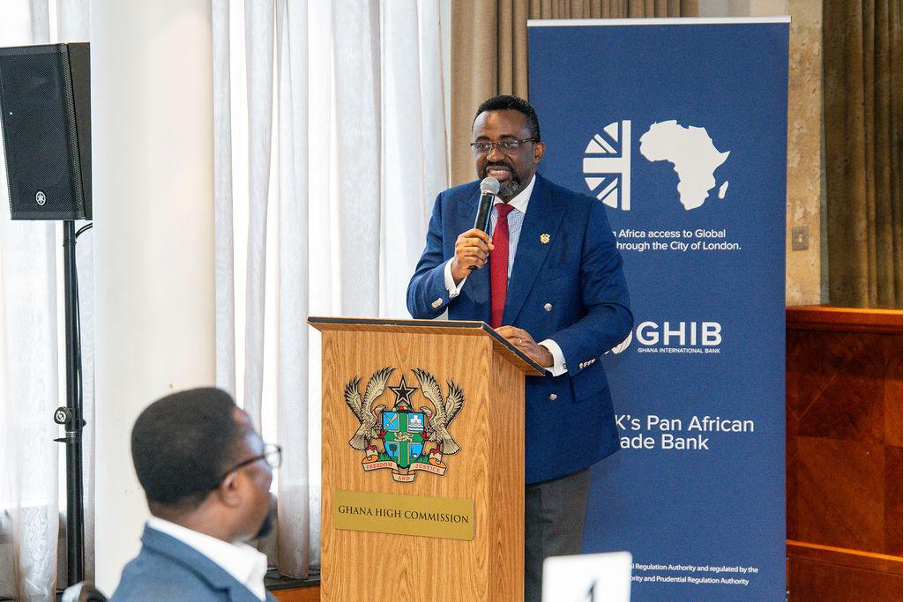
Ghana's central bank is maintaining a cautious stance on monetary policy even as the country posts encouraging signs of economic stability. Bank of Ghana Governor Dr Johnson Asiama has firmly dismissed calls to lower the nation's inflation target, arguing that recent improvements in price stability are not yet solid enough to warrant a more ambitious benchmark.
Speaking at the 2026 CEOs Connect event hosted by the Canada Ghana Chamber of Commerce, Dr Asiama revealed that international investors have been pressing the Bank to tighten its inflation target range. Currently set at 8% with a tolerance band of plus or minus 2 percentage points—giving a range of 6–10%—some investors have suggested reducing this to a 4–6% band, believing Ghana can sustain even lower price pressures.
The Governor acknowledged the appeal of this argument but rejected the proposal, citing unpredictable external threats. "Iran is still around the corner," he remarked, highlighting how geopolitical tensions could disrupt commodity prices and foreign exchange flows. His caution reflects the broader reality that small, open economies like Ghana remain vulnerable to global shocks, particularly in energy and food prices that directly affect inflation.
Ghana's Recent Economic Progress
Ghana's macroeconomic position has genuinely improved in recent months. Inflation has fallen below the lower bound of the Bank's medium-term target range, and the cedi has regained strength after years of depreciation pressures. Dr Asiama attributed this resilience to three key factors: stronger foreign exchange reserves, improved fiscal discipline from government, and a well-calibrated monetary policy approach by the central bank itself.
These developments represent real progress for Ghanaians dealing with the cost of living. However, the Governor emphasised that consolidating these gains must take priority over setting more ambitious targets. Rather than risk a premature shift in policy that could trigger inflation to creep back upward, the Bank intends to maintain its current framework whilst monitoring conditions closely.
Why It Matters for Ghana
The decision to hold the line on inflation targets has significant implications for ordinary Ghanaians and the broader economy. First, it signals the Bank's commitment to preventing a repeat of the high-inflation environment of recent years, which eroded purchasing power and made planning difficult for households and businesses.
Second, maintaining a slightly higher target band provides a buffer against external shocks. Given Ghana's dependence on imports for fuel and food, and volatile commodity prices for key exports, this prudence makes economic sense. A target that proves unachievable can undermine central bank credibility and complicate future policy decisions.
Third, Dr Asiama's comments reveal a shift in focus from crisis management to growth. The Bank is now looking beyond price stability toward translating macroeconomic gains into real outcomes: increased investment, stronger private-sector expansion, higher exports and quality job creation. This signals confidence in Ghana's direction whilst acknowledging that work remains unfinished.
For investors and businesses, the message is clear: Ghana is committed to maintaining predictable monetary conditions. For ordinary Ghanaians, it means the Bank's focus remains on keeping inflation manageable rather than experimenting with untested lower targets that could backfire. The approach reflects hard-won lessons from Ghana's recent economic volatility.
Source: MyJoyOnline


Comments (0)
Be the first to comment.