
African Digital Creators Now Shaping Continent's Policy Agenda, Not Just Selling Products
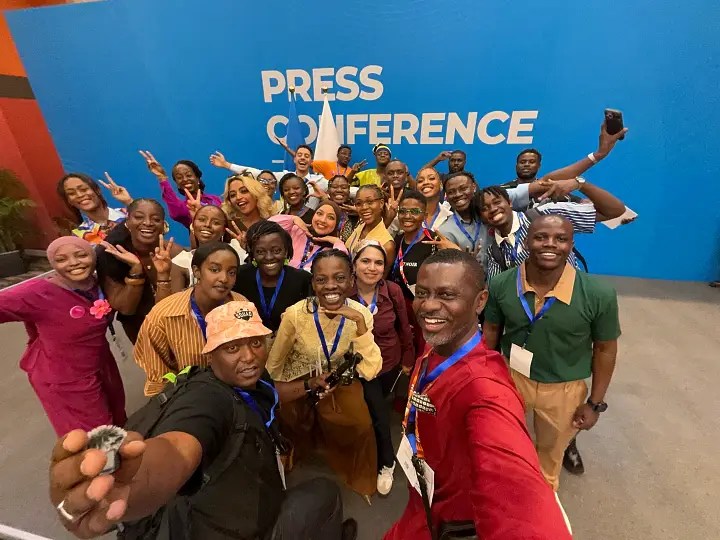
The role of African digital creators is undergoing a significant transformation. What was once dismissed as mere product promotion is evolving into genuine policy influence, with content creators now directly shaping conversations around continental governance and development. This shift was on full display at the inaugural Africa Mindset Reset Forum held in Kigali, Rwanda, on 25–26 August 2026, where 34 carefully selected digital creators participated alongside Africa's most prominent political leaders.
The forum, hosted by the African School of Governance in partnership with Influencer Africa, deliberately structured its participation to centre young voices. Remarkably, 80% of attendees were young leaders, reflecting an intentional move to ensure that Africa's youth—the demographic most affected by policy decisions—would help shape them from the outset. Among attendees were Rwandan President Paul Kagame and former South African President Thabo Mbeki, lending weight to the creators' presence in these high-level discussions.
Israel Laryea, Executive Head of Influencer Africa, framed the initiative as overdue recognition: "For a long time, young Africans have been left out of the big decisions. By bringing these 34 talented creators to Kigali, we are making sure our youth are not just listening, but are actively helping to build the Africa we all want to see. They are the true voice of the present."
From Preparation to Action: The Creatorthon Model
Before the main forum convened, Influencer Africa orchestrated a "Creatorthon"—a preparatory workshop designed to equip creators with the policy knowledge and contextual understanding necessary for substantive participation. Unlike traditional briefings, the Creatorthon operated as a bidirectional exchange. Whilst creators received insight into governance issues, policymakers and forum speakers gained direct exposure to grassroots perspectives from young Africans across the continent.
This reciprocal approach proved crucial. Creators shared their lived experiences and demonstrated how complex policy concepts could be translated into digital narratives that resonate with youth audiences. The session underscored a fundamental reality: digital creators already possess the skills and networks to drive continental conversations—they needed only the platform and preparation to do so meaningfully.
The 34 creators represented 12 African countries, though their digital influence extends far beyond national boundaries. This delegation bridged North, West, Central, East, and South Africa, and importantly, connected Anglophone and Francophone communities—a geographic and linguistic span that mirrors the continent's diversity. Among the participants were storytellers, entrepreneurs, and visionary communicators whose combined digital reach extends across the entire continent and into diaspora communities globally.
Why This Matters for Ghana and Africa's Digital Future
This development carries profound implications for Ghana and the broader African continent. Historically, digital influence has been treated as a commercial asset, with creators monetising their followings for brand partnerships. However, this forum signals a maturation of how African societies view digital creators' potential. They are no longer relegated to lifestyle and consumer content; they are now recognised as crucial intermediaries between policy elites and the millions of young Africans who consume their content.
For Ghana specifically, this opens possibilities for deeper civic engagement. Ghanaian creators now have a precedent and a model for participating in continental governance discussions. As African nations grapple with challenges from economic policy to climate adaptation, digital creators can translate abstract policy language into accessible narratives that mobilise their audiences around collective action.
The forum's underlying philosophy—that Africa cannot progress without youth leadership—addresses a persistent challenge across the continent. Young Africans comprise the demographic majority in most nations, yet have historically been excluded from decision-making spaces. By treating digital creators as policy participants rather than merely promotional tools, this initiative acknowledges that influence flows both directions: creators shape public sentiment, and now, they can also help shape the policies affecting their communities.
The ideas discussed in Kigali will not remain confined to meeting rooms. Each of the 34 creators will translate these conversations into content for their audiences, sparking dialogue across social platforms, broadcast networks, and digital channels. This mechanism ensures that continental policy discussions reach ordinary young Africans in formats they already consume, democratising access to governance conversations.
As Africa continues to assert its voice on the global stage, this partnership between the African School of Governance and Influencer Africa represents a strategic recognition: the continent's digital creators are not peripheral players in nation-building—they are central architects of Africa's narrative and future.
Source: Ameyaw Debrah



Comments (0)
Be the first to comment.