
Afenyo-Markin Warns That Targeting Business Owners Over Past Government Contracts Threatens Ghana's Private Sector


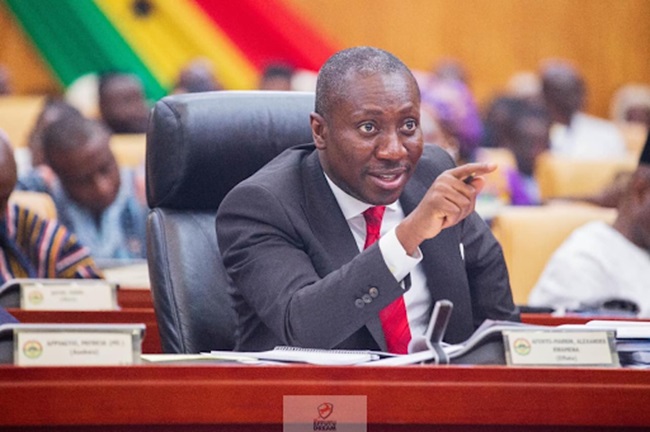
Minority Leader and Member of Parliament for Effutu, Alexander Afenyo-Markin, has sounded a strong warning over what he characterises as the deliberate targeting of Ghanaian business owners whose only apparent offence is having executed legitimate contracts under the previous New Patriotic Party (NPP) government. He argues that such treatment, if allowed to continue, poses a serious threat to Ghana's private sector development and broader economic recovery efforts.
The Core of Afenyo-Markin's Concern
At the heart of the Minority Leader's argument is a straightforward but critical question: how can Ghana genuinely build a thriving private sector and create sustainable employment when local entrepreneurs face the risk of punishment simply for doing business with a government that has since left office?
Afenyo-Markin contends that contracts awarded and executed under the previous administration were legal, binding agreements entered into in good faith. Business owners who delivered on those contracts should not now find themselves marginalised, blacklisted or subjected to investigations that appear politically motivated rather than grounded in evidence of wrongdoing.
The Minority Leader's intervention comes at a time when Ghana's economy is under significant strain, with job creation remaining one of the most pressing challenges facing both the government and the citizenry. Many small and medium-sized enterprises (SMEs) that grew their operations through government contracts now find themselves in a precarious position, uncertain about their future prospects under the current administration.
Why It Matters for Ghana
Ghana has long struggled to build a robust, independent private sector capable of driving growth without being overly dependent on government patronage. Political transitions, however, have historically disrupted this process, with incoming administrations sometimes viewing businesses associated with their predecessors with suspicion.
This cycle has real consequences. When entrepreneurs believe that working with one government may cost them dearly when power changes hands, it creates a chilling effect on private sector participation in public procurement. Businesses may become reluctant to bid for government contracts, reducing competition, inflating costs for taxpayers, and ultimately slowing down infrastructure and service delivery.
Beyond procurement, the broader message such actions send to both local and foreign investors is deeply damaging. Investor confidence depends heavily on the perception that business decisions will be judged on commercial and legal merit, not on political affiliation. Ghana's ambition to position itself as a premier investment destination in West Africa cannot be realised if the business environment is perceived as unstable or politically hostile.
- Job losses: Many of the businesses reportedly being targeted are significant employers. Any forced closure or financial squeeze on these firms translates directly into job losses at a time when unemployment, particularly among the youth, remains a major concern.
- Legal principles: Afenyo-Markin's argument also touches on fundamental rule-of-law principles. If businesses that complied with the law are penalised without due process, it undermines confidence in Ghana's legal and regulatory frameworks.
- Political accountability: Crucially, the Minority Leader is drawing a distinction between legitimate investigations into corruption — which are entirely appropriate — and what he sees as politically motivated harassment of businesses simply because of their association with the NPP era.
Calls for a Principled Approach
Afenyo-Markin is urging the current government to draw a clear and principled line between holding genuinely corrupt actors to account and unfairly punishing businesses that operated within the law. He insists that Ghana's long-term development interests must take precedence over short-term political point-scoring.
Political observers note that this debate is not unique to Ghana — it surfaces after nearly every change of government across the continent. However, with Ghana widely regarded as one of West Africa's most stable democracies, there is an expectation that it should set a higher standard. How the current administration responds to these concerns may well shape the confidence of the private sector not just today, but heading into future electoral cycles.
Source: 3News




Comments (0)
Be the first to comment.