
Ghana's Two-Party Grip on Power Under Fire as Economist Warns NDC and NPP Cannot Deliver Real Change
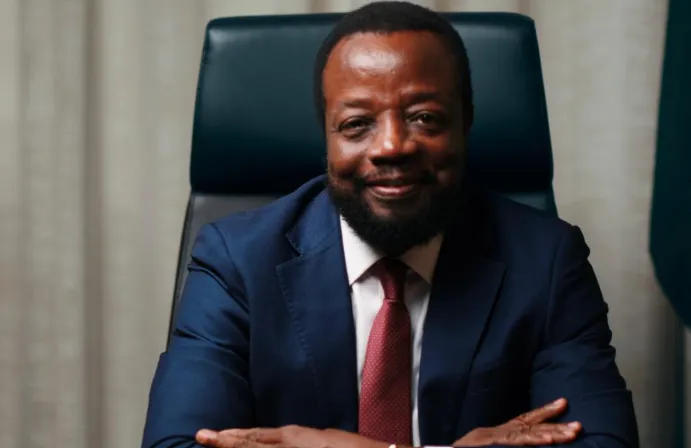

A prominent Ghanaian economist, Dr Kpikpi, has issued a stark warning ahead of the 2027 budget cycle, asserting that neither the governing National Democratic Congress (NDC) nor the opposition New Patriotic Party (NPP) is capable of engineering the kind of deep, structural economic transformation that Ghana requires. The statement has reignited long-running debates about whether Ghana's dominant two-party political system is serving the country's development interests or simply entrenching a cycle of disappointment.
What was said and why it is striking
Dr Kpikpi's critique is notable precisely because it does not target one side of Ghana's political divide — it implicates both. Rather than framing Ghana's economic difficulties as a problem of bad governance by one party that could be solved by electing the other, he points to a structural failure that transcends party affiliation. His argument, centred on the 2027 budget outlook, suggests that whichever of the two parties holds power, Ghanaians should not expect transformational economic outcomes under the current approach.
This is a perspective that resonates with a growing segment of Ghanaian civil society and academia, who point to the fact that Ghana has alternated between the NDC and NPP for decades, yet continues to grapple with persistent challenges — including high public debt, a depreciating cedi, unemployment among the youth, and an economy heavily reliant on commodity exports such as gold, cocoa and oil rather than value-added manufacturing and services.
Why it matters for Ghana
Ghana returned to an International Monetary Fund (IMF) programme in 2023 following a severe economic crisis that included a debt default and a sharp fall in living standards. The current NDC administration inherited this IMF arrangement and is working within its fiscal constraints as it prepares future budgets. Critics argue that both major parties have, over successive administrations, pursued broadly similar economic frameworks — ones that have failed to diversify the economy, reduce import dependency or build a robust industrial base.
Dr Kpikpi's comments land at a particularly sensitive moment. With the 2027 budget already on the horizon and Ghanaians still feeling the pinch of austerity measures, questions about whether the political class has the vision and political will to pursue genuine transformation are becoming louder. Many ordinary Ghanaians — especially young people facing limited job prospects — are increasingly sceptical that switching between the two dominant parties will produce meaningfully different results.
- Ghana has been under IMF support programmes multiple times in recent decades, reflecting recurring fiscal vulnerabilities.
- Youth unemployment and economic diversification remain among the most pressing unresolved challenges facing the country.
- Calls for third-party or independent political alternatives have grown louder, though Ghana's electoral structure continues to favour the two dominant parties.
What needs to change, according to critics
Economists and development analysts who share Dr Kpikpi's concerns typically point to the need for long-term national development planning that outlasts election cycles, investment in domestic manufacturing, and a serious renegotiation of Ghana's relationship with extractive industries to retain more value within the country. There are also calls for stronger institutions that can hold any government accountable to development targets, regardless of which party is in power.
Whether Dr Kpikpi's warning will gain traction in the political mainstream remains to be seen. In Ghana's highly partisan political environment, such non-partisan critiques often struggle to cut through the noise of party loyalty. However, with public disillusionment growing and the 2027 budget set to be a critical test of the NDC administration's economic credibility, his voice adds to a chorus demanding that Ghana's leaders think beyond the next election and towards a genuinely transformative economic agenda.
Source: 3News

Comments (0)
Be the first to comment.