VP calls for public access to Ghana's political party histories to strengthen civic engagement
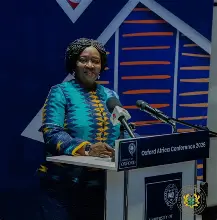
Vice President Professor Naana Jane Opoku-Agyemang has made a compelling case for democratising access to Ghana's political history, arguing that public knowledge of how the country's major political parties have evolved is essential for informed citizenship and stronger democratic participation.
Speaking at the launch of six new historiographies documenting the National Democratic Congress (NDC) on Tuesday, 13 October, the Vice President stressed that understanding Ghana's political journey should not remain the preserve of those who lived through key historical moments. Instead, she contended that younger generations and all citizens deserve access to these documented accounts to better comprehend the institutions and constitutional frameworks that govern the nation.
Why it matters for Ghana
Ghana's democracy is built on citizen participation and informed decision-making. Yet many Ghanaians, particularly younger voters entering the political space, have limited exposure to the detailed histories of the country's major political organisations and how they have shaped national governance. The Vice President's push for broader access to party historiographies addresses a significant gap in public knowledge.
When citizens understand the constitutional and historical underpinnings of Ghana's political system, they are better equipped to engage critically with current policy debates, hold leaders accountable and contribute meaningfully to national discourse. This is particularly important in a context where misinformation and shallow political engagement can undermine democratic quality.
The call also reflects a broader recognition that institutional memory matters. Ghana has experienced multiple political transitions, constitutional reforms and governance experiments since independence. Documented histories of major political parties provide invaluable records of these transitions and can serve as reference materials for researchers, students, policymakers and the general public.
Distribution and accessibility strategy
Professor Opoku-Agyemang outlined an ambitious distribution strategy to ensure the newly launched NDC publications reach diverse audiences. She expressed hope that the books would be placed in libraries, research institutions, government offices and private spaces throughout the country. She also encouraged NDC regional and constituency executives to stock the publications in their offices, effectively turning party headquarters into accessible repositories of political history.
This decentralised approach recognises that not all Ghanaians have equal access to libraries or formal research institutions. By placing these materials in party offices, community spaces and local institutions, the strategy aims to make history more accessible to ordinary citizens regardless of their location or educational background.
Preservation and institutional value
Beyond immediate public education, the Vice President emphasised that these historiographies serve a crucial preservation function. Political organisations accumulate experiences, institutional knowledge and decision-making records that, if not documented, risk being lost to future generations. Written historiographies create permanent records that can withstand the passage of time and the natural process of institutional change.
For Ghana specifically, where institutional continuity has sometimes been disrupted by political transitions, having documented histories of major political parties provides institutional anchors and continuity. These records become reference materials that scholars can consult, that institutions can draw upon for understanding their own development, and that citizens can access to make sense of contemporary political arrangements.
The six NDC historiographies represent a significant step toward building a more comprehensive written record of Ghana's democratic experience. As the Vice President noted, such knowledge should be treated as important reference material that contributes to deeper understanding of how Ghana's governance structures have developed and how the country's political system has evolved over time.
Source: MyJoyOnline


-1200x1338.webp)
Comments (0)
Be the first to comment.