
US immigration judge overstepped authority in Ofori-Atta case, says Fuseini
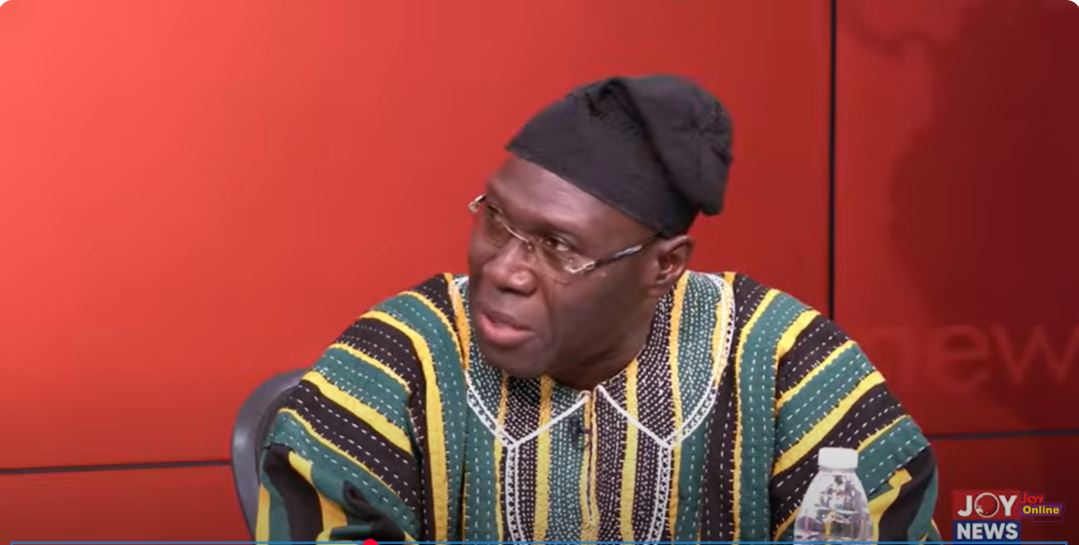

A prominent Ghanaian lawyer has challenged the legal authority of a United States immigration judge to make determinations about criminal proceedings involving former Finance Minister Ken Ofori-Atta, arguing the court exceeded its jurisdictional powers.
Inusah Fuseini, the former Tamale Central MP and legal practitioner, contends that whilst the US immigration judge was entitled to assess Mr Ofori-Atta's eligibility for lawful permanent residence (a green card), the court had no mandate to make conclusive findings on criminal allegations pending before Ghana's courts.
The dispute stems from an immigration judge's ruling that documents presented to the US court lacked sufficient evidence from Ghana's Office of the Special Prosecutor linking Mr Ofori-Atta to criminal wrongdoing. This finding facilitated the approval of his green card application after his authorisation to remain in the United States had expired.
The jurisdictional argument
Speaking on JoyNews' Newsfile programme on Saturday, 25 July, Mr Fuseini articulated a fundamental principle of international law: criminal jurisdiction is inherently territorial. He argued that the US court's assessment of criminal matters occurring in Ghana represented a clear breach of this principle.
According to his legal analysis, countries only exercise jurisdiction over criminal matters occurring outside their borders through explicit international agreements or treaties—such as the International Criminal Court (ICC)—where nations have voluntarily ceded some sovereignty. The United States does not participate in the ICC framework, Mr Fuseini noted, strengthening his argument that American courts cannot adjudicate Ghanaian criminal proceedings.
Mr Fuseini emphasised that Mr Ofori-Atta's legal representatives submitted affidavit evidence and materials from Ghana's Office of the Special Prosecutor solely to support the immigration application itself. These documents were never intended to allow the US court to determine the merits of criminal allegations already under examination in Ghanaian judicial processes.
Why it matters for Ghana
This legal disagreement touches on fundamental questions about Ghana's judicial sovereignty and the proper relationship between foreign immigration proceedings and domestic criminal justice. If international courts or judges routinely made binding pronouncements on the substance of Ghana's criminal cases—even indirectly through immigration assessments—it could undermine the authority and independence of Ghana's judicial system.
The case also highlights how complex legal proceedings spanning multiple jurisdictions can create tension between different legal systems' authority. Whilst Ghana pursues its own investigation and potential prosecution of Mr Ofori-Atta through the Office of the Special Prosecutor, the parallel US immigration process has reached conclusions that may be perceived as prejudicial to Ghana's proceedings.
Furthermore, the case raises questions about how evidence submitted in one legal context—such as immigration status—ought to be interpreted or used in other contexts, particularly criminal proceedings. Mr Fuseini's argument suggests that the US immigration judge should have restricted its analysis entirely to whether the former minister qualified for the specific immigration relief sought, without venturing into assessments of criminal guilt or innocence.
The broader legal principle
Mr Fuseini's position reflects established principles of international law regarding state sovereignty and judicial independence. Each nation maintains exclusive jurisdiction over criminal matters within its territory, and this principle protects Ghana's ability to conduct its own prosecutions without external interference.
The challenge now lies in how Ghana's courts will proceed with the criminal investigation and any potential prosecution, given the US immigration judge's findings. Whether such findings will influence Ghana's judicial process or be treated as irrelevant to the domestic proceedings remains to be seen.
Source: MyJoyOnline





Comments (0)
Be the first to comment.