
Ghana's inclusive education policy falls short: advocates demand budget boost to £1.7bn annually
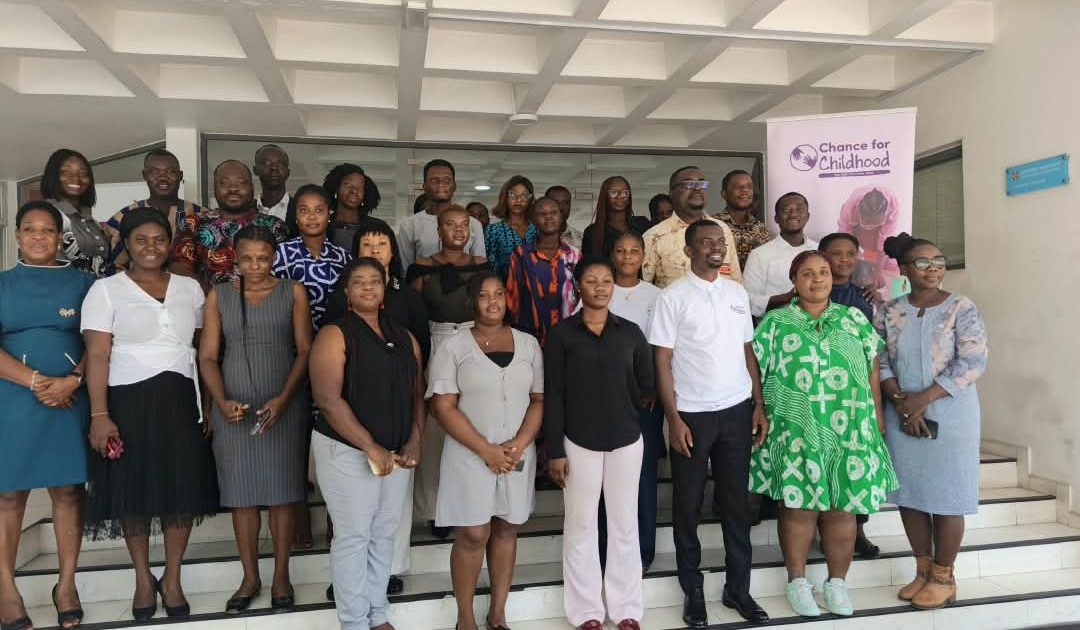

Ghana's inclusive education framework remains largely unfulfilled due to chronic underfunding, according to advocates who gathered this week to push for urgent government action. Richard Opoku, Country Representative at Chance for Childhood, and Rebecca Ekpe, Vice President of the Ghana Journalists Association, warned that despite Ghana adopting an Inclusive Education Policy in 2015, implementation has stalled because budget allocations remain below one per cent of the overall education budget.
The Ministry of Education introduced the policy to ensure children with disabilities and special educational needs could learn in mainstream schools alongside their peers. However, nearly a decade on, the framework has produced limited real-world results. At a Media Workshop on Disability and Inclusive Education held at the British Council, both speakers made an urgent appeal: the government must increase funding to at least two per cent of the education budget to translate policy into action.
The funding crisis and its human cost
Underfunding has created cascading problems across Ghana's education system. Opoku highlighted that inadequate resources prevent schools from providing essential support services—from qualified teachers to learning materials adapted for different disabilities. Ekpe reinforced this with stark statistics: more than 80 per cent of teachers lack proper training to support inclusive education, and approximately 80 per cent of schools lack basic accessible infrastructure such as functioning toilets, laboratories and appropriate furniture.
Perhaps most concerning, Ekpe cited figures showing around 1,700 children with severe communication impairments remain entirely out of school. These are not abstract policy failures; they represent thousands of Ghanaian children systematically excluded from education.
Why it matters for Ghana
Ghana is bound by international commitments—including the Convention on the Rights of Persons with Disabilities—to ensure equal access to education. Domestically, the 2015 policy represents the government's own stated commitment to inclusion. Yet enforcement has been hollow. The current shortfall affects Ghana's social and economic trajectory. Children kept out of school become adults unable to participate fully in the economy or civic life, perpetuating cycles of poverty and dependence.
Additionally, Ghana's media landscape plays a crucial role. Ekpe urged journalists to investigate and expose disability-related barriers within their own communities, arguing that local reporting could illuminate problems masked by national statistics. She also warned against stigmatising language and imagery that reinforces discrimination, calling on journalists to amplify the voices of persons with disabilities themselves rather than speaking for them.
What needs to happen next
Both speakers emphasised that funding alone is insufficient. The government must:
- Increase inclusive education budget allocation from below one per cent to at least two per cent
- Invest heavily in continuous teacher training programmes to equip educators with disability-inclusive teaching methods
- Support infrastructure improvements—accessible toilets, laboratories, ramps and assistive technology
- Recognise and motivate teachers working with children with disabilities through both financial and non-financial incentives
- Enable children with communication impairments to access school through appropriate support systems
Opoku stressed that achieving inclusion requires a collective effort from government, schools, civil society and the private sector. The media, both speakers agreed, must hold this coalition accountable and shift public perceptions about disability—moving from stigma to recognising the rights and potential of all children.
Ghana adopted its inclusive education policy in good faith. Eight years later, the gap between policy and reality remains vast. Closing it will require political will, sustained funding and public pressure—particularly from a media willing to investigate and amplify stories from children and families currently left behind.
Source: MyJoyOnline

Comments (0)
Be the first to comment.