Telecel Ghana Pledges Expanded Support for Deaf Education as Tertiary Institutions Take Centre Stage
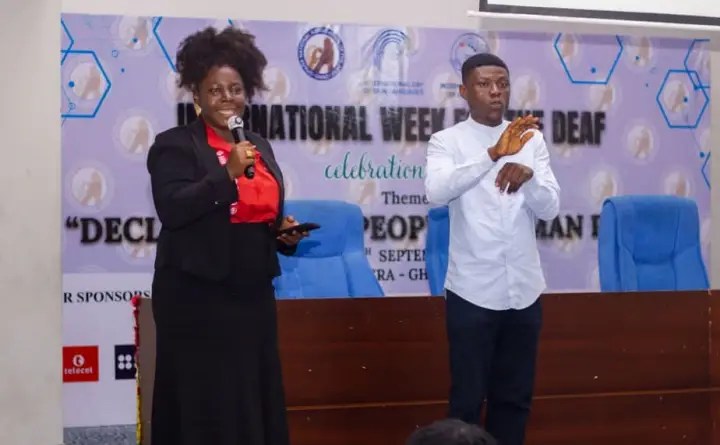
Telecel Ghana has doubled down on its efforts to champion inclusion and accessibility for deaf Ghanaians, positioning itself as a key corporate partner in advancing the rights and educational opportunities of the deaf community. The telecommunications company's participation as main sponsor at this year's International Week for the Deaf celebrations underscored a growing corporate responsibility agenda focused on making tertiary education genuinely accessible to deaf and hard-of-hearing learners.
The event, centred on the theme "Strengthening Access to Quality Multilingual Inclusive Education for Deaf Learners in Ghana: The Role of Tertiary Education Institutions," convened educators, government officials, students, and disability advocates to tackle systemic barriers to higher education for deaf persons. A key concern emerging from discussions was the gap between policy and implementation—whilst many institutions have inclusion frameworks on paper, practical accessibility measures remain inconsistent across Ghana's tertiary education sector.
Telecel's Track Record and Expanding Commitment
Mercy Akude, Telecel Ghana's General Manager for Commercial Operations, outlined the company's partnership trajectory with Ghana National Association of the Deaf (GNAD), a collaboration that began in 2017 and has since matured into a multi-pronged inclusivity strategy. Beyond corporate sponsorship, Telecel has taken tangible employment steps, hiring 10 deaf professionals within its workforce. The company also serves more than 3,500 members of the deaf community through subsidised voice and data packages and dedicated support channels, including the Telecel Play App and *494# service line.
Akude's core message—that inclusion transcends mere service access and demands meaningful societal participation—resonates with growing advocacy demands. The company's SuperCare Initiative was cited as evidence of this deeper commitment, positioning connectivity not simply as a commercial product but as a tool for social empowerment.
Government and Institutional Gaps Laid Bare
Representatives from the Ministry of Education acknowledged persistent challenges in deaf education delivery. Nana Baffuor Awuah, Director for Pre-Tertiary Education, outlined government priorities: improved teaching methodologies, expanded accessible technologies, early identification programmes, and enhanced sign language training for educators. However, these commitments remain aspirational without adequate resource allocation and coordination mechanisms.
Panellists from major tertiary institutions—including Ashesi University, University of Ghana, Takoradi Technical University, and Presbyterian College of Education—identified critical gaps: inadequate sign language interpretation services, limited accessible learning materials, underfunded disability support centres, and poor cross-institutional collaboration. The discussion revealed that whilst some universities have begun addressing accessibility, implementation remains fragmented and often depends on individual institutional champions rather than systemic policy.
Why This Matters for Ghana
Ghana's deaf community faces significant barriers to educational and economic participation. Approximately 3 million Ghanaians live with hearing loss, yet cultural stigma, infrastructure limitations, and policy implementation gaps continue to exclude deaf persons from quality education and employment opportunities. Initiatives like Telecel's partnership with GNAD signal a potential model for corporate-civil society collaboration, yet remain insufficient without broader systemic change.
The emphasis on sign language as an essential right rather than optional accommodation reflects international best practice. Seidu Musah, GNAD's Programmes Manager, articulated this clearly: accessibility must be embedded in campus operations from day one, spanning academics, administration, and social life. For Ghana to meet SDG commitments on inclusive education, tertiary institutions must move beyond compliance rhetoric to genuine architectural, pedagogical, and technological transformation.
The deaf community's calls for stronger interpreter access, assistive technologies, and dedicated disability support services align with UNESCO standards for inclusive education. Yet implementation will require sustained funding, political will, and corporate engagement—areas where Telecel's sponsorship and employment initiatives offer a constructive, albeit limited, starting point. For Ghana to truly advance deaf inclusion, government must prioritise disability-focused budgeting whilst private sector partnerships remain catalytic rather than substitutive.
Source: Ameyaw Debrah

Comments (0)
Be the first to comment.