Kumasi Assembly empowers 57 PWDs with business grants as disability groups push for accessible infrastructure
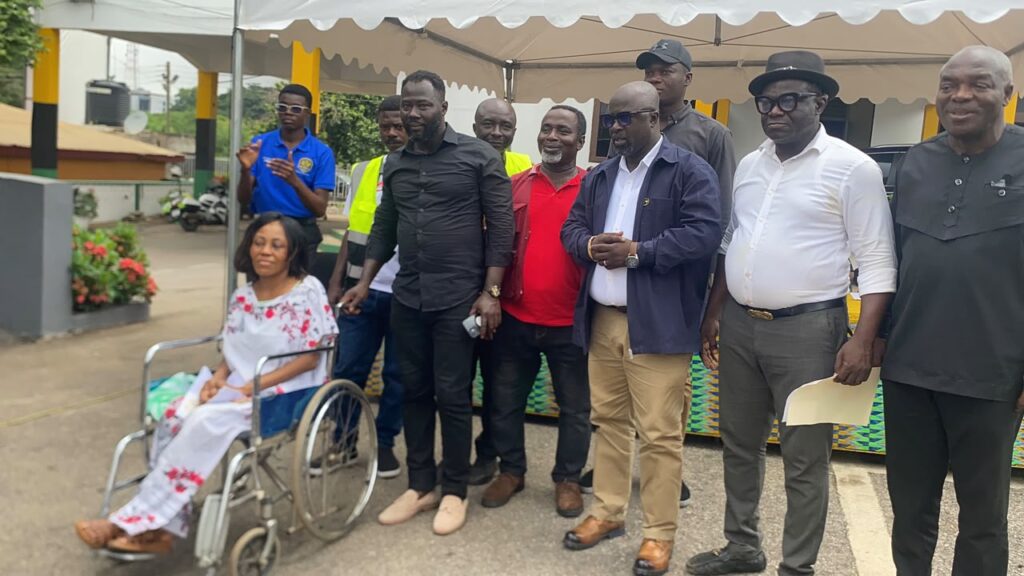
The Kumasi Metropolitan Assembly has provided financial support and business start-up kits to 57 persons with disabilities (PWDs), marking a significant move in disability economic empowerment across Ghana's second-largest city. However, the initiative has reignited urgent calls from disability advocates for comprehensive accessibility reforms in both public infrastructure and transport systems nationwide.
The beneficiaries received cash grants ranging from GH¢5,000 to GH¢7,000 alongside start-up equipment including chest freezers, deep freezers, industrial and hand sewing machines, distributed under the District Assembly Common Fund Disability Programme (DACF). The support comes following President Mahama's directive to increase the DACF allocation for PWDs from 3 per cent to 5 per cent, signalling enhanced government commitment to disability inclusion.
Infrastructure Access remains a critical barrier
Despite the positive developments in financial support, the Ghana Federation of Disability Organisations has highlighted a persistent and fundamental challenge: the inaccessibility of Ghana's public infrastructure. Francis Lare, Kumasi Metro Chairman of the federation, raised concerns that government buildings including hospitals, schools, Metropolitan, Municipal and District Assemblies (MMDAs), and ministry offices lack basic disability-friendly features such as ramps and elevators.
The challenge extends beyond buildings to public transport systems. Lare emphasised that PWDs struggle to access commercial vehicles and even government metro buses, effectively excluding them from independent mobility and wider economic participation. He called on transport operators and the Ministry of Transport to modify buses and terminals to accommodate persons with mobility challenges, noting that true empowerment requires both financial support and physical accessibility.
Why this matters for Ghana
Ghana's disability population represents a significant portion of the workforce, yet structural barriers to accessibility limit their economic potential and independence. While cash grants address immediate livelihood needs, the infrastructure gap undermines long-term sustainability. PWDs who cannot access government services, healthcare facilities, or public transport face compounded disadvantages in maintaining businesses, accessing markets, and participating in civic life.
The increase in DACF allocation reflects policy progress, but Lare's observations suggest implementation across ministries and local authorities remains inconsistent. Kumasi's initiative could serve as a model for other MMDAs, though scaling such programmes nationally requires corresponding investment in accessibility standards. The appointment of an audit team to monitor beneficiary usage of grants indicates government seriousness about accountability and preventing misuse—essential for public confidence in disability support programmes.
Implementation and next steps
Kumasi Metropolitan Chief Executive Richard Ofori Agyemang Boadi emphasised that the grants aim to foster economic independence and reduce reliance on others for survival. The Acting Convener for Social Services, Robert Aikins, noted that items were distributed based on individual assessments and warned of sanctions for misapplication.
For Ghana's disability sector to achieve meaningful progress, advocates argue that infrastructure accessibility must advance alongside financial support programmes. This includes mandatory accessibility audits of government buildings, regulatory requirements for public transport operators, and enforcement mechanisms to ensure compliance. The Kumasi Assembly's dual approach—providing immediate economic support whilst amplifying accessibility demands—offers a template for integrated disability inclusion policy.
Source: MyJoyOnline



Comments (0)
Be the first to comment.