Upper East vegetable farmers battle price collapse as harvest glut floods Nabdam markets
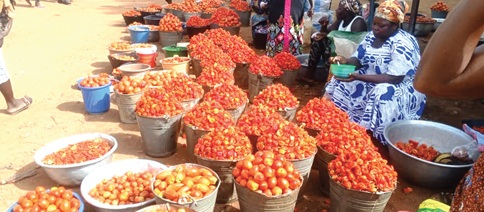
Vegetable farmers in Nabdam District, Upper East Region, are facing severe financial strain as prices for staple produce have crashed dramatically over the past month, with tomatoes losing 50 to 60 percent of their value and other vegetables following suit. The sharp downturn, driven by seasonal supply oversupply, has created a stark divide: while consumers and traders celebrate lower food costs, smallholder farmers warn they are now unable to recover basic production expenses.
The price collapse in numbers
A market survey across Nabdam's three major trading centres—Pelungu, Kongo and Zanlerigu—reveals the severity of the situation. In September, a bucket of tomatoes fetched between GH¢120 and GH¢150; by early October, prices had plummeted to GH¢60 to GH¢70. A basin (larger unit) that sold for GH¢300 to GH¢350 now moves for just GH¢120 to GH¢150. Okra buckets have fallen from around GH¢120 to GH¢80, whilst fresh pepper dropped from GH¢150 to GH¢200 to between GH¢100 and GH¢120.
According to farmers interviewed, the glut leaves them vulnerable to aggressive buyer tactics. Traders and bulk purchasers deliberately arrive mid-morning to negotiate rock-bottom prices, knowing farmers face total loss if produce spoils. As one pepper and tomato farmer, Samson Wougnab, explained: "Buyers will intentionally come and wait until around 11 a.m. or 12 noon. If you don't agree to their price, you have to send it back home because they can't even finish buying it."
Why production costs make the crisis worse
The situation is compounded by stubbornly high input costs. Farmers reported that fertiliser bags remain priced between GH¢450 and GH¢500, whilst daily labour wages sit at GH¢70 to GH¢80. With a bucket of tomatoes now selling for as little as GH¢60 to GH¢70—sometimes less—farmers are unable to break even, let alone turn a profit. Tomato farmer Mboleni Zoya expressed the bind clearly: the perishable nature of vegetables forces immediate sales regardless of price, trapping farmers in a cycle where abundant harvests guarantee losses.
The Upper East Region's September-to-December harvest season, driven by rainfall patterns, creates predictable seasonal oversupply. All farmers harvest simultaneously, flooding markets with identical produce and eliminating any competitive advantage.
What this means for Ghana's food security and farming economy
This crisis highlights structural vulnerabilities in Ghana's agricultural value chain, particularly for smallholder vegetable producers. Unlike cereal crops with established storage and export channels, fresh vegetables offer farmers almost no buffering mechanism against seasonal price swings. The lack of affordable cold storage, organised buyer aggregation, or contract farming arrangements forces farmers into a distress-sale cycle that undermines investment incentives.
For consumers and urban food vendors, lower prices offer temporary relief—the teacher quoted in the report noted the benefit to household budgets, whilst vendor Yenmah Mba celebrated margin improvements. However, this relief is illusory if it discourages production in coming seasons. When prices recover to unsustainable levels later in the year (as Mba noted happens by January), the shortage will harm both consumers and vendors.
The Nabdam situation also reflects broader challenges facing Ghana's Upper East Region, an agriculture-dependent area where crop price volatility directly impacts rural household income and poverty levels. Without interventions—such as producer cooperatives, market information systems, or post-harvest infrastructure—seasonal gluts will continue to undermine farming viability and rural livelihoods.
Agricultural experts and policymakers should view this crisis not as a temporary market correction, but as a symptom of systemic weakness in Ghana's fresh produce supply chain. Supporting farmer-led solutions and investing in market stabilisation mechanisms are essential to protect both producer incomes and food affordability for ordinary Ghanaians.
Source: MyJoyOnline




Comments (0)
Be the first to comment.