
UN backs fairer world map—and Ghana should take note of Africa's push for equal representation
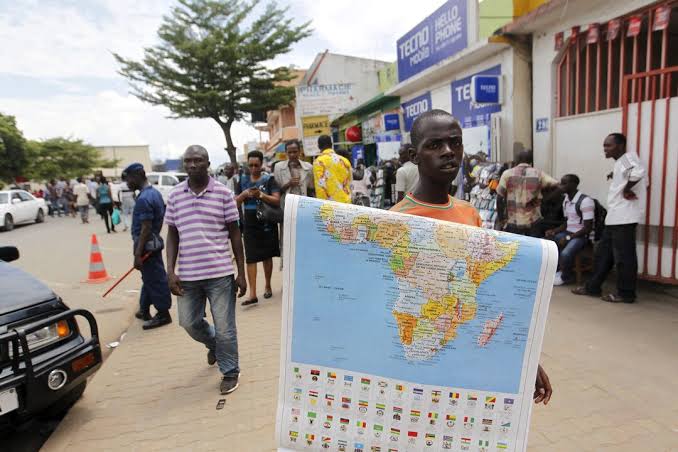

In a symbolic but significant victory for African representation on the global stage, the United Nations General Assembly on Friday passed a resolution championing a more accurate map projection of the world—one that finally gives Africa its proper place. The vote, which passed 164 to 1 with 6 abstentions, marks a turning point in how the continent is perceived and portrayed globally.
The resolution, led by Togo, targets the centuries-old Mercator projection, a 16th-century map that has dominated classrooms, offices and governments for over four hundred years. The problem is stark: the Mercator map distorts land masses near the poles, making Greenland appear roughly the same size as Africa when in reality Africa is approximately 14 times larger. This visual misrepresentation has quietly shaped global perceptions of the continent's significance for generations.
"A fair world begins with a fair map," Togo's Foreign Minister Robert Dussey told Reuters, encapsulating the campaign's core message. The resolution promotes the Equal Earth projection as an alternative—a map that more accurately depicts the true size and proportions of continents without the northward bias that has long distorted geographical understanding.
Why it matters for Ghana
For Ghana and other African nations, this UN resolution carries broader implications than cartography alone. It reflects Africa's growing assertion of agency in shaping global narratives—a direct challenge to colonial-era legacies that have persisted in everyday tools and institutions. The Mercator projection itself is a product of colonialism; its widespread adoption reinforced perceptions of European and polar regions as larger, more significant, and more developed than they actually are.
Dussey was explicit about this connection, linking the map campaign to wider African efforts to confront and overcome colonial inheritances. By correcting how Africa is visually represented to the world, African nations are reclaiming agency over their own image and challenging deeply embedded assumptions about their place and power in the global order. For Ghana, this matters because it shapes how Ghanaians—and how the world—perceives the nation and continent.
The practical rollout is already underway. Togo committed to becoming the first country to change its school geography textbooks by the end of this year, signalling serious intent rather than symbolic gesture. The minister plans to engage other African Union member states, international organisations, technology companies and global educational institutions to accelerate adoption of Equal Earth maps within six months.
Implementation and global resistance
It is important to note that the resolution is non-binding and explicitly does not challenge the Mercator projection's use in maritime and aerial navigation, where its properties remain technically valuable. This careful framing was necessary to build consensus.
Not everyone supports the shift, however. The United States was the sole vote against, characterising the resolution as promoting an "ideological agenda" and dismissing it as a distraction from genuine international concerns. This objection itself underscores why the campaign matters: challenging how power and geography are visualised is viewed as contentious precisely because these representations have real consequences for how resources, influence and legitimacy are distributed globally.
For Ghana and African nations, the path forward involves practical action. Schools, government offices, and public institutions should begin transitioning teaching and reference materials to Equal Earth or similarly accurate projections. Beyond maps, this resolution should prompt reflection on other colonial-era tools and narratives that continue to shape African self-perception and global standing.
The resolution is a reminder that representation—whether in maps, media, or institutions—matters profoundly. Africa's campaign for a fairer map is ultimately a campaign for fairer recognition.
Source: MyJoyOnline


Comments (0)
Be the first to comment.