Trump orders Lake Ontario renamed 'Lake America' amid US-Canada trade war
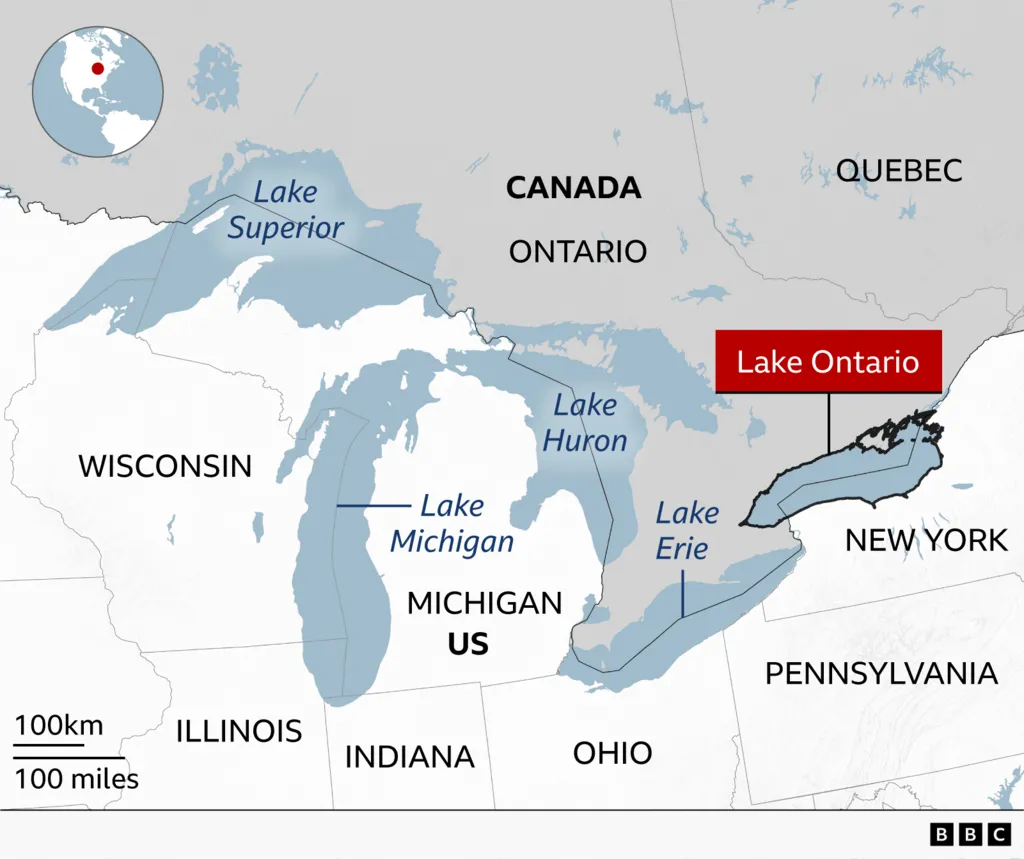
US President Donald Trump has signed an executive order to rename Lake Ontario to Lake America, escalating tensions with Canada just days after trade negotiations between the two nations collapsed. The move, announced Thursday, comes amid a broader dispute over tariffs and reflects deteriorating relations between Washington and Ottawa at a critical moment for North American commerce.
The order directs the US Department of the Interior to update the Geographic Names Information Service—the official repository of US domestic geographic names—within 30 days. However, the renaming applies only to how the United States officially recognises the lake; Canada and other countries are under no obligation to adopt the new name. Lake Ontario, the smallest of the Great Lakes, straddles the border between New York State and the Canadian province of Ontario.
Canada rejects the move
Canadian Prime Minister Mark Carney responded swiftly and firmly, stating that "things must be called by their name, and this lake is called Lake Ontario—today and forever." He emphasised that the lake's name has been used for more than 400 years, predating both the Canadian Confederation and the US Declaration of Independence. Ontario Premier Doug Ford and other provincial leaders issued similar statements rejecting the rename.
Carney noted that Lake Ontario derives its name from indigenous words, as do four of the five Great Lakes—Ontario, Huron, Michigan, and Erie. Lake Superior was named after an anglicised French term. The Canadian government's position reflects a broader diplomatic principle: no single nation can unilaterally rename international waterways shared with neighbours.
Why it matters for Ghana
This dispute highlights how geopolitical tensions can affect trade relationships and international stability—matters that directly concern Ghana and Africa. Ghana, as a member of ECOWAS and the African Union, operates within international frameworks that depend on consensus and mutual respect among nations. The US-Canada conflict demonstrates how unilateral actions over shared resources can destabilise relationships and create precedent for similar disputes elsewhere.
Additionally, the breakdown in US-Canada trade relations has global economic implications. Canada is among the world's largest commodity exporters and trading nations. Trade friction between North America's two largest economies can affect supply chains, prices, and economic growth worldwide, including in Ghana's trade and investment sectors.
The incident also raises questions about how African nations might respond to similar unilateral claims by larger powers over shared resources—a concern for countries across the continent that share rivers, lakes, and maritime boundaries.
Broader context: Trump's geographic rebranding
This is not Trump's first attempt to rename international geography. Earlier in 2025, he signed a similar order renaming the Gulf of Mexico to the Gulf of America. Mexico rejected that change, and it sparked a legal dispute with Google, which now displays different names depending on users' locations: Americans see "Gulf of America," Mexicans see "Gulf of Mexico," and others see both names displayed together.
The White House also blocked Associated Press reporters from presidential events over the news agency's refusal to use "Gulf of America" in coverage, prompting a legal battle that remains ongoing.
Within the US, reactions have been mixed. Secretary of the Interior Doug Burgess praised the Lake Ontario rename, but Democratic lawmakers including Michigan's Debbie Dingell and New York Governor Kathy Hochul opposed it. Dingell called the order "idiotic" and pledged to introduce legislation nullifying the change, framing the Great Lakes as "a shared treasure that generations of Americans and Canadians have worked together to protect."
Trump defended the move Thursday, saying it was not aimed at Canada but reflected America's position that its northern neighbour "has been ripping us off for a long time on trade." The order follows the collapse of trade talks last week, US imposition of 50% tariffs on CAD$28 billion of Canadian goods, and Canada's announcement of reciprocal counter-tariffs next month. However, Canadian Trade Minister Dominic LeBlanc suggested Thursday that some room remains for negotiations, noting the US withdrew demands around French labelling requirements—though the US disputes making such demands.
Source: MyJoyOnline


Comments (0)
Be the first to comment.