Supreme Court Ruling on Vacation Court Trials Sparks Legal Debate Over Lawyer Rights and Judicial Practice
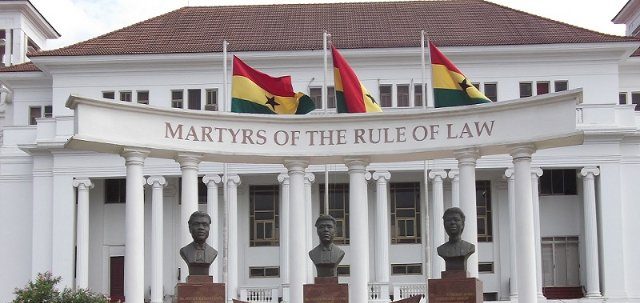
Ghana's legal community is grappling with the implications of a recent Supreme Court ruling that permits the Chief Justice to conduct criminal trials during the statutory legal vacation—a practice that has long been shelved by convention. Justice Gabriel Pwamang's decision, delivered whilst sitting as a Single Justice, upheld the Chief Justice's warrants authorising vacation sittings, but the judgment has triggered substantive critique from practitioners and scholars on the bench who argue it mishandles the practical realities of litigation practice and the constitutional protections afforded to legal professionals.
The core tension centres on two key findings in the ruling that legal observers say reveal a disconnect between the court's theoretical legal analysis and the lived mechanics of courtroom work. Critics argue that the judgment oversimplifies the position of trial lawyers and underestimates the compulsory nature of what the Chief Justice's warrants represent, despite the court's own acknowledgement of established practice.
The "Independent Service Provider" Problem
The ruling's most contentious reasoning treats private legal practitioners as independent service providers with unfettered freedom to schedule their own leave at any time during the year. On its face, this legal characterisation is sound—many private lawyers are indeed self-employed contractors, not salaried government employees entitled to statutory leave. However, critics argue this framing collapses when confronted with how court calendars actually operate.
During the ten-month legal term, trial lawyers do not control their own schedules. Courts issue hearing notices, judges fix trial dates, and the Superior Courts sit continuously across all tiers. A practitioner cannot simply pause the court's docket in March, May, or November to take personal leave. The statutory long vacation, enshrined in Order 79 Rule 4 of the Courts Instrument, exists specifically because it provides the only predictable institutional break in which courts naturally cease business. This pause allows lawyers to rest, attend professional conferences locally and internationally, and reorganise their firms without abandoning clients' cases to jeopardy.
By portraying counsel as operating in an open market where they can negotiate leave freely, the ruling arguably ignores the non-negotiable constraints of judicial schedules during term time. If a lawyer is bound by a court's calendar nine months a year, describing their leave options as "free" becomes largely theoretical.
The Acknowledged Convention and the Compulsion Question
More troublingly for critics, the ruling itself concedes a crucial fact: criminal trials in the High Court are, by settled convention and practice, not conducted during legal vacation. Yet having admitted this baseline reality, the judgment then sidesteps the logical consequence—that breaking this convention introduces an element of genuine compulsion.
When a lawyer receives a directive requiring them to proceed with a part-heard criminal trial throughout August and September, the characterisation of attendance as "voluntary" becomes difficult to sustain. A defence counsel or prosecutor faces a genuine bind: appearing destroys their statutory and conventional right to vacation rest and professional planning, whilst refusing to appear in order to honour the vacation jeopardises the client's right to representation or forces the client into self-representation during a critical phase of trial. This is not a voluntary choice in any meaningful sense.
The ruling, critics argue, frames the Chief Justice's warrants solely as a mechanism to expedite justice without fully engaging with the fact that requiring substantive trials through the recess represents a substantial departure from the very established practice the judgment itself recognised only moments earlier.
Why This Matters for Ghana
The ruling touches on fundamental constitutional protections under Article 24 of Ghana's Constitution, which guarantees satisfactory working conditions and health for all citizens. Legal practitioners, whilst independent, remain entitled to these protections. The decision also implicates Article 19(1), which guarantees the right to a fair trial within a reasonable time—a principle the ruling invoked to justify vacation sittings, but which equally protects the integrity of the trial process itself when counsel are adequately rested and professionally prepared.
For Ghana's justice system, the ruling establishes that the Chief Justice may now direct vacation trials without obtaining prior court approval. This power affects not only the Bar but the broader administration of justice. If lawyers cannot rely on a predictable vacation window to rest and prepare, and if clients may be tried during a period when counsel are stretched thin, questions arise about trial fairness and the quality of representation available.
Additionally, the decision sets precedent for how Ghana's courts balance competing constitutional values: the right to expeditious trial against the professional and constitutional rights of legal practitioners. How courts resolve this tension will shape the landscape of legal practice and judicial administration for years to come.
Source: The Ghana Report


Comments (0)
Be the first to comment.