Supreme Court allows selective case hearings during legal vacation despite equality concerns

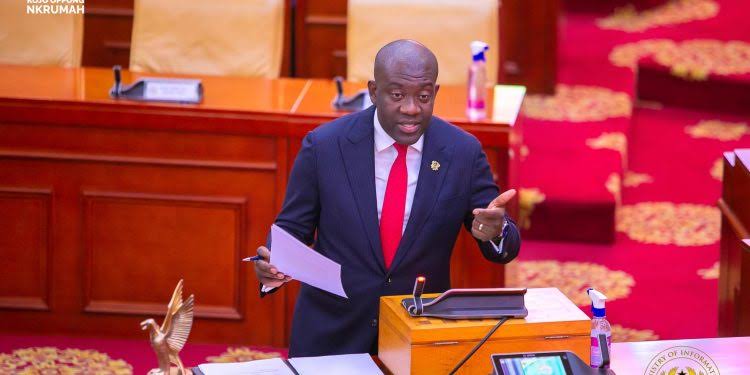
The Supreme Court has dismissed Ofoase-Ayirebi Member of Parliament Kojo Oppong Nkrumah's application to halt selected criminal trials during the ongoing legal vacation, yet the ruling has inadvertently highlighted ongoing concerns about unequal case handling within Ghana's justice system.
On Friday, 21 August 2026, Justice Gabriel Pwamang, sitting as a single judge, rejected Oppong Nkrumah's interlocutory injunction application that sought to prevent High Court judges from conducting criminal trials during the annual legal vacation period (1 August to 30 September 2026). The court allowed the affected cases to proceed under administrative warrants issued by Chief Justice Paul Baffoe-Bonnie.
What the court acknowledged
Whilst dismissing the MP's legal challenge, the Supreme Court effectively confirmed that certain criminal cases are receiving faster, priority treatment compared to others—a practice Oppong Nkrumah and his legal team argue amounts to selective justice. The court recognised the differential handling but concluded that the arrangement does not violate the 1992 Constitution.
The MP, speaking to the media after the judgment, expressed concern that the court did not provide clear reasoning for why some cases warrant expedited hearing whilst others proceed through normal channels. He announced his legal team would obtain a certified copy of the judgment to analyse the court's full reasoning before deciding their next steps.
Significantly, Oppong Nkrumah has not ruled out seeking a review of the Supreme Court's decision, signalling that this matter may return to the bench.
The constitutional question at stake
Oppong Nkrumah had challenged the constitutionality of the administrative warrants enabling judges to conduct trials during the legal vacation, arguing that selecting particular criminal cases for hearing amounts to a breach of constitutional provisions guaranteeing equality before the law and fair treatment. He sought an injunction to suspend the warrants' operation until the substantive case could be fully heard and determined.
The Supreme Court's rejection of this argument does not definitively settle whether Ghana's justice system treats all accused persons equally. Rather, the ruling establishes that administrative convenience and judicial efficiency—allowing certain trials to proceed during what is ordinarily a court recess—do not constitute unconstitutional discrimination, even if the practical effect is unequal access to justice depending on the nature or profile of one's case.
Why it matters for Ghana
This ruling touches on fundamental principles underpinning Ghana's legal system. Public confidence in the courts depends partly on the perception that all cases receive equal attention and that trials are not expedited or delayed based on hidden criteria. Whilst the court has legal authority to manage its docket efficiently, transparency about which cases receive priority hearing and why is essential to maintaining judicial legitimacy.
The acknowledgment that differential treatment exists, combined with the court's refusal to view it as unconstitutional, raises questions that civil society, legal professionals, and citizens should continue to monitor. Without clear, published criteria for determining which cases proceed during the legal vacation, there remains scope for accusations of bias or selective justice—particularly in high-profile criminal matters.
For Ghanaians navigating the court system, the practical implication is that access to swift justice may depend on factors beyond the merits of one's case. Whether Oppong Nkrumah pursues a review or whether his challenge prompts broader judicial reform remains to be seen, but the Supreme Court's candid acknowledgment of differential treatment suggests this debate is far from resolved.
Source: The Ghana Report

Comments (0)
Be the first to comment.