Ghana's Legal Vacation Debate: Can Justice Wait Until September?
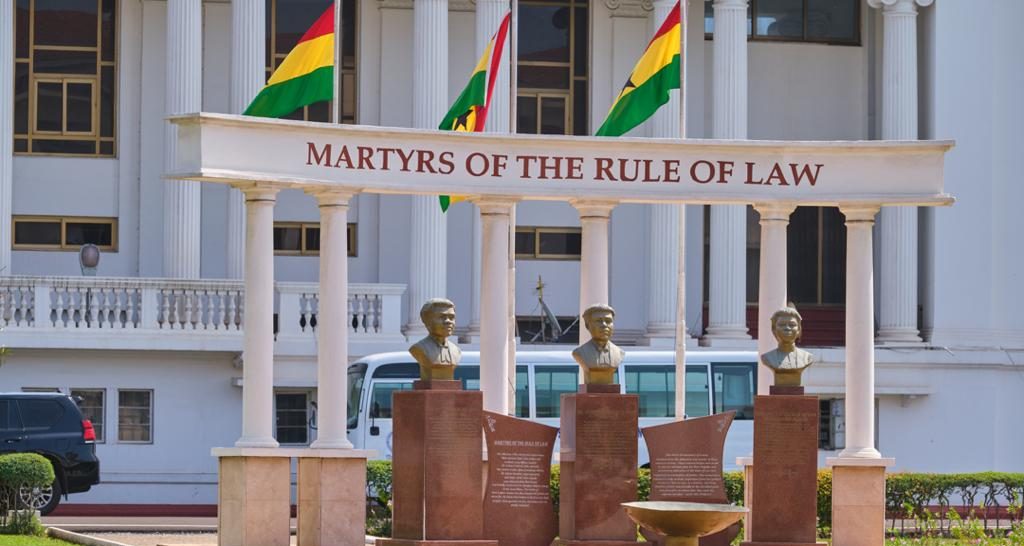
Ghana's judiciary faces an unprecedented constitutional showdown as the annual legal vacation enters August, with the Chief Justice's decision to allow certain criminal prosecutions to continue during the recess sparking fierce legal debate and a Supreme Court challenge.
For decades, the August legal vacation—traditionally running from 1 August to 30 September—has been an uncontested feature of Ghana's judicial calendar. Judges, lawyers and court staff have observed the break without significant controversy. But this year, concerns about cases involving politically sensitive figures have reignited a fundamental question: when the courts go on vacation, does justice itself go to sleep?
The Constitutional Foundation
Legal vacation in Ghana is not arbitrary. Article 157 of the 1992 Constitution empowers the Rules of Court Committee to regulate court sittings and prescribe vacation periods. Section 80(2)(g) of the Courts Act, 1993 further codifies this authority. The High Court (Civil Procedure) Rules, 2004 (C.I. 47) established the three traditional vacation windows: Christmas (23 December–6 January, amended to 24 December–6 January by C.I. 101 of 2016), Easter (Tuesday after Easter Monday to the following Saturday), and the Long Vacation (August–September).
However, legal experts argue there is a critical distinction between the legality of vacation and its scope. While the courts have clear constitutional authority to take vacations, that authority principally regulates civil proceedings, not criminal cases.
Why It Matters for Ghana
At stake is a core constitutional right. Article 19(1) of Ghana's Constitution guarantees that anyone charged with a criminal offence must receive a fair hearing within a reasonable time. This is not merely administrative convenience—it is a fundamental constitutional protection that directly affects the liberty, property and rights of accused persons.
The current dispute reflects deeper concerns about judicial independence and the appearance of selective justice. When criminal trials are postponed for administrative reasons while urgent matters can bypass vacation rules, questions naturally arise about fairness and equal treatment before the law. For accused persons—whether on bail or in custody—a month-long judicial shutdown can mean extended periods unable to travel, repeated police reporting requirements, or continued detention awaiting trial.
The broader implication concerns public confidence in the judiciary. If citizens perceive that the timing of legal vacations can affect the pace or outcome of politically sensitive cases, it undermines trust in the fairness of the system. Ghana's commitment to the rule of law depends on transparent, predictable application of judicial procedures regardless of who is on trial.
Criminal Proceedings Require Different Rules
The legal argument hinges on a procedural reality: C.I. 47, which governs legal vacation, regulates civil proceedings, not criminal cases. Criminal procedure falls under the Criminal and Other Offences (Procedure) Act, 1960 (Act 30), a separate statutory framework. Legal experts contend that applying civil vacation rules blanket-style to criminal trials lacks proper legal justification.
This distinction is crucial. An accused person charged with a serious offence should not become trapped by the calendar. If someone is in custody awaiting trial, the vacation becomes a form of involuntary delay. If released on bail, the restrictions on movement and liberty continue. Neither scenario aligns with the constitutional promise of timely justice.
The Supreme Court cases now pending will likely clarify whether the Chief Justice's directive to continue prosecutions during vacation is constitutionally sound, and whether criminal proceedings must operate under different vacation rules than civil cases. The outcome will reshape how Ghana balances administrative efficiency against the constitutional right to speedy trial.
Source: The Ghana Report


Comments (0)
Be the first to comment.