Paul Afoko declares bid for NPP chairmanship, pledges party unity

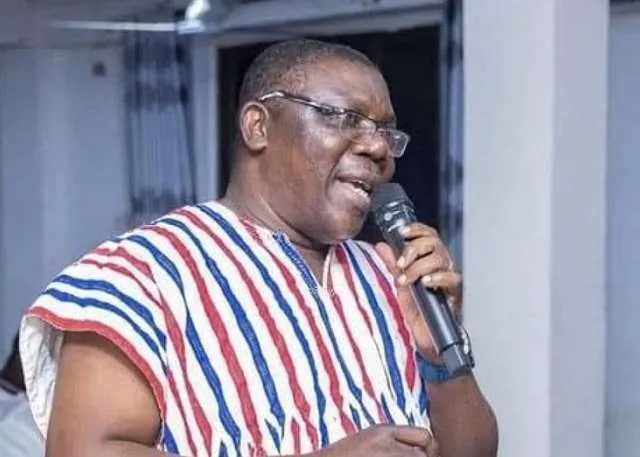
Paul Afoko, a prominent figure in Ghana's opposition New Patriotic Party (NPP), has officially entered the race for the party chairmanship after submitting his nomination form. The move comes amid ongoing discussions about the party's direction and leadership structure ahead of crucial electoral cycles.
In a statement following the filing of his candidacy, Afoko made clear that his ambition centres on strengthening the party rather than deepening divisions. "I am not contesting for Chairman to lead a faction of the NPP, I want to be Chairman of a united NPP," he declared, signalling his intention to prioritise party cohesion over factional interests.
Afoko's track record in NPP leadership
Afoko previously served as NPP chairman, bringing experience to the current contest. His re-entry into the chairmanship race reflects confidence in his ability to navigate the party's internal dynamics and present a unifying vision that could appeal to different camps within the NPP.
His emphasis on unity appears designed to address concerns that have periodically surfaced within the party regarding internal cohesion. By explicitly stating his commitment to a unified NPP rather than a fractionalised one, Afoko is positioning himself as a consensus builder who can hold the party together during a period when unity is essential for electoral success.
Why it matters for Ghana
The NPP chairmanship race carries significant implications for Ghana's political landscape. As the leading opposition party, the NPP's internal stability directly affects the country's democratic health and the credibility of the opposition as a governing alternative. A fractious opposition weakens democratic checks and balances, whilst a cohesive one strengthens the nation's political system.
The party chairmanship election will likely determine how effectively the NPP can mobilise support, maintain party discipline, and present a united front to voters. Leadership choices made now will influence the party's strategy, messaging, and ability to attract both traditional supporters and swing voters.
Moreover, the tone of party elections—whether they are characterised by unity-building rhetoric or divisive positioning—sets the tenor for broader political discourse in Ghana. Candidates like Afoko who emphasise cohesion over factionalism contribute to a healthier democratic environment.
The road ahead
With multiple candidates likely to contest for the chairmanship, the party will face the challenge of ensuring that the election process strengthens rather than weakens internal bonds. The voting patterns and final outcome will provide insights into which vision—unity-focused or factionally-aligned—resonates most deeply with NPP delegates and members.
Afoko's candidacy and his explicit focus on party unity inject an important dimension into the chairmanship race, reminding party members and observers that the role demands not just administrative competence but also the diplomatic skill to hold together a diverse coalition of interests within a large political organisation.
Source: 3News

Comments (0)
Be the first to comment.