From grassroots activist to party power: Kojo Bamba's ascent in NPP leadership

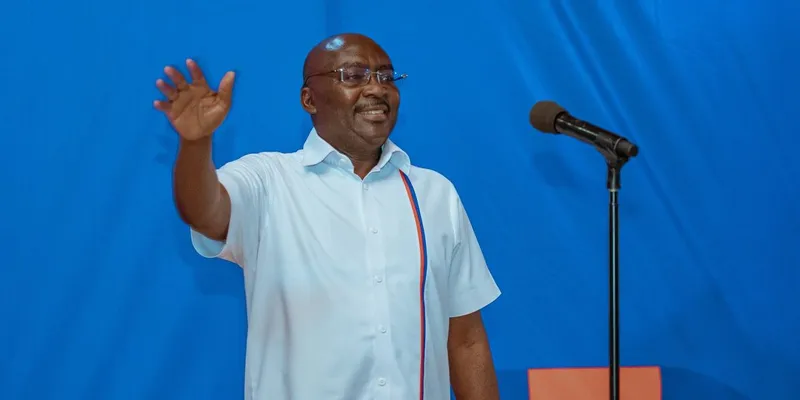
Kwadwo Fosu Boadu, popularly known as Kojo Bamba, has ascended to one of Ghana's most influential political positions as the newly elected First Vice Chairman of the New Patriotic Party (NPP). Securing 3,116 votes at the party's National Delegates Conference in Kumasi on 3 October, Boadu emerged top among 13 candidates competing for three Vice Chairmanship roles, signalling strong backing from delegates. Yet in his acceptance remarks, the 1st Vice Chair struck a notably humble tone, framing his elevation not as personal triumph but as a mandate to serve Ghana's youth and advance party renewal ahead of 2028.
The victory marks a significant milestone for Boadu, whose political ascent reflects a deliberate journey from community activism to formal party machinery. Now positioned within the NPP's senior leadership alongside newly elected National Chairman John Boadu, he joins a team tasked with rebuilding the party's electoral prospects after its December 2024 general election loss. For Ghana's youth—a demographic that has featured prominently in recent election campaigns—Boadu's appointment carries symbolic weight, though his track record remains mixed and contested.
The journey from Delta Force to national office
Boadu's political biography reveals an unconventional path to establishment politics. Originally working as an auto mechanic, he gained public prominence as leader of Delta Force, a pro-NPP vigilante group that became notorious in Ashanti Region following the party's 2016 election victory. During this period, he was involved in contentious activities, including opposition to state security appointments, actions that triggered significant controversy and drew criticism from civil society organisations concerned about political violence.
The transition from vigilantism to formal party structures began in 2018 when Boadu was appointed Deputy National Director of Operations within the NPP's youth wing. This move effectively rebranded him as a legitimate youth mobiliser rather than an extra-institutional activist. Since then, he has focused on grassroots organising, consistently emphasising the welfare of constituency executives—whom he describes as the party's frontline workers—and the need to strengthen the NPP's organisational base from the ground up.
Why it matters for Ghana's political future
Boadu's election reflects deeper dynamics within Ghana's political landscape. The NPP's decision to elevate someone with his profile signals the party's focus on youth engagement and grassroots mobilisation as it rebuilds after electoral defeat. For ordinary Ghanaians, particularly young people facing economic challenges and limited job opportunities, the question is whether such symbolic gestures will translate into tangible policy action or remain largely performative.
In his post-election message, Boadu stressed that the NPP's return to power in 2028 is essential for unlocking opportunities for Ghana's next generation. This framing ties party electoral success directly to youth welfare—a narrative that resonates with a demographic that has grown increasingly disillusioned with both major parties. However, critics and observers will likely scrutinise whether his leadership translates grassroots energy into concrete programmes addressing unemployment, skills training, and economic inclusion.
The elevation of figures with contested histories also raises questions about accountability within Ghana's political parties. Boadu's past involvement with Delta Force has not been subject to formal investigation or public reckoning, a pattern that extends across Ghana's political establishment. His new position will test whether the NPP's leadership structures prioritise institutional reform and ethical standards alongside electoral competitiveness.
What's next for NPP youth mobilisation
As 1st Vice Chairman, Boadu will play a key role in shaping the NPP's campaign strategy and internal organisation through 2028. His emphasis on constituency-level mobilisation and youth representation suggests the party will invest heavily in rebuilding its grassroots apparatus. Whether this translates into genuine power-sharing with younger members or remains a hierarchical structure led by established elites remains to be seen.
For Ghanaians broadly, Boadu's trajectory exemplifies both the opportunities and risks within political systems where individuals can transition from extra-institutional activism to formal leadership. The NPP's confidence in promoting him reflects belief in his mobilising capacity; the challenge will be whether he can deliver on promises to expand genuine opportunities for Ghana's youth, or whether his tenure becomes another cycle of political rhetoric unmatched by substantive change.
Source: MyJoyOnline



Comments (0)
Be the first to comment.