
Over 4.6 Million Ghanaian Homes Spend Nearly All Their Money on Food, GSS Report Warns
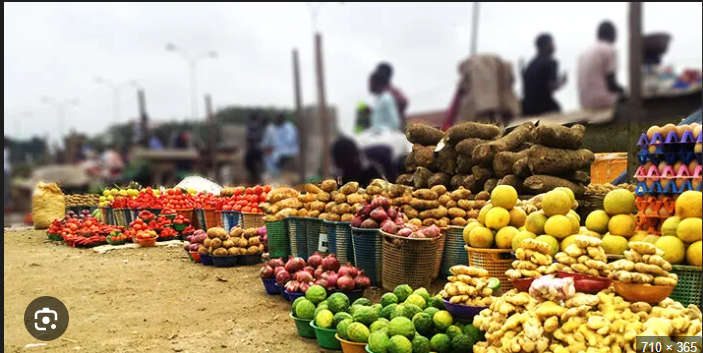

A striking new report from the Ghana Statistical Service (GSS) has laid bare the depth of financial hardship facing millions of Ghanaian families, finding that more than half of all households in the country are spending over three-quarters of their entire budget simply on putting food on the table. The figures, drawn from a nationwide survey conducted between July and September 2026, paint a sobering picture of a population increasingly squeezed by the rising cost of living.
The Numbers Behind the Crisis
According to the GSS's Third Quarter 2026 Mobile Vulnerability Analysis and Mapping (mVAM) report, exactly 50.5% of Ghanaian households — roughly 4.69 million homes — spent more than 75% of their total expenditure on food during the survey period. At the other end of the scale, only 8% of households managed to spend less than half of their income on food, underscoring just how little financial breathing room most families have.
The survey, which captured responses from 7,752 households across all 16 regions of Ghana, went beyond food spending to examine consumption quality, market access, livelihoods and coping strategies. While 93.5% of households recorded what researchers classify as acceptable food consumption, the GSS was careful to note that this does not translate to financial security or freedom from food-related stress. An estimated 2.69 million Ghanaians still lived in households experiencing vulnerable food consumption during the quarter.
Approximately 606,000 homes — around 6.6% of households — recorded poor or borderline food consumption outright. More alarmingly, 11.3% of all households were forced into crisis or emergency coping measures, including selling productive assets, cutting back on medical care, or withdrawing children from school simply to cover immediate food needs.
Why It Matters for Ghana
The report arrives at a time when Ghana is still navigating the economic aftershocks of recent years, including the impact of currency depreciation and elevated inflation that pushed up food prices sharply. When households are directing the overwhelming majority of their income toward food alone, spending on health, education and housing — the very pillars of long-term development — is effectively crowded out. This creates a cycle where poverty becomes increasingly difficult to escape.
The regional breakdown is particularly telling. The North East Region recorded the highest rate of vulnerable food consumption at 42.2%, followed by Upper East at 30.1%, Upper West at 29.5% and the Northern Region at 27.1%. Rural households were nearly three times more likely to face vulnerable food consumption than their urban counterparts — 10.7% compared to 3.8%. Agriculture-dependent households, meanwhile, recorded a vulnerable food consumption rate of 15.9%, more than double the national average, raising uncomfortable questions about whether farming families are able to benefit adequately from the food they produce.
Access to markets also proved to be a significant barrier. Around 2.1 million homes — 22.6% of all households — reported difficulties reaching a market in the month before the survey. Among those with market access problems, the rate of vulnerable food consumption was 13.5%, compared to just 4.4% for households with reliable access, highlighting infrastructure and logistics as critical factors in food security.
What Must Change
Despite the scale of the challenge, only 0.9% of households — approximately 83,000 homes — reported receiving any form of food, cash or other assistance during the same period, pointing to a significant gap between need and the reach of existing social protection programmes.
The GSS has called on policymakers to strengthen early-warning systems, improve the targeting of social protection schemes and invest in resilient agriculture, food storage, transportation and value chains. The report underlines a point that policymakers often overlook: Ghana's food security problem is not purely about agricultural output. Even when food is available, millions of families lack the financial means or the market access to consistently afford it.
- Social protection gaps: With fewer than 1% of households receiving assistance, the safety net for the most vulnerable remains critically thin and must be expanded urgently if the country is to prevent food insecurity from deepening into a wider humanitarian concern.
Source: The Ghana Report





Comments (0)
Be the first to comment.