
NDC MP Claims Mahama and Ato Forson Have Transformed Ghana's Economy in Just Two Years
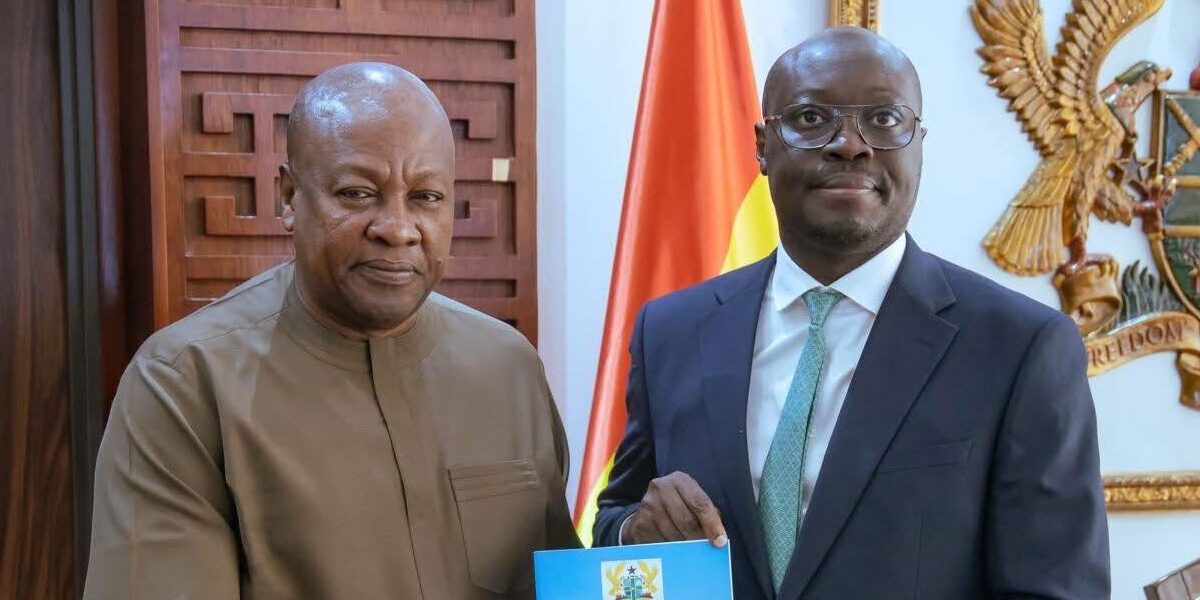

A senior National Democratic Congress parliamentarian has declared that President John Dramani Mahama and Finance Minister Dr Cassiel Ato Forson have successfully turned Ghana's battered economy around within just two years of assuming office — a bold claim made on the floor of Parliament during debates on the 2027 Budget Statement.
Deputy Majority Leader and Cape Coast South MP George Kweku Ricketts-Hagan made the assertion on Wednesday, crediting what he described as a deliberate pivot towards fiscal discipline and expenditure-based consolidation as the driving forces behind the country's economic recovery.
What was said on the floor of Parliament
Speaking during the budget debate, Ricketts-Hagan argued that key macroeconomic indicators — including inflation and interest rates — had improved meaningfully under the current administration. He maintained that the government had made substantial progress in stabilising the economy despite inheriting what he called extremely difficult fiscal conditions from the previous New Patriotic Party administration.
"His Excellency John Dramani Mahama and Dr Ato Forson have turned Ghana's economy around in two years. We still have about seven years to spare from what they told us," he told Parliament.
The MP also pushed back against debt figures cited by former Finance Minister Ken Ofori-Atta's side of the aisle, insisting that Ghana's debt-to-GDP ratio has fallen to 47.5 per cent. He acknowledged that Ghana's total debt stock currently stands at approximately $59.3 billion, up from $53 billion in 2024 — but argued that when the prevailing exchange rate is correctly applied, the ratio relative to GDP has in fact declined from nearly 70 per cent to 47.5 per cent.
Ricketts-Hagan also defended the Bank of Ghana's financial position, dismissing criticism over losses tied to the central bank's financing of gold purchases. He argued that any assessment must weigh the broader profitability and strategic value of the Gold Board's operations against the Bank's standalone figures.
Expenditure discipline vs revenue-chasing: The key distinction
Central to the MP's argument was a distinction between two approaches to fiscal consolidation. He accused the previous NPP administration of pursuing a revenue-based consolidation — essentially borrowing heavily to finance government spending while counting on future tax receipts to close the gap. He said the NDC government has instead adopted an expenditure-based consolidation, matching spending to actual available revenue and cutting waste.
"Instead of doing an expenditure-based consolidation, they were doing a revenue-based. They were more interested in borrowing money to fund expenditure," he said, adding that the current government's approach was to direct limited resources only towards priority sectors of the economy.
"The discipline that we have instilled in this country, the expenditure that we are making sure that we have the revenue to fund, is what has brought us here," Ricketts-Hagan stated.
Why it matters for Ghana
Ghana's economy has been under significant strain since the country entered a debt crisis that culminated in a suspension of most external debt payments in late 2022 and a subsequent International Monetary Fund bailout programme. The country underwent a painful domestic debt exchange programme that affected bondholders, pension funds and financial institutions, while the cedi lost substantial value and inflation surged to record highs.
Against that backdrop, claims of a turnaround carry considerable political and economic weight. If macroeconomic indicators have genuinely improved — with inflation trending downward and the cedi showing relative stability — it would represent a meaningful shift in fortunes for ordinary Ghanaians who bore the brunt of the crisis through higher prices and reduced purchasing power.
However, opposition figures are likely to contest Ricketts-Hagan's characterisation. The rising nominal debt stock — from $53 billion to $59.3 billion — will remain a point of contention, even if the government argues the GDP-relative ratio has improved. Ghana's ongoing IMF programme also means external oversight and conditionalities remain firmly in place, suggesting full economic recovery is still a work in progress.
- Ricketts-Hagan says Ghana's debt-to-GDP ratio has dropped to 47.5 per cent.
- Ghana's total debt stock currently stands at approximately $59.3 billion.
- Government says it has replaced borrowing-led spending with revenue-matched expenditure.
Source: MyJoyOnline


Comments (0)
Be the first to comment.