
2027 Budget Gets Two Things Right About Ghana's Boom-and-Bust Problem — But Misses the One That Could Trigger the Next Crisis


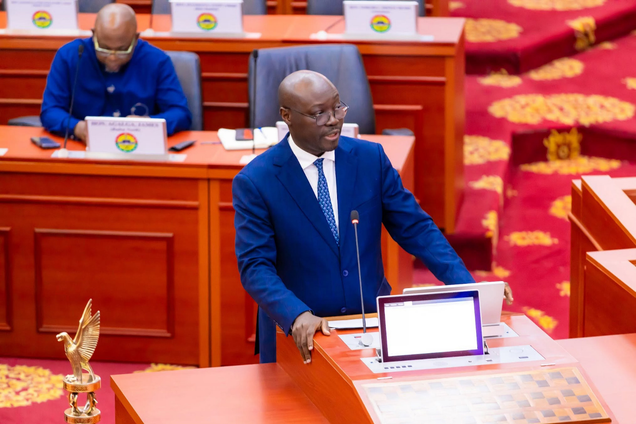
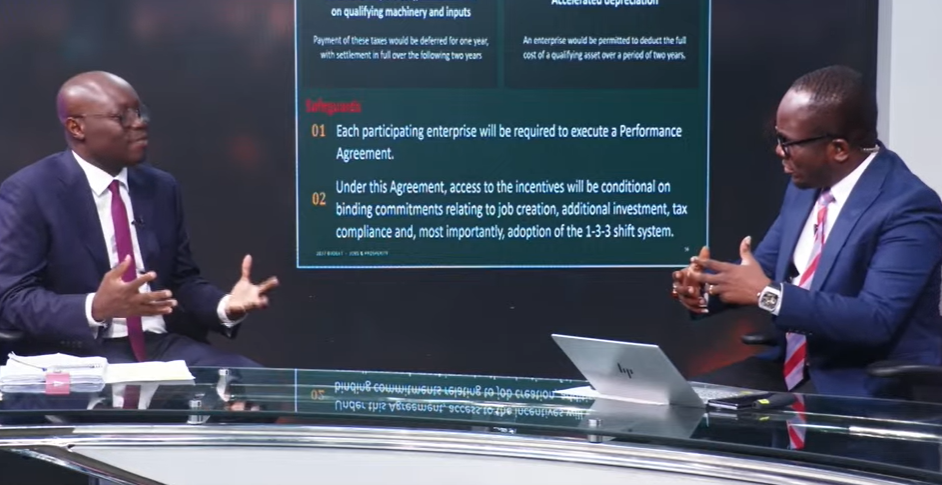
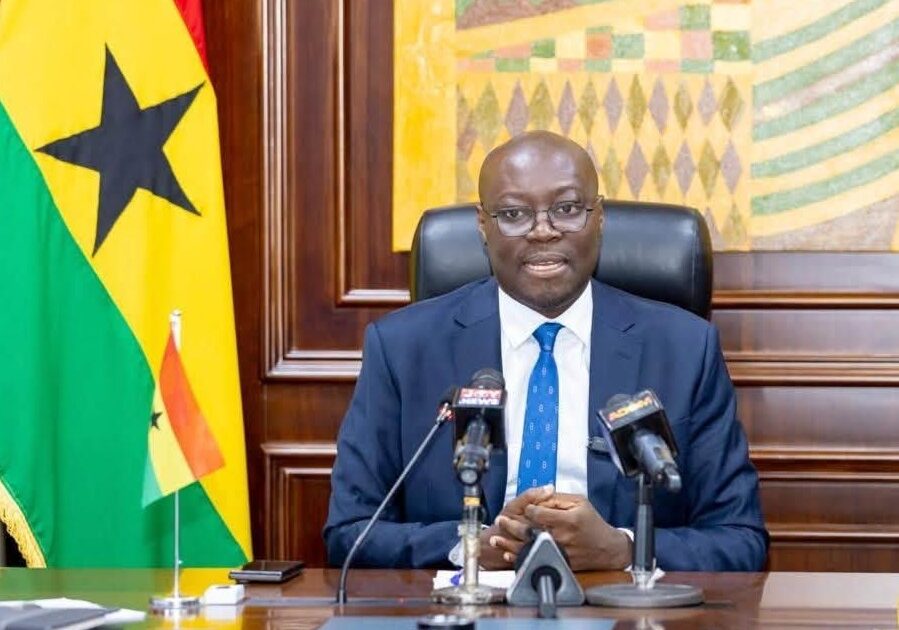
Finance Minister Dr Cassiel Ato Forson stood before Parliament on the evening of 12 November 2026 and made a promise many Ghanaians have longed to hear: Ghana's destructive boom-and-bust economic cycles must end. The 2027 Budget Statement, built around what the government calls the New Economy programme, is more candid about the roots of Ghana's instability than most budgets in recent memory. But a careful reading of the full document reveals a significant blind spot — one that, left unaddressed, could set the stage for the very crisis the Minister is trying to prevent.
What the budget gets right
The 2027 budget deserves credit for its honesty. It acknowledges that the cedi has historically come under pressure "when prices dropped or fiscal discipline weakened" and admits that past governments allowed "temporary booms to finance permanent commitments" — a habit that left public finances dangerously exposed whenever commodity revenues dipped. The budget also concedes that previous administrations repaired public finances after crises but failed to change the underlying structure of the economy, and so the cycle simply began again.
Two causes of instability are therefore clearly identified: Ghana's heavy dependence on raw commodity exports, and recurring fiscal indiscipline. The budget pledges that fiscal discipline will hold even through the election cycle — a commitment that, if kept, would mark a genuine departure from past practice. These are real and important diagnoses, and the New Economy programme's eight pillars — covering agriculture, manufacturing, energy, and value addition — represent a serious attempt to address them.
The missing piece: Ghana does not make its own machines
Here is the problem the budget does not confront. The entire New Economy programme is built on importing capital equipment. The budget identifies food imports — rice, sugar, poultry, fish, vegetables, medicines — as the main drain on the cedi and promises that growing and processing more of these goods locally will ease pressure on the currency. That logic is sound as far as it goes.
But the factories, mills, refineries and processing plants that will produce all these goods are themselves imports. Cocoa grinding mills, gold refineries, rice mills, alumina plants, garment production lines, pharmaceutical plants — Ghana manufactures almost none of these, and very few of the spare parts needed to keep them running. Every piece of equipment will be purchased in dollars. Every breakdown will require dollar-denominated spare parts sourced from abroad. The budget's own numbers make the priorities plain:
- The full New Economy programme is allocated GH¢30 billion in 2027.
- Procurement of imported agricultural machinery alone is allocated GH¢800 million.
- Completion of the Foundry and Machine Tooling Centre — the one facility dedicated to making machines locally — receives just GH¢51 million, roughly 0.17 percent of the New Economy outlay.
- GRATIS Foundation, designed to spread engineering capability across Ghana's regions, receives approximately GH¢3 million for the entire year, with no capital expenditure.
The Foundry and Machine Tooling Centre has been awaiting completion for years. In 2027 it will receive one-sixteenth of what is being spent on imported farm machinery. Nothing in the New Economy programme is set aside for machine tools, foundries, or engineering manufacturing.
Why it matters for Ghana
Consider the scenario where the New Economy succeeds exactly as planned. By the early 2030s, Ghana is processing its own cocoa, refining its own gold, milling its own rice. Export earnings rise, food import costs fall, and the cedi strengthens. This would genuinely be progress.
But every one of those processing facilities will eventually need to be maintained, upgraded, or replaced. The machinery for the next wave of investment — and the spare parts for the current one — will still need to be bought with dollars. If commodity prices fall at that moment, or if global borrowing costs rise, Ghana will once again face a currency squeeze driven in large part by capital goods import demand. The structural vulnerability simply moves one level up the value chain rather than being eliminated.
The long-term answer requires Ghana to begin developing the capacity to design and manufacture at least some of its own industrial equipment — a process that takes decades and requires consistent, sustained investment in engineering education, foundry infrastructure, and technical institutions such as GRATIS. The 2027 budget allocates almost nothing to this. That gap is not fatal to the New Economy programme in the short term, but it is the reason the programme, even if it succeeds, may not be the final cure for boom-and-bust that Ghanaians are hoping for.
The Minister has made the right diagnosis. Ghana must move beyond raw commodities and fiscal recklessness. But a complete cure requires confronting a third cause: the fact that Ghana's industrialisation, as currently planned, will itself generate a large and recurring import bill that leaves the economy exposed the moment global conditions turn. Naming the problem clearly — as this budget does in other areas — is the first step toward solving it.
Source: MyJoyOnline

Comments (0)
Be the first to comment.