
Jinapor casts doubt on Ghana's BRICS partnership benefits, warns of IMF constraints
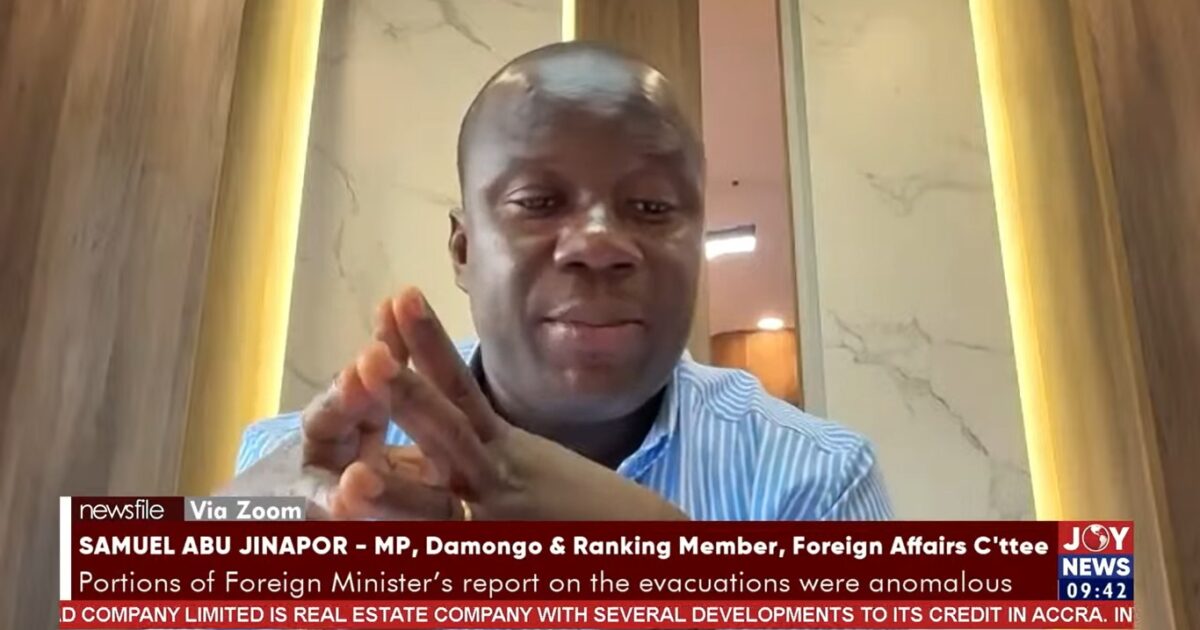

Samuel Abu Jinapor, Ranking Member of Parliament's Foreign Affairs Committee, has raised serious concerns about the realistic value of Ghana's proposed partnership with BRICS, arguing that key economic benefits promoted by the government may be overstated.
Speaking on JoyNews' Newsfile programme on Saturday, the Damongo MP contended that Ghana's existing International Monetary Fund (IMF) obligations would significantly curtail the financial advantages the government has suggested the BRICS relationship would unlock. His critique centres on a fundamental constraint: accessing funds from BRICS's New Development Bank requires prior IMF approval, a requirement that undermines claims about reducing Ghana's reliance on Western financial institutions.
The core argument: IMF approval remains a gatekeeper
Jinapor's position reflects a broader parliamentary concern about how the BRICS partnership is being framed to the public. The Foreign Affairs Ministry, led by Samuel Okudzeto Ablakwa, has emphasised that Ghana is pursuing partner status rather than full membership—a measured approach Jinapor acknowledged as sensible. However, he argued this distinction does little to address the structural reality constraining Ghana's financial autonomy.
"The argument that this is going to help us move away from the dollar, that this is going to help us broaden our opportunities and to stabilise our currency, I am afraid, is a bit simplistic because you need IMF approval," Jinapor stated, highlighting what he views as an uncomfortable truth in the government's pitch.
The comment reflects ongoing tension within Ghana's political establishment over how to balance new international partnerships with existing commitments to the IMF. While many developing nations seek alternatives to traditional Western financing, Ghana's current IMF programme imposes conditions that create practical limitations on how freely the country can pursue parallel financial arrangements.
Why this matters for Ghana
Ghana has long struggled with currency stability and external debt, making international financial partnerships a critical policy issue. The BRICS initiative, which includes Brazil, Russia, India, China, and South Africa, is often presented as an alternative architecture for developing economies. However, Jinapor's intervention underscores a challenge many African nations face: the difficulty of truly diversifying financial relationships when IMF programme conditions remain in place.
For ordinary Ghanaians, this debate translates into practical concerns about whether new partnerships will actually improve economic conditions, reduce inflation, or strengthen the cedi. Jinapor's scepticism suggests that without addressing underlying structural constraints, BRICS engagement, however well-intentioned, may deliver less transformative change than the government's messaging implies.
The opposition politician's comments also reflect a broader parliamentary responsibility to scrutinise government claims with evidence-based analysis rather than optimistic rhetoric.
A bipartisan acknowledgement with partisan differences
Notably, Jinapor did not reject the BRICS partnership outright. He acknowledged that initial exploratory steps were taken under the previous Akufo-Addo administration, and he welcomed the current government's continuation of that trajectory. This suggests cross-party acceptance that deepening relationships with BRICS-aligned nations is strategically sound.
The disagreement is not about whether Ghana should engage with BRICS, but about the realism of expectations. Jinapor called for more honest public communication about what the partnership can and cannot achieve given Ghana's current fiscal and external constraints. He urged policymakers to assess anticipated benefits with greater rigour rather than making claims that may prove disappointing once implementation begins.
As Ghana navigates an increasingly multipolar international system, this parliamentary tension highlights an important governance question: can the country pursue meaningful new partnerships whilst remaining credible to existing international creditors, or does it require a more fundamental rethinking of its economic strategy?
Source: MyJoyOnline



Comments (0)
Be the first to comment.