BRICS membership could expand Ghana's diplomatic reach beyond Western allies, says analyst
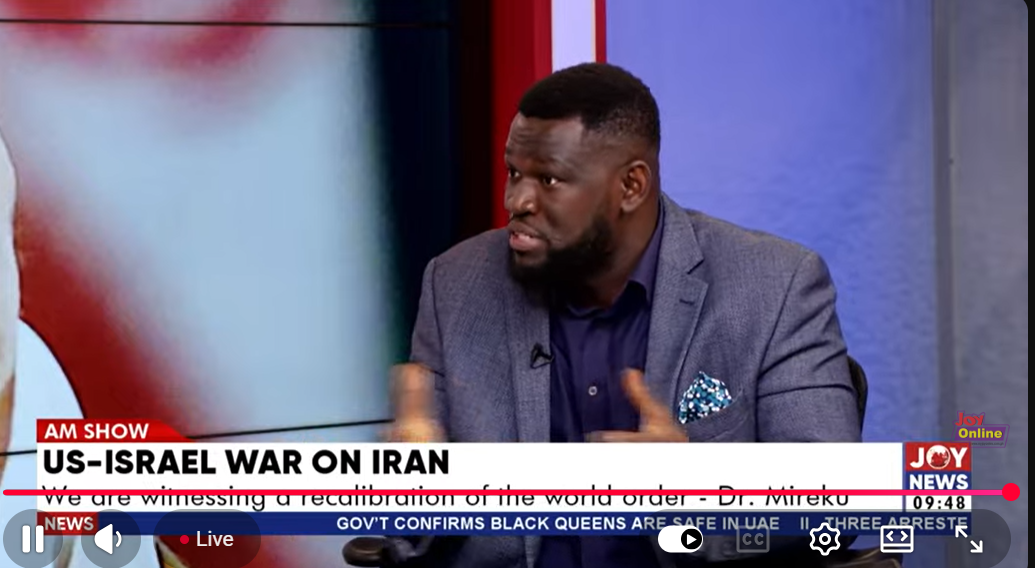
Ghana's potential membership of BRICS could significantly broaden the country's diplomatic and economic options in an increasingly multipolar world, according to International Relations Analyst Dr Nana Yaw Mireku. The assessment comes as Foreign Affairs Minister Samuel Okudzeto Ablakwa has signalled the government's intention to pursue BRICS membership, marking a strategic shift in Ghana's approach to international partnerships.
Dr Mireku emphasised that BRICS membership would provide Ghana with alternatives to its traditionally Western-focused foreign policy framework. Rather than limiting engagement to established Western partners, membership would enable Ghana to negotiate and interact across a wider spectrum of global relationships, particularly with emerging economies in the Global South.
"One card that you are likely to score from being a member of BRICS is options," Dr Mireku stated on Citi FM on Wednesday, October 7, 2026. "What it means is that in these changing geopolitical dynamics, if you are a member of BRICS, it gives you options to interact, to negotiate globally beyond looking at a Western corridor or the Western window."
Why it matters for Ghana
Ghana's potential BRICS membership reflects a broader recalibration of African nations' foreign policy strategies in response to shifting global power dynamics. The bloc comprises major emerging economies including China, India, Brazil and South Africa—all countries with significant economic clout and influence in their respective regions. For Ghana, membership could facilitate new trade partnerships, investment opportunities and development cooperation that have historically been concentrated through Western institutions.
The move also aligns with Ghana's stated commitment to deepening relationships within the Global South and strengthening intra-African cooperation. As BRICS increasingly positions itself as a counterweight to Western-dominated international institutions, African countries like Ghana see potential benefits in diversifying their international engagement.
Balancing opportunity with realistic expectations
Dr Mireku's analysis highlights both the potential gains and limitations of BRICS membership. While the grouping offers access to major economies and alternative development pathways, membership does not automatically translate into immediate market access or financial benefits. Ghana would need to actively leverage relationships and pursue strategic partnerships within the bloc to realise tangible economic gains.
The analyst stressed that Ghana's foreign policy should remain anchored in national interest rather than uncritical alignment with any single geopolitical bloc. "In the pursuit of our national interest, we do not have to be tied to a particular geopolitical block," he noted. This perspective suggests that Ghana's BRICS application should be understood as part of a pragmatic strategy to maximise policy flexibility rather than as ideological repositioning.
The broader context
Ghana's interest in BRICS membership reflects wider African engagement with the bloc. Several African nations have sought membership in recent years, viewing BRICS as a platform for advancing development priorities and securing alternative sources of financing and partnership outside traditional Western frameworks. However, successful integration into BRICS requires Ghana to identify concrete areas of mutual interest and comparative advantage with existing members.
The government's diversification strategy also responds to evolving economic realities, where emerging markets increasingly shape global trade patterns and investment flows. By joining BRICS, Ghana could position itself more favourably within these emerging networks whilst maintaining its existing partnerships and commitments to international multilateral institutions.
Source: MyJoyOnline


Comments (0)
Be the first to comment.