IFC and LMI Holdings inject $39.5m to power Ghana's industrial zones with 100MW solar project
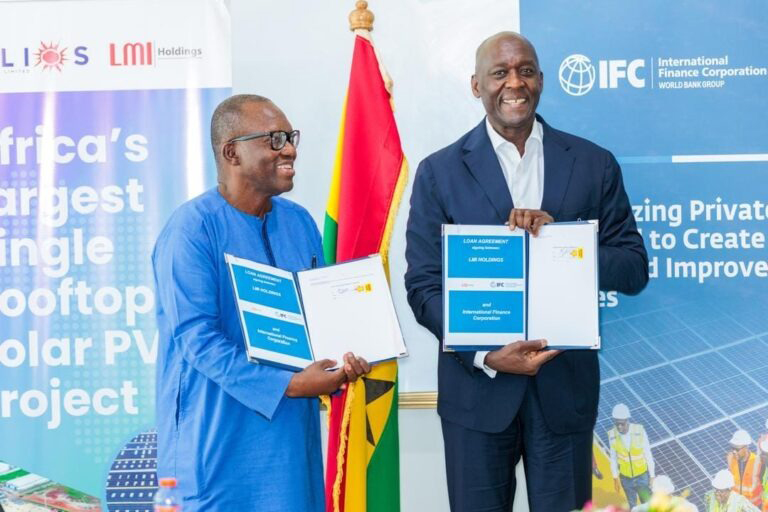
Ghana's industrial sector is set for a major renewable energy upgrade as the International Finance Corporation (IFC) and LMI Holdings have announced a substantial expansion of their partnership, committing $39.5 million to accelerate solar power infrastructure across the country's key manufacturing hubs.
The initiative, known as the Solar for Industries (SFI) project, represents the second tranche of funding from a broader $100 million facility aimed at transforming how businesses in the Tema and Dawa Industrial Zones access electricity. More than 100 companies operating in manufacturing, agro-processing, and logistics sectors will be able to tap into this renewable energy infrastructure, addressing a persistent challenge for industrial operators seeking reliable and cost-effective power.
The capital injection will support the completion of the initial 100-megawatt phase of what is ultimately planned as a 200-megawatt solar photovoltaic installation located in the Dawa Industrial Zone. The first tranche of $21 million was committed by IFC in the 2024 financial year and disbursed in 2025, with this second phase now accelerating deployment.
Economic and employment gains
Beyond renewable energy generation, the project carries significant economic multiplier effects for Ghana. Construction activities are projected to create approximately 250 direct jobs and 500 indirect positions, whilst the completed facility will maintain 19 permanent operational roles post-construction. For industrial zones competing to attract manufacturing investment, reliable power at competitive rates remains a decisive factor.
The solar facility will enable participating businesses to lower operational costs, reduce their carbon footprint across manufacturing value chains, and improve competitiveness. Industrial operators have long cited energy costs and supply reliability as constraints on expansion, making this investment strategically important for Ghana's ambitions to deepen manufacturing and increase local value addition in sectors ranging from food processing to textiles.
The financing structure itself demonstrates how multilateral development finance can mobilise private capital. The $39.5 million package combines IFC's own capital, support from the International Development Association's Private Sector Window, and directly mobilised private investment, effectively expanding the total resources available whilst improving affordability for end-users.
Why this matters for Ghana
This partnership directly supports Ghana's National Energy Transition Framework, which seeks to expand renewable energy adoption whilst maintaining energy security and supporting economic development. Industrial zones account for substantial portions of national electricity demand, so transitioning them to solar reduces pressure on the national grid and aligns with Ghana's climate commitments.
The investment also builds on earlier successes. A previous IFC-LMI Holdings collaboration delivered a 16.82-megawatt rooftop solar facility at the Tema Industrial Zone, currently Africa's largest operating installation of its kind, alongside an 11,000-cubic-metre-per-day water treatment plant at Dawa. These projects demonstrate the partnership's systematic approach to bundled infrastructure development—combining electricity, water, logistics, and digital services across both zones.
For Ghana's broader economic strategy, reliable renewable energy in industrial zones directly improves the investment climate, helping the country compete with regional manufacturing hubs for foreign direct investment and supporting domestic entrepreneurs' expansion plans. As global supply chains increasingly value sustainable production credentials, Ghanaian manufacturers powered by renewable energy gain marketing advantage in international markets.
Next phase expansion
With the 100-megawatt phase now funded, attention will turn to completing the planned 200-megawatt facility, suggesting further investment rounds may follow. The scale of ambition—expanding from Africa's largest rooftop installation to utility-scale solar serving industrial zones—reflects growing confidence in Ghana's renewable energy sector and the bankability of well-structured industrial infrastructure partnerships.
Source: The Ghana Report


Comments (0)
Be the first to comment.