World Bank's IFC Backs $39.5m Solar Push to Power Ghana's Industrial Zones
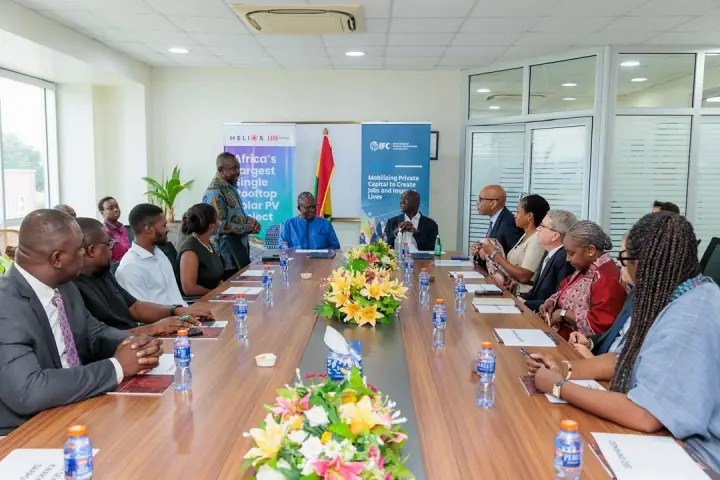
The International Finance Corporation, a World Bank Group member, is injecting $39.5 million into Ghana's industrial energy infrastructure through an expanded partnership with LMI Holdings. The new financing will complete the first phase of a 100 MW solar photovoltaic project at the Dawa Industrial Zone, with plans to expand to 200 MW eventually. The move represents the second tranche of a $100 million facility, following an initial $21 million commitment in the 2024 financial year.
The Solar for Industries project will supply renewable power to over 100 businesses operating across the Tema and Dawa Industrial Zones, spanning manufacturing, agro-processing, logistics and other sectors. Construction and installation phases are expected to create approximately 250 direct jobs, with another estimated 500 indirect positions generated through supply chains and related services. Once operational, the facility will maintain 19 permanent roles.
Strengthening Ghana's Manufacturing Sector
Reliable and affordable electricity remains critical to Ghana's ambitions to deepen manufacturing activity and boost local value addition. Industrial operators in both zones have long cited energy costs and supply inconsistency as significant challenges to scaling production and attracting investment. The solar facility addresses this directly by offering businesses a stable, cost-effective renewable power source that reduces their operational expenses and carbon footprint simultaneously.
By decarbonising manufacturing value chains, participating businesses gain competitive advantages in export markets increasingly focused on sustainable sourcing. Companies can also operate with greater confidence in their expansion plans when energy supply is guaranteed at predictable rates. This security encourages reinvestment and attracts new industrial operators to the zones.
LMI Holdings' integrated infrastructure—combining electricity generation, water supply, logistics facilities and digital connectivity—now positions the Tema and Dawa zones as comprehensive industrial hubs. This ecosystem approach removes multiple barriers to business growth simultaneously, making the zones more attractive to both domestic and foreign investors.
Why It Matters for Ghana
This investment directly supports Ghana's National Energy Transition Framework, which seeks to increase renewable energy deployment whilst maintaining energy security and supporting socio-economic development. The solar project bridges a critical gap: it addresses industrial energy demand without straining the national grid or requiring expensive diesel-powered alternatives that many businesses currently rely upon.
The financing structure is also significant for Ghana's development trajectory. By combining IFC's own capital, funds from the International Development Association's Private Sector Window, and privately mobilised capital, the partnership demonstrates how blended finance can make large infrastructure projects more affordable and reduce the burden on government resources. This model is increasingly important as Ghana pursues ambitious development goals with constrained public finances.
The project builds on earlier success. A 16.82 MW rooftop solar facility already operating at the Tema Industrial Zone is the largest installation of its kind across the African continent, validating both the technology and LMI Holdings' execution capability. An 11,000-cubic-metre-per-day water treatment plant at Dawa adds another essential service to the zones' infrastructure suite.
Beyond immediate economic benefits, the project aligns with global investor expectations around environmental, social and governance standards. As international buyers increasingly scrutinise supply chain sustainability, Ghanaian manufacturers powered by renewable energy gain tangible competitive advantages and access to premium market segments.
Source: Ameyaw Debrah

Comments (0)
Be the first to comment.