How Ghana's Top CEOs Can Master Strategic Decision-Making to Drive Business Growth

The quality of decisions made at the executive level fundamentally shapes whether a Ghanaian business thrives, stagnates, or fails. Yet many CEOs, particularly in Ghana's growing but resource-constrained business environment, struggle with a common trap: attempting to personally oversee every significant decision. This bottleneck slows growth, exhausts leadership teams, and often leads to poor outcomes.
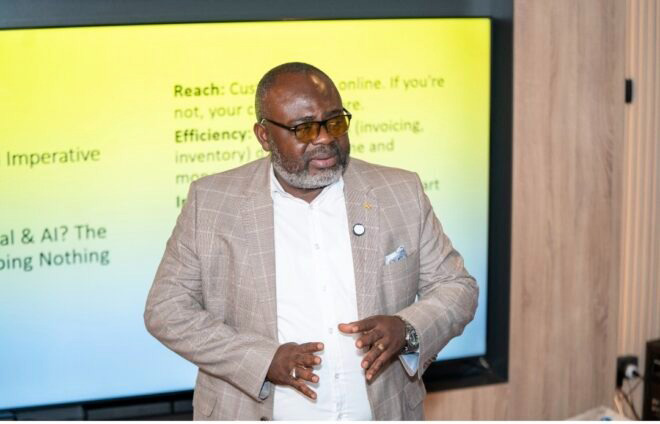
Ernest De-Graft Egyir, CEO advisor and founding head of the Chief Executives Network Ghana, argues that the most effective leaders do not try to decide everything themselves. Instead, they build disciplined systems that ensure the right decisions reach the right decision-maker at the right time.
Building a Robust Decision-Making Framework
For Ghanaian businesses navigating competitive markets, infrastructure challenges, and regulatory complexities, a structured approach to decision-making becomes essential. De-Graft Egyir recommends that CEOs establish clear principles upfront that guide both themselves and their teams on which decisions demand direct executive attention and which should be delegated.
The framework should include:
- Clear decision-making principles aligned with organisational strategy and values
- Explicit authority levels—defining which decisions require CEO sign-off versus board approval versus departmental leadership
- A system for distinguishing urgent matters (demanding immediate response) from important ones (affecting long-term success)
- Reliance on reliable data, professional expertise, and input from relevant stakeholders
- Rigorous risk assessment, particularly for decisions with long-term financial or operational implications
This separation of decision layers prevents what often happens in smaller and mid-sized Ghanaian firms: critical decisions get delayed because they await CEO approval, whilst the CEO wastes energy on operational matters that their team could handle.
Why This Matters for Ghana's Business Leaders
Ghana's economy is increasingly competitive. Businesses compete not only locally but regionally and globally. Companies that make faster, better-informed decisions gain market advantage. Conversely, organisations crippled by slow or poorly considered decisions lose ground to rivals.
Additionally, Ghana's business environment—marked by regulatory changes, energy cost volatility, and evolving supply chain dynamics—demands that leaders respond swiftly to external shocks. A CEO who is bogged down in day-to-day decisions cannot focus on spotting threats or opportunities on the horizon. Building a decision-making culture where the executive team is empowered and trusted to act within clear boundaries means the organisation becomes more resilient and adaptive.
For Ghanaian firms seeking to scale, attract investment, or enter new markets, investors and partners increasingly scrutinise whether the leadership team can function effectively without the CEO as a bottleneck. Companies with robust decision-making frameworks are perceived as better-managed and lower-risk.
Practical Steps for Ghanaian CEOs This Week
De-Graft Egyir offers three immediate actions:
- List the decisions demanding your direct attention this coming week—then honestly assess whether each truly requires your involvement or whether delegation is safe
- Meet with your executive team to clarify who holds decision-making authority on major categories (strategy, investments, hiring, risk management, etc.)
- Review a significant decision made three to six months ago: Did it deliver the expected results? What can you learn to improve future decisions?
A simple test can guide CEOs through any major decision: Does this decision advance our strategy, create sustainable value, and position the organisation for future success? If the answer is no, the decision may not warrant the CEO's time. If yes, it demands disciplined analysis and stakeholder input before action.
In Ghana's increasingly sophisticated business landscape, the CEO who builds a culture of disciplined, decentralised decision-making will find their organisation moves faster, learns better, and outperforms competitors still trapped in command-and-control models.
Source: MyJoyOnline



Comments (0)
Be the first to comment.