GoldBod CEO defends gold board against opposition's loss allegations
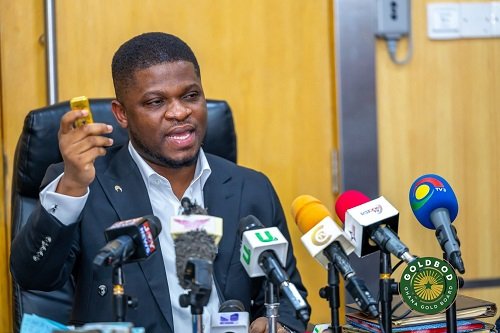
The Chief Executive Officer of the Ghana Gold Board (GoldBod), Sammy Gyamfi, has forcefully rejected accusations from the opposition Minority that the organisation is responsible for losses at the Bank of Ghana, demanding specific evidence from Minority Leader Alexander Afenyo-Markin to support the claims.
Speaking at the Government Accountability Series held at the Jubilee House, Gyamfi directly challenged Afenyo-Markin to identify any reference in the IMF report cited by the opposition that attributes Bank of Ghana losses to GoldBod's operations. "I challenge Afenyo-Markin to point to any page, paragraph, sentence, phrase or punctuation mark in the said referenced report that the IMF accused the GoldBod of having caused the losses reported to have been incurred by the Bank of Ghana," he stated.
GoldBod's gold refining achievements
Rather than defending against criticism alone, Gyamfi highlighted what he described as significant progress in Ghana's domestic gold refining sector. He announced that GoldBod has purchased and refined more than nine metric tonnes of gold locally within the current year—a development he framed as transformative for Ghana's value addition strategy in the gold industry.
This stands in sharp contrast to the previous administration, according to Gyamfi. He claimed that during that period, no gold produced in Ghana underwent local refining, with all processing occurring abroad. "Not a gram of gold produced in Ghana was refined in Ghana. Today, over nine metric tonnes, just this year, of gold we have bought, refined in Ghana. We are changing the value addition story," he emphasised.
Why it matters for Ghana
The dispute between government and opposition over GoldBod's performance touches on a critical issue for Ghana's economy: whether the country can effectively increase the domestic value of its primary export commodity. Gold exports generate substantial foreign exchange for Ghana, yet historically most processing has occurred outside the country, limiting local economic benefits.
Gyamfi's figures suggest that if the nine-tonne refining achievement is sustained, it could represent a meaningful shift in how Ghana captures value from its mineral wealth. However, the political clash also reflects broader concerns about institutional accountability and oversight, particularly given references to Bank of Ghana losses that remain contested between government and opposition.
Gyamfi further criticised the quality of opposition scrutiny, characterising some Minority comments as lacking proper research. He suggested that current Minority leadership should be measured against former occupants of the position, naming J.H. Mensah, Papa Owusu-Ankomah and Osei Kyei-Mensah-Bonsu as examples of opposition figures who commanded parliamentary respect through substantive engagement.
He also referenced Ghana's gold exports under the previous administration, noting approximately 170 tonnes were exported through formal channels over one and a half years, generating more than $17 billion. Gyamfi questioned why individuals responsible for institutions that recorded significant losses during their tenure were now criticising GoldBod's current performance.
Dismissing suggestions that he felt intimidated by political attacks, Gyamfi noted that politics was a "contact sport" and those involved should expect criticism. He reiterated his commitment to serving Ghana and expressed confidence that GoldBod's record would ultimately vindicate the board's work. "We are serving Ghana in good conscience, and our record and posterity will speak for us," he concluded.
Source: The Ghanaian Times


Comments (0)
Be the first to comment.