
GHS Puts Ghana on Alert: El Niño and Harmattan Could Trigger Meningitis and Dehydration Surge
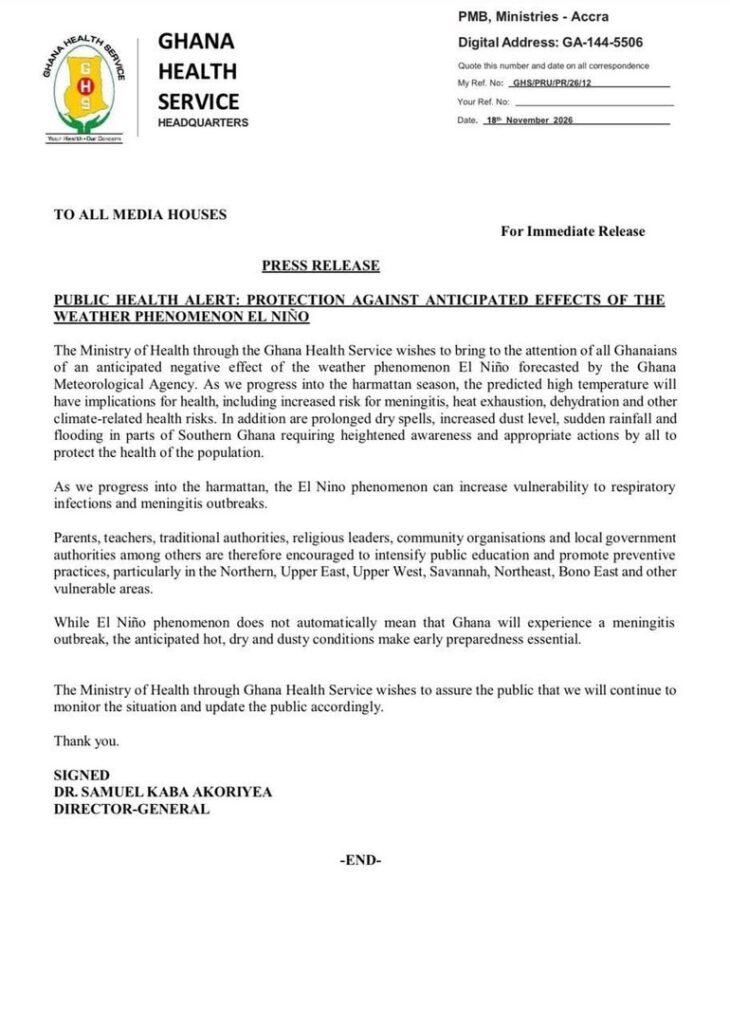

The Ghana Health Service (GHS) has sounded a public health alarm ahead of what forecasters say could be a particularly harsh harmattan season, warning that the influence of the El Niño weather phenomenon may significantly increase the risk of meningitis, dehydration, heat exhaustion and respiratory infections across the country. The alert, issued on Wednesday, 18 November 2026, through the Ministry of Health, urges all Ghanaians — especially those in northern regions — to take proactive steps to protect themselves and their communities.
What the GHS is warning about
According to the GHS, the combination of unusually high temperatures, prolonged dry spells and elevated dust levels expected during this year's harmattan creates conditions particularly favourable for the spread of meningitis and other climate-sensitive illnesses. Heat exhaustion and severe dehydration are also flagged as serious concerns, especially for children, the elderly and outdoor workers who face prolonged exposure to extreme heat.
The Service additionally cautioned that while the season will bring dry and dusty conditions to much of the country, parts of southern Ghana could experience sudden, heavy rainfall leading to localised flooding — a reminder that El Niño's effects can be unpredictable and varied across different geographical zones.
Importantly, the GHS was careful to clarify that the presence of El Niño conditions does not automatically mean Ghana will suffer a meningitis outbreak. The warning is intended to prompt early preparedness rather than to cause alarm.
Why it matters for Ghana
Ghana sits within what public health experts often refer to as the African Meningitis Belt — a broad stretch of sub-Saharan Africa running from Senegal in the west to Ethiopia in the east, where environmental conditions during the dry season have historically driven recurring outbreaks of bacterial meningitis. The Northern, Upper East, Upper West, Savannah, North East and Bono East regions, all identified by the GHS as priority areas, fall squarely within this high-risk zone.
El Niño, a periodic warming of Pacific Ocean surface temperatures, has well-documented downstream effects on West African weather patterns, often intensifying dry conditions and extending the harmattan season. Health systems in affected regions can come under significant strain when outbreaks of preventable disease coincide with extreme heat events, making early public education and community-level preparedness critical.
For everyday Ghanaians, the practical implications are clear: drinking adequate water, wearing dust masks or covering the nose and mouth in dusty conditions, keeping living and sleeping spaces ventilated, and seeking prompt medical attention at the first signs of severe headache, stiff neck, fever or confusion — all classic early symptoms of meningitis — could make a life-saving difference.
What authorities are calling for
The GHS has called on a wide coalition of stakeholders — including parents, teachers, traditional rulers, religious leaders, community organisations and local government officials — to step up public education and reinforce preventive practices at the grassroots level. The Service stressed that community awareness is one of the most effective tools in preventing the rapid spread of meningitis, particularly in densely populated or under-resourced areas where access to healthcare can be limited.
The Ministry of Health and the GHS have assured the public that monitoring will continue and that updated guidance will be issued as the situation develops. Ghanaians are encouraged to follow official communications from the GHS and to contact the nearest health facility if they observe any unusual clusters of illness in their communities.
- El Niño conditions could intensify harmattan, raising meningitis and dehydration risks nationwide.
- Northern and savannah regions identified as highest-risk areas requiring urgent preparedness.
- GHS clarifies no confirmed outbreak; early action and public education are the priority.
Source: MyJoyOnline



Comments (0)
Be the first to comment.