
Ghana's Housing Crisis Demands Decade-Long Strategy, Not Quick Fixes – Frimpong-Boateng Warns
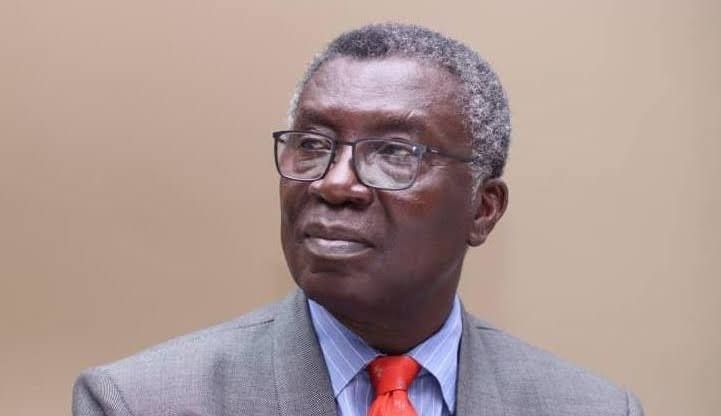

Ghana's persistent housing shortage and deteriorating urban transport systems cannot be solved through temporary government programmes, a respected former minister has cautioned, urging policymakers to adopt a comprehensive, long-term national strategy that transcends electoral cycles.
Prof. Kwabena Frimpong-Boateng, who previously served as Minister of Environment, Science, Technology and Innovation, argues that the country's accommodation crisis requires sustained commitment from successive administrations and coordinated action across multiple sectors—a departure from the piecemeal approaches that have characterised most interventions to date.
The Scale of Ghana's Housing Deficit
Ghana faces a substantial and worsening housing shortage, with estimates suggesting a deficit in the millions of units across urban and peri-urban centres. As urbanisation accelerates and rural-to-urban migration intensifies, the demand for affordable, quality housing outpaces supply dramatically. This imbalance has driven property prices beyond the reach of many middle and lower-income Ghanaians, while informal settlements continue to expand around major cities including Accra, Kumasi, and Sekondi-Takoradi.
The housing challenge is inseparable from urban transport dysfunction. Overcrowded, sprawling cities without integrated public transit force residents into lengthy commutes, reducing quality of life and raising transport costs for ordinary workers. Poor infrastructure planning in new residential areas compounds the problem, creating isolated communities with inadequate road networks and transportation links.
Why Long-Term Strategy Matters for Ghana
Frimpong-Boateng's emphasis on sustained, cross-administration planning reflects a fundamental reality: housing development operates on timescales far longer than electoral cycles. Building the physical, regulatory, and financial infrastructure needed to address a multi-million-unit deficit requires coordination across at least two or three government terms—typically 8-12 years minimum. Short-term programmes, whilst occasionally delivering visible results, rarely achieve systemic change.
A durable national strategy would need to address several interconnected issues: land availability and titling; mortgage financing accessibility; construction standards and enforcement; urban planning regulations; and transport infrastructure development. When governments abandon predecessors' housing initiatives simply for political reasons, momentum is lost, resources are wasted, and beneficiaries lose confidence in the system.
For ordinary Ghanaians struggling to secure adequate housing, the implications are serious. Without a stable, multi-decade commitment to housing expansion, prices will remain unaffordable for young families and workers earning modest incomes. The proliferation of unplanned slums will continue, bringing accompanying challenges in sanitation, education access, and public health.
The Path Forward
Addressing this crisis effectively requires several components working in concert. Government must establish clear housing targets and timelines, create predictable financing mechanisms for both developers and home-buyers, streamline land registration processes, and invest substantially in urban infrastructure—particularly public transport systems that reduce commuting times and costs.
Private sector participation is essential, but cannot succeed without stable, long-term policy frameworks. Similarly, international development partners and local financial institutions need confidence that housing-related investments will enjoy consistent support regardless of which party governs.
The warning from Frimpong-Boateng underscores a broader governance challenge: Ghana's ability to tackle major structural problems depends partly on whether political leaders can commit to plans that extend beyond their own tenures. The housing crisis, left unaddressed through strategic, sustained effort, will continue to constrain Ghana's economic competitiveness and quality of life for millions.
Source: 3News


Comments (0)
Be the first to comment.