Ayariga pitches corporate road-adoption scheme to transform Ghana's streets
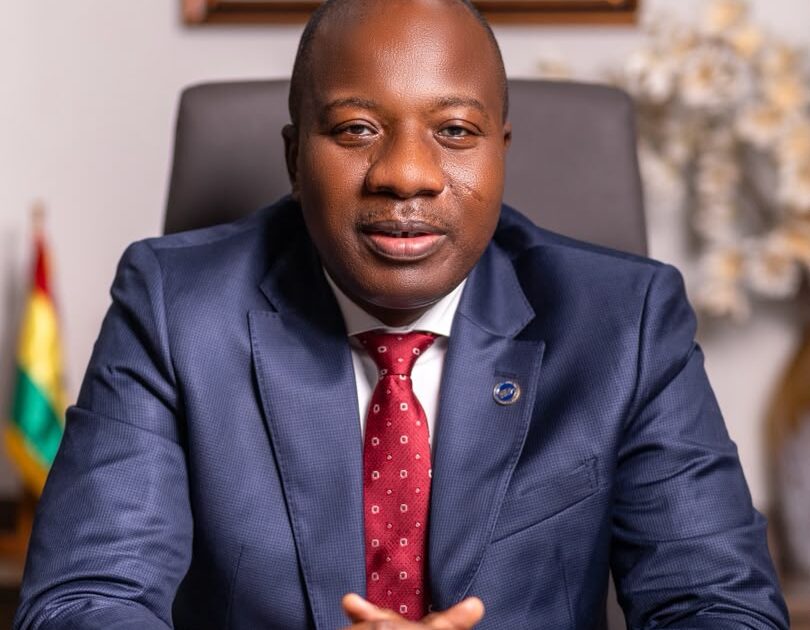
Ghana's Local Government minister has unveiled an ambitious plan to transform the country's urban landscape by enlisting banks and major corporations to adopt, maintain and sponsor stretches of road across the nation. Mahama Ayariga pitched the scheme to banking leaders at the Bank of Ghana headquarters, framing it as a scaled-up corporate social responsibility initiative that would benefit both the private sector and Ghana's image globally.
Under the proposal, participating companies would take financial and operational responsibility for designated road sections in their areas of operation. Their obligations would include planting and maintaining trees, grass, flowers and other greenery to transform often-neglected roadsides into attractive corridors. In exchange, companies would gain branding rights, allowing them to associate their names with the maintained streets—a departure from Ghana's current practice where public infrastructure carries minimal corporate attribution.
How the programme would work
The minister envisioned a flexible framework tailored to company size and reach. A major bank operating across multiple regions, for instance, could maintain several kilometres in Greater Accra, shorter stretches in Ashanti Region and at least one kilometre in each regional capital where it has a presence. Other corporations would similarly scale their commitments to match their operational footprint.
Ayariga proposed that the government, working alongside the Land Use and Spatial Planning Authority and Urban Roads Directorate, would establish design standards and approve participating companies. Companies would need to incorporate road maintenance into their annual budgets to ensure continuity rather than ad-hoc seasonal efforts.
The minister referenced Obasanjo Highway as a model, suggesting that a company funding its maintenance could have its brand incorporated into the official road name—a practice uncommon in Ghana but established elsewhere. He pledged to engage the Ghana Association of Bankers to develop an implementation roadmap if the banking sector embraced the concept.
Why it matters for Ghana
This initiative addresses multiple pressures facing urban Ghana simultaneously. Poor road maintenance and lack of greenery in towns and cities undermine the country's appeal to international visitors and investors, while creating public health hazards. The scheme taps private sector resources to fill a gap that government budgets struggle to cover, potentially freeing public funds for other priorities.
The employment angle is significant for Ghana's young population. The minister explicitly noted that the programme could create jobs for landscapers, gardeners, park maintenance workers and private contractors—sectors with substantial untapped potential. Beyond immediate employment, systematically greener cities could improve public health outcomes and reduce urban heat in an increasingly warming climate.
The branding component reflects pragmatic reasoning: by linking corporate identity to visible environmental improvements, companies gain reputational benefit whilst public spaces improve. Ghana's tourism sector, already competitive across West Africa, would benefit from cleaner, more attractive urban environments.
Next steps and broader context
The proposal remains at an early consultation stage. The minister's engagement with bank leaders represents the first formal pitch, with implementation dependent on industry buy-in and regulatory framework development. If successful among major banks, expansion to other sectors—telecommunications, retail, manufacturing—could accelerate adoption.
Critically, the scheme's success hinges on enforcement and consistency. Private partners must maintain standards across seasons and economic cycles, and government must resist pressure to allow branding that clashes with the public interest. Clear contractual terms and regular monitoring will be essential.
Ayariga's vision ultimately hinges on a simple proposition: Ghana's urban spaces belong to everyone, but their maintenance needn't be entirely public-funded. By aligning corporate interests with environmental improvement, the government hopes to achieve what decades of insufficient budget allocations have not—making Ghana's towns and cities genuinely green and attractive.
Source: MyJoyOnline



Comments (0)
Be the first to comment.