Ghana's Government Pushes for Increased Chieftaincy Funding to Speed Up Dispute Resolution

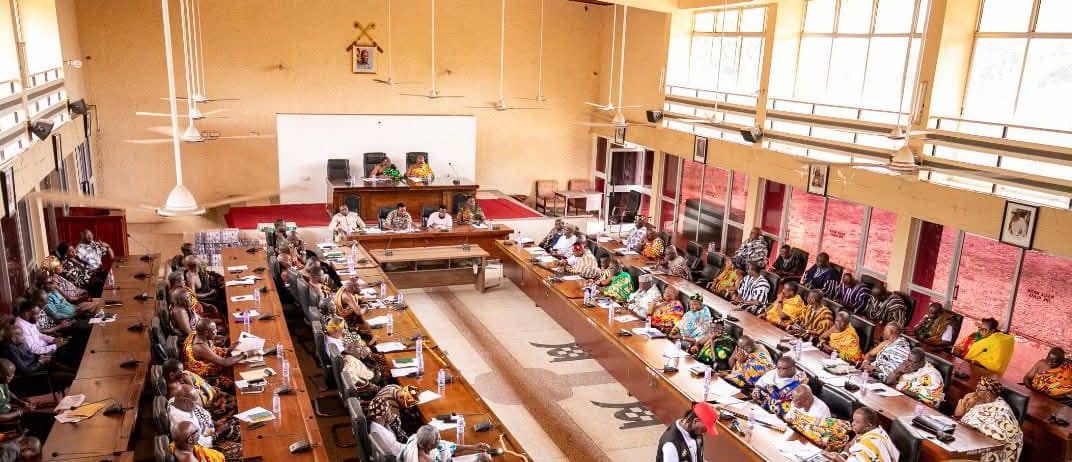
The government is seeking increased financial resources for the National and Regional Houses of Chiefs, aiming to strengthen their capacity to resolve chieftaincy disputes more rapidly and prevent them from escalating into community security crises.
According to government officials, the additional funding would enable these traditional institutions to process cases more efficiently, reducing backlogs that often delay resolutions and allow tensions to fester within communities. Chieftaincy disputes have historically been a source of conflict in many Ghanaian communities, occasionally leading to violence and disrupting social cohesion.
Why it matters for Ghana
Chieftaincy disputes remain a persistent challenge across Ghana, particularly in rural and semi-urban areas. These conflicts often involve competing claims to traditional authority, land ownership, and ceremonial roles, and can polarise entire communities. When disputes linger without resolution, they create fertile ground for violence, property destruction, and social division that can take years to heal.
The Houses of Chiefs serve as critical institutions within Ghana's traditional governance structure, operating alongside formal courts. They handle matters of customary law and cultural significance that formal courts may not fully address. However, resource constraints have historically limited their effectiveness. Insufficient staffing, poor office infrastructure, limited access to dispute resolution expertise, and lack of resources for community engagement have all contributed to slow case processing.
By investing in these institutions, the government acknowledges that preventing chieftaincy conflicts is more cost-effective and less disruptive than managing the security and social fallout after disputes escalate. This approach aligns with broader peacebuilding and conflict prevention strategies that prioritise early resolution mechanisms over reactive interventions.
What the funding could address
- Expedited case processing to reduce dispute resolution timelines
- Enhanced training and capacity-building for chiefs and mediators in conflict resolution techniques
- Improved office facilities and administrative support across Regional Houses of Chiefs
- Better documentation and record-keeping systems for dispute cases
- Increased outreach and communication to educate communities about dispute resolution processes
The broader context
Ghana's chieftaincy system remains deeply embedded in the governance and social fabric of many communities, despite the existence of modern legal institutions. The Constitution recognises the institution of chieftaincy and establishes the National House of Chiefs as an advisory body to Parliament on matters affecting chieftaincy and customary law.
However, the tension between traditional and formal governance structures, combined with limited resources, has created gaps in dispute resolution. Communities often turn to Houses of Chiefs first because of their cultural legitimacy and understanding of local customs, making their effectiveness essential for overall social stability.
The government's push for additional funding reflects growing awareness that strengthening these traditional institutions is not a step backwards but rather a practical investment in conflict prevention and community cohesion. Success in this area could serve as a model for how modern and traditional governance systems can work together effectively in the Ghanaian context.
Source: 3News



Comments (0)
Be the first to comment.