Volta House of Chiefs halts rival Ziavi chieftaincy claims pending court ruling
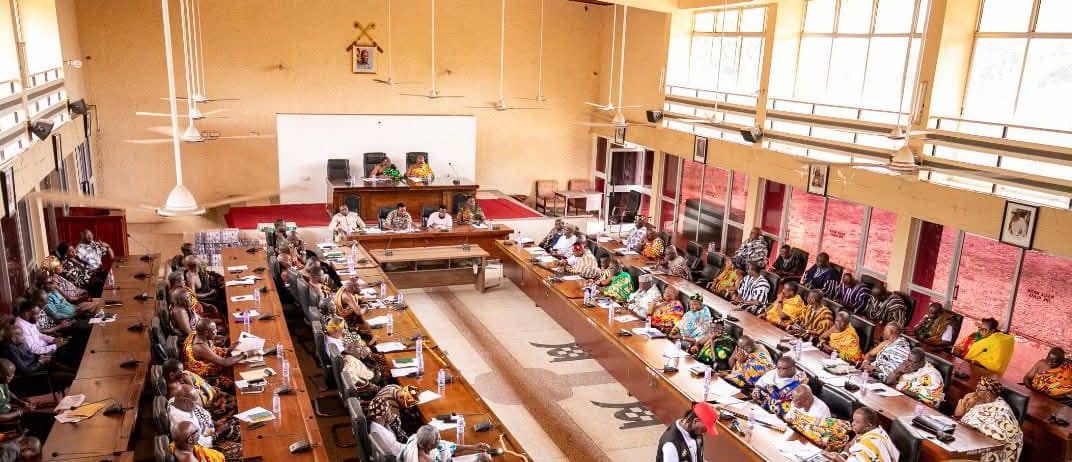
A significant intervention by the Volta Regional House of Chiefs aims to restore order in the Ziavi Traditional Area, where competing installations of paramount chiefs and queen mothers have created administrative confusion. The Judicial Committee has issued a formal interlocutory injunction prohibiting any individual from presenting themselves as the legitimate Ziavi Paramount Chief or Queen Mother until the dispute is finally resolved.
The conflict centres on rival claims to the paramount stool, with the Akpevi Clan having installed one set of traditional leaders whilst the Tsadaviefe Clan installed competing individuals to the same positions. This overlapping legitimacy crisis prompted the court case brought by Emmanuel Kwasi Norgbe and three others against George Kofi Agbagba and respondents.
The interim arrangement
To maintain continuity of traditional governance whilst the matter is adjudicated, the House of Chiefs has designated Togbe Adza Kwadzo III to continue acting as President of the Ziavi Traditional Council. He assumed this role following the death of Togbe Kwaku Ayim I, the previous occupant. Togbe Adza Kwadzo III will remain responsible for all traditional and administrative decisions affecting the Ziavi Traditional Area during the pendency of the suit.
The registrar of the Volta Regional House of Chiefs, Muhammed Ikililu, formalised this order through an official notice that explicitly binds both petitioners and respondents. The injunction represents a measured approach to preventing further complications arising from dual or contested claims of authority within the traditional governance structure.
Why it matters for Ghana
Chieftaincy disputes remain a sensitive issue across Ghana, often involving complex questions of customary succession rights, clan authority and historical precedent. The Volta Region, with its rich traditional heritage and established House of Chiefs, has developed procedures to manage such conflicts through structured legal adjudication rather than allowing parallel power structures to operate unchecked.
This case illustrates how traditional governance intersects with formal legal processes in Ghana. The House of Chiefs' decisive action prevents the emergence of a governance vacuum where two rival authorities might claim legitimacy, potentially causing confusion amongst community members and complicating administrative functions. Such disputes, if left unresolved, can escalate into broader community tensions affecting social cohesion and development efforts at the local level.
The decision to maintain an acting president ensures that essential traditional functions—dispute resolution, ceremonial duties and administrative oversight—continue uninterrupted. This pragmatic interim solution protects the integrity of Ziavi's traditional institutions whilst the underlying legal matter is examined thoroughly. The case also demonstrates the relevance of Ghana's dual governance system, whereby customary law and formal judicial processes operate in parallel.
For stakeholders in Ziavi and neighbouring communities, the injunction provides clarity: neither faction may claim exclusive legitimacy or exercise chiefly authority until the courts determine which installation was proper. This binding order applies equally to both sides, preventing either group from consolidating power or gaining material advantage during the litigation period.
Source: MyJoyOnline

.jpg)

Comments (0)
Be the first to comment.