
Sudan's hunger crisis deepens as Western nations urge end to aid blockade
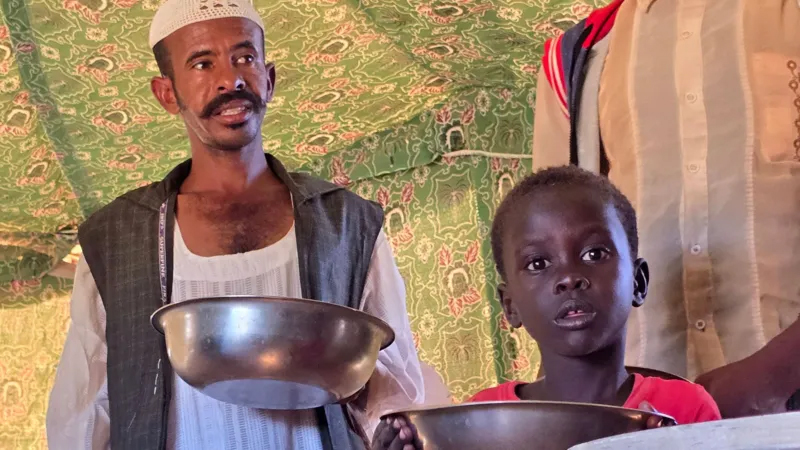

A coalition of Western nations, led by the United States and including European Union member states, has sounded fresh alarm over the deteriorating humanitarian situation in Sudan, warning that famine threatens millions unless warring factions immediately allow unobstructed access for aid delivery.
The joint statement, signed by 31 countries including the UK, Canada, Switzerland and Norway, paints a bleak picture of a nation in crisis. According to the signatories, approximately 19.5 million Sudanese—representing 41 percent of the country's entire population—are currently experiencing high levels of acute food insecurity. Even more concerning, around five million face emergency-level hunger, with the crisis particularly severe among children.
The scale of displacement and humanitarian need
Sudan's civil war, which erupted in April 2023 following a power struggle between the Sudanese Armed Forces and the paramilitary Rapid Support Forces, has triggered one of the world's most severe humanitarian emergencies. The conflict has displaced 14 million people, many of whom have lost homes, livelihoods and family members.
Yusuf Roble, regional director for Islamic Relief East Africa, described scenes of devastation in Omdurman, where returning residents found their homes destroyed or stripped of possessions. He recounted meeting a mother of seven children whose husband, the family's sole breadwinner, has been missing for three and a half years—a situation replicated across thousands of households.
The World Health Organisation has designated Sudan's crisis as the world's worst humanitarian emergency. Yet funding remains critically inadequate: as of September, only 40 percent of Sudan's 2026 humanitarian needs plan had been resourced. This shortfall means community kitchens and other lifelines lack long-term support, forcing aid organisations to make impossible choices about whom they can help.
Obstacles to aid and climate impact
The Western nations' statement highlights two major drivers perpetuating the crisis: deliberate obstruction of humanitarian corridors by warring parties, and the impact of El Niño weather patterns. The latter has reduced rainfall and intensified drought across more than half of Sudan, destroying crops and depleting water sources that communities depend upon for survival.
The joint statement estimates that without immediate intervention, the number of children suffering from severe acute malnutrition could exceed the projected 825,000—a figure already alarming by any standard.
Why it matters for Ghana and West Africa
Sudan's humanitarian catastrophe carries implications for Ghana and the broader West African region. Neighbouring countries, particularly those in the Horn of Africa and along migration corridors, face pressure from refugee flows and regional instability. Additionally, as a member of the African Union and the broader African community, Ghana has a stake in how continental crises are managed and resolved.
The signatories have called on Sudan's warring parties to shoulder their primary responsibility for alleviating civilian suffering by lifting all impediments to humanitarian access and permitting full, safe, rapid and unimpeded delivery of aid. Without such measures, experts warn the famine risk will only intensify, potentially claiming tens of thousands of lives and creating further regional destabilisation.
Source: The Ghana Report




Comments (0)
Be the first to comment.