Ghana's Gold Reserve Strategy Carries Heavy Price Tag, S&P Warns of Fiscal Risks
Ghana's ambitious push to build up foreign reserves and gold stocks faces a significant financial headwind, according to a fresh assessment from S&P Global, the international ratings agency. Whilst the strategy aims to strengthen the nation's economic buffers, the costs of implementing the Ghana Accelerated National Reserves Accumulation Program (GANRAP) could undermine the fiscal progress the country has achieved in recent years.
The agency estimates that accumulating these reserves through local currency operations will cost between 0.8% and 2.6% of annual Gross Domestic Product—a substantial burden that threatens to reverse gains made through ongoing economic reforms. This warning comes as Ghana navigates inflationary pressures and external shocks that continue to test its economic resilience.
Central Bank's Balance Sheet Under Strain
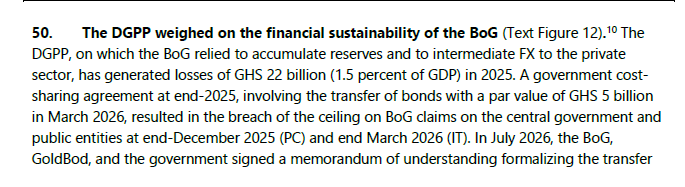
A key concern flagged by S&P is the deteriorating financial position of the Bank of Ghana itself. The central bank recorded an operating loss of $1.25 billion in 2025, pushing its negative equity to 6.7% of GDP. This structural weakness raises questions about the institution's ability to support monetary policy effectively whilst managing reserve accumulation goals.
To address this crisis, the government has launched a phased capital restoration programme scheduled to run until 2032. However, S&P cautions that this recapitalisation will likely require the government to issue additional debt, placing further pressure on public finances at a time when Ghana is already working to stabilise its debt-to-GDP ratio following years of fiscal strain.
Why This Matters for Ghana
Ghana's reserve accumulation strategy reflects a legitimate policy objective: building a buffer against external shocks and currency volatility, which have historically plagued the economy. However, S&P's warning highlights a critical trade-off between short-term fiscal sustainability and longer-term economic resilience.
The country has made notable progress on inflation control, with the rate dropping from a destructive 54.1% peak in December 2022 to 5% by August 2026. Yet recent upward price trends suggest this hard-won stability is fragile. External factors—particularly rising fuel prices linked to Middle East tensions—are already pushing up transport and input costs across the economy, threatening both inflation targets and the fiscal space needed for reserve accumulation.
The gold sector reforms, including Ghana's shift to a dynamic sliding-scale royalty model, represent an attempt to reduce the fiscal burden of reserve building. However, S&P expects international shocks to partially offset these benefits, meaning the government cannot rely on improved mining revenues alone to fund its strategy.
For ordinary Ghanaians, this situation carries practical implications. A government forced to choose between reserve accumulation and public spending could face pressure to reduce investment in social programmes or delay infrastructure projects. Conversely, if rising inflation resurfaces, the gains in purchasing power that citizens have enjoyed since 2023 could evaporate.
The broader challenge is one of sequencing: Ghana needs both immediate fiscal discipline and long-term institutional strength, but achieving both simultaneously may prove impossible without difficult choices about priorities and external support from international creditors and development partners.
Source: MyJoyOnline
Comments (0)
Be the first to comment.