
Ghana's Public Debt Surges Past GH¢720bn Amid Rising Borrowing Pressures
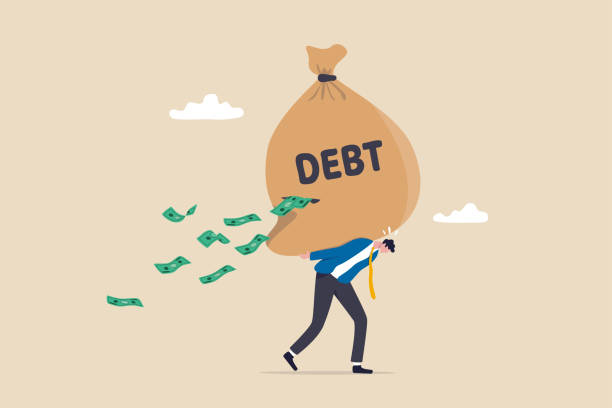

Ghana's public debt has climbed to GH¢720.8 billion as of May 2026, equivalent to US$61.5 billion, according to the Bank of Ghana's July 2026 Summary of Financial and Economic Data. The debt-to-GDP ratio now stands at 45.1%, marking a concerning upward trajectory that has accelerated over the first half of 2026.
The five-month period from January to May revealed a consistent pattern of debt accumulation. The country's debt obligations grew from GH¢663.4 billion in January through successive monthly increases—GH¢674.1 billion in February, GH¢686.1 billion in March, and GH¢695.9 billion in April—before reaching the May milestone. This represents a net increase of GH¢57.4 billion in just five months, underscoring the accelerating pace of public indebtedness.
Domestic Borrowing Outpaces External Debt
The composition of Ghana's debt reveals a critical shift in financing patterns. Domestic debt has emerged as the primary driver of the overall debt increase, climbing to GH¢379.1 billion in May 2026—up from GH¢369.2 billion in April. This represents approximately 23.7% of GDP and has grown consistently from GH¢341.0 billion in January, showing a domestic debt accumulation of GH¢38.1 billion over the five-month period.
External debt, by contrast, showed relative stability during the same timeframe. The external debt position stood at US$29.1 billion in May 2026, representing just 21.4% of GDP. This represents a marginal decline from US$29.2 billion in April, suggesting that while international borrowing remains significant, the government has increasingly relied on domestic credit markets to fund its operations.
Why This Matters for Ghana
The sustained rise in public debt carries substantial implications for Ghana's economic trajectory and fiscal sustainability. Several factors merit consideration:
- Debt servicing burden: As debt accumulates, government resources devoted to interest payments and debt repayment will inevitably increase, potentially crowding out expenditure on critical social services including health, education, and infrastructure development.
- Monetary policy constraints: High domestic debt levels can limit the central bank's flexibility in managing inflation and interest rates, as government borrowing requirements can dominate credit markets.
- Investor confidence: The rapid pace of debt accumulation may concern international investors and rating agencies, potentially affecting Ghana's borrowing costs and credit ratings in future bond issuances.
- IMF programme implications: Ghana's ongoing engagement with the International Monetary Fund includes debt sustainability targets. This trajectory will be carefully monitored against programme benchmarks.
The government's fiscal position showed a marginal surplus of 0.1% in March 2026, with a primary balance surplus of 1.1% of GDP. However, these modest surpluses appear insufficient to arrest the underlying debt growth momentum, suggesting that the government's revenue collection and expenditure management may require further tightening.
Analysts and policymakers will be monitoring whether the May 2026 figures represent a peak or merely a waypoint in ongoing debt accumulation. The sustainability of Ghana's current fiscal path will depend critically on whether revenue growth can accelerate and whether spending discipline can be maintained in coming months.
Source: MyJoyOnline


Comments (0)
Be the first to comment.