
Ghana's Foresters Push for Stronger Legal Protections After Achimota Forest Victory
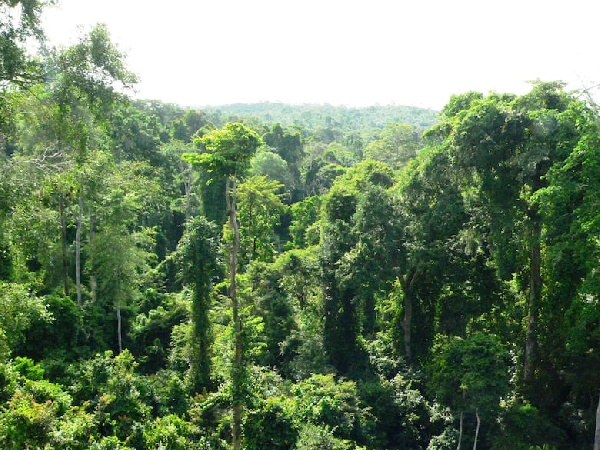

The Ghana Institute of Foresters (GIF) has seized on the government's reversal of the Achimota Forest declassification to push for sweeping reforms in how Ghana protects its urban green spaces. On 16 July 2026, Lands Minister Emmanuel Armah Kofi Buah announced that Cabinet had restored the Achimota Forest Reserve to its full protected status, undoing the April 2022 decision by the previous administration that had removed approximately 361.5 acres from the southern portion of the reserve.
The decision marks a significant victory for environmental advocates who have long warned that the loss of urban forests poses serious risks to Ghana's cities, particularly as flooding and extreme weather events become increasingly frequent. However, the GIF's response reveals a deeper concern: the ease with which such critical environmental assets can be stripped of protection without robust legal safeguards.
Why This Matters for Ghana
Urban forests play a crucial but often underestimated role in protecting Ghana's rapidly expanding cities. Beyond their aesthetic value, these reserves provide essential climate adaptation services—absorbing rainwater to reduce flooding severity, lowering urban temperatures, purifying air quality, and recharging groundwater supplies. As Accra, Kumasi, Tamale and other urban centres experience more severe flooding and heat stress, the loss of these natural buffers carries real costs in both human welfare and economic damage.
Ghana has already lost significant forest cover to unplanned urban expansion. The once-prominent Kumasi Forest Reserve has largely disappeared, serving as a cautionary tale. The GIF's concern is that without stronger legal frameworks, other critical reserves face similar fates. The forests they are highlighting—including the Dede Forest Reserve in the Eastern Region, Kabakaba in Volta, and multiple reserves in Tamale—are under pressure from development and urbanisation.
Calling for Parliamentary Oversight
The GIF is not simply celebrating the Achimota reversal; they are using it as a catalyst for institutional reform. They are urging Parliament and the government to establish new requirements for any future de-reservation of forest reserves. Their proposals include:
- Parliamentary approval for all forest reserve reservation or de-reservation decisions
- Mandatory comprehensive environmental and social impact assessments
- Broad stakeholder and public consultation processes
- Scientific and technical evaluation
- Full compliance with constitutional principles of sustainable development and intergenerational equity
These safeguards would prevent the ad-hoc use of Executive Instruments—like the one that removed Achimota's protection in 2022—to bypass public scrutiny and environmental assessment.
A Vision for Africa's Urban Parks
The GIF has invoked the example of New York's Central Park as inspiration, suggesting that with proper planning and sustained investment, Achimota could become one of Africa's premier urban ecological parks. Such a facility could deliver environmental, educational, recreational and economic benefits for future generations whilst simultaneously strengthening Ghana's resilience to climate impacts. The key, however, is ensuring that the legal and institutional protections put in place are durable and cannot be easily reversed by future governments pursuing short-term development goals at the expense of long-term environmental security.
Source: MyJoyOnline




Comments (0)
Be the first to comment.