
Ghana's exam-obsessed education system is failing children—time to rebuild from scratch
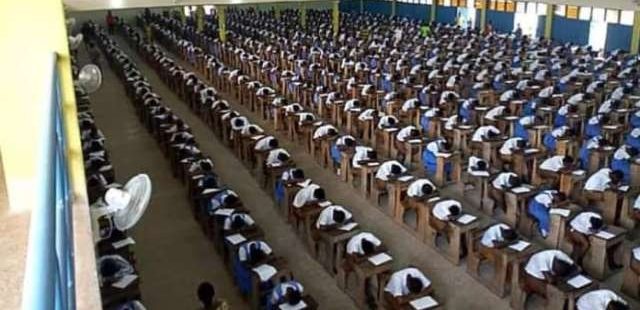

Ghana's education system has become a conveyor belt of high-stakes examinations that sorts children into winners and losers rather than develops their full potential. This is not reform talk—it is a call to dismantle the entire edifice and start anew, scrapping both the Basic Education Certificate Examination and the West African Senior School Certificate Examination in their current forms.
The argument is simple but damning: when a nation's education framework revolves entirely around examination results, grade aggregates, school categories and placement rankings, it stops being education and becomes what critics rightly call an "examination pipeline." Every year, hundreds of thousands of Ghanaian children are funnelled through identical cycles: write BECE, wait for results, compete for school placement, fight over Category A slots, and then spend three years preparing for WASSCE. The system has become so entrenched that the letters A, B and C no longer simply denote school tiers—they have become a social ranking of children themselves.
The placement crisis reveals a broken system
Recent BECE placement exercises have exposed the human cost of this examination-first approach. Approximately 50,000 candidates failed to qualify for senior high school because they did not meet English or Mathematics thresholds. These are not statistics—they represent thousands of children, families and teachers whose hopes hinge on a single examination performance.
Behind each of those figures is a story: a mother who paid for extra lessons, a father who sacrificed, a teacher who invested time. Yet the system's response is coldly transactional—you did not pass the required subjects, so you do not progress. There is no structured second chance, no intensive remedial pathway, no alternative route designed to identify why a child struggled and help them overcome the barrier. One examination determines whether a young person continues to secondary school. That is disproportionate power to vest in a single assessment.
WASSCE has become a shadow over schooling
For those who do advance, the examination culture intensifies rather than improves. Three years of secondary schooling become increasingly condensed around WASSCE preparation. Schools are compared via league tables. Regions are ranked. The highest-performing institutions are celebrated; the lowest are shamed. Yet a critical distinction remains unasked: there is a profound difference between learning how to pass an examination and developing the intellectual, practical, social and professional competencies a young person actually needs to thrive in life.
WASSCE began as an assessment mechanism but has metastasised into something far larger. It now determines university access, shapes public perception of schools, and brands individual students as academically successful or unsuccessful. The examination has become the tail wagging the dog of education itself.
Why it matters for Ghana
This debate matters because Ghana's education outcomes have stalled despite decades of policy adjustments. The country has renamed and reformed these examinations repeatedly, introduced new grading systems, and subjected the frameworks to countless committee reviews—yet the fundamental architecture remains intact. The symptoms persist because the disease has not been addressed.
If the genuine objective of education is to develop human beings in their full complexity—intellectually, socially, emotionally, practically—then an assessment system designed primarily to sort them into hierarchies is fundamentally misaligned with that goal. Ghana has not lacked committees or good intentions; it has lacked the courage to acknowledge that some systems, however longstanding, may need to be dismantled rather than reformed.
The proposal to scrap BECE and WASSCE and replace them with modern assessment mechanisms that measure what children actually know, what they can do, and which learning pathways suit them is radical. But Ghana's current examination pipeline is not working. It is time to ask not just how to improve it, but whether it should exist in its present form at all.
Source: The Ghana Report




Comments (0)
Be the first to comment.