
Ghana's economy growing faster than global average, but jobs crisis remains – ISSER warns
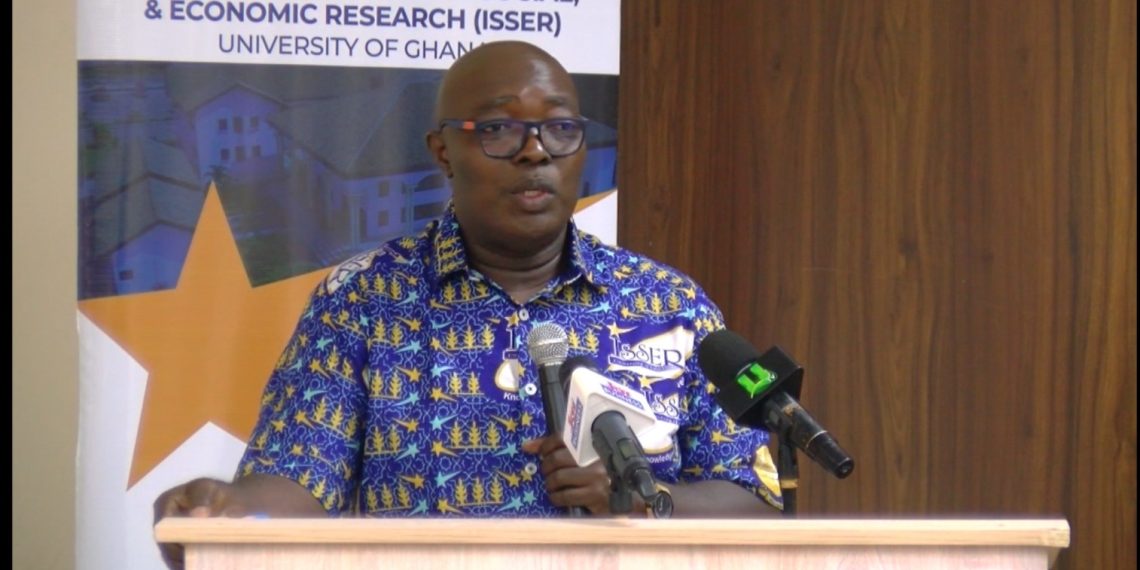

Ghana's economy is growing at a healthier pace than much of the world, but economic expansion alone will not improve the lives of ordinary Ghanaians without deliberate action on employment, the Institute of Statistical, Social and Economic Research has warned.
In its latest State of Ghana Economic Report, ISSER presents a mixed picture of recovery: the country's gross domestic product expanded 6.0% in 2025, up from 5.8% the previous year and comfortably ahead of the global average of 3.4% and sub-Saharan Africa's 4.5%. Yet this headline figure masks deep structural challenges that policymakers must address to translate growth into tangible improvements in living standards.
The economic turnaround: stability returning
The macroeconomic improvements are undeniably significant. Year-end inflation has plummeted from 23.8% to 5.4%, providing breathing room for households and businesses. The cedi has strengthened, interest rates have declined, and the fiscal deficit has narrowed—all signs that the government's stabilisation efforts are yielding results. Strong gold exports have also bolstered Ghana's external position and international reserves, creating a more attractive environment for investment.
Growth drivers have been uneven across sectors. Services led expansion at 8.1%, whilst agriculture grew 6.8%. However, industry contracted to just 2.3% growth, dragged down by a sharp decline in oil and gas production, though manufacturing and gold mining expanded within the sector.
The employment gap: growth without jobs
ISSER's critical insight is that macroeconomic stability, whilst necessary, is insufficient. The institute emphasises that employment opportunities, borrowing costs, and how growth benefits are distributed remain pressing concerns. Many Ghanaians, particularly young people, continue to struggle to find meaningful work despite the economy's expansion.
The report urges government to prioritise job creation in productive sectors—manufacturing, agriculture value-added processing, and export-oriented industries—rather than relying on service-sector growth, which often generates low-wage informal employment.
Why it matters for Ghana
The disconnect between GDP growth and employment creation is Ghana's defining economic challenge. A 6% growth rate that fails to create jobs for the estimated millions of school leavers entering the labour market annually risks deepening social tensions and undermining the gains made on inflation and fiscal discipline.
ISSER's recommendations signal what policymakers must do next: maintain the hard-won macroeconomic gains through fiscal discipline and low inflation; simultaneously channel investment into productive sectors that generate quality employment; diversify production and exports to reduce dangerous reliance on commodities like gold and oil, whose prices Ghana cannot control; and improve infrastructure to support private sector competitiveness.
The institute's message is clear: stability is a foundation, not a destination. Without deliberate focus on transforming that stability into jobs—especially for young Ghanaians—the benefits of recovery will remain confined to those already in formal employment and business ownership.
Source: MyJoyOnline



Comments (0)
Be the first to comment.