Ghana's Creative Industries to Lead Climate Action: Centre for CSR Partners on Landmark 2026 Summit
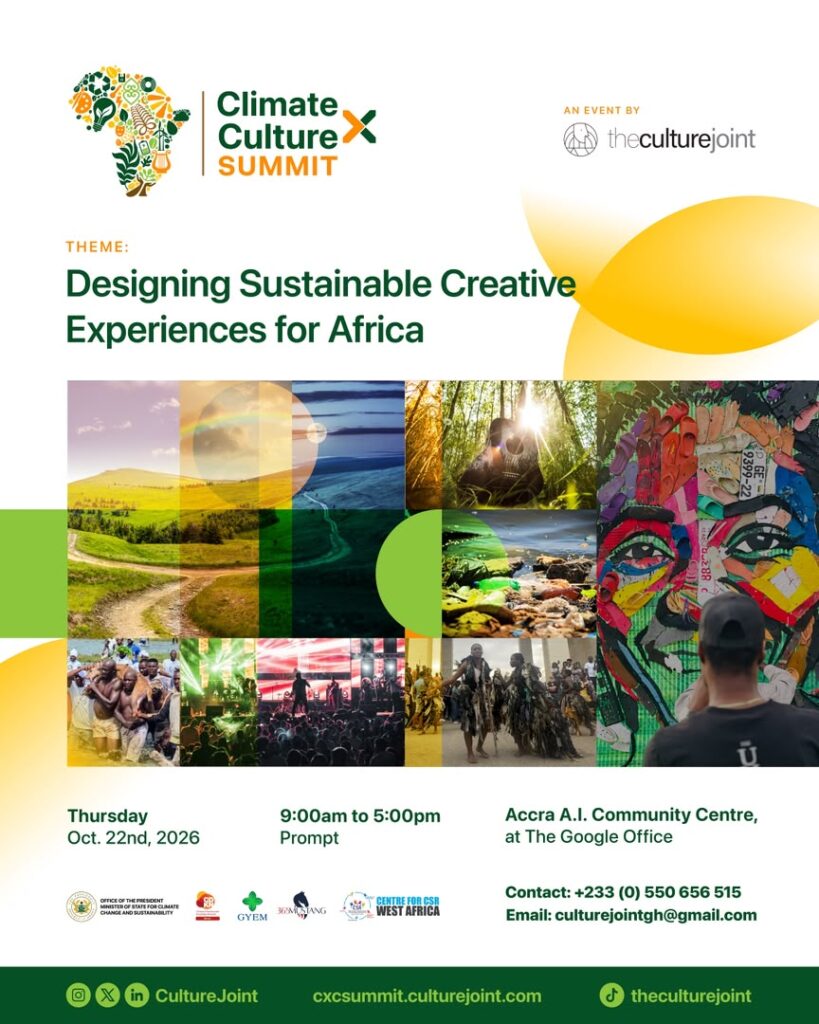
Ghana's sustainability advocacy landscape has taken a significant step forward with the announcement of a strategic partnership between the Centre for CSR, West Africa and the Climate x Culture Summit, set to convene at Google's AI Centre in Accra next October. The collaboration signals a deliberate shift in how West Africa approaches climate action—moving beyond traditional policy conferences to engage the creative industries that shape cultural narratives and public consciousness.
A New Approach to Climate Action in the Creative Sector
The inaugural Climate x Culture Summit, scheduled for October 22, 2026, represents a departure from conventional sustainability discourse. Rather than limiting climate conversations to boardrooms and academic spaces, organisers aim to embed environmental responsibility into the creative and events production landscape. The summit's theme, "Designing Sustainable Creative Experiences for Africa," signals an intention to make sustainability practical and accessible for event producers, artists, influencers, and cultural practitioners who shape how Ghanaians consume entertainment and cultural experiences.
This approach recognises a critical gap: creative industries, which contribute significantly to Ghana's cultural economy, have historically operated outside mainstream sustainability conversations. By bringing together stakeholders from film production, event management, music promotion, and visual arts, the summit aims to establish practical guidelines for reducing environmental footprints across these sectors.
Tangible Outputs and Industry Standards
Rather than concluding with abstract commitments, the partnership has committed to producing concrete deliverables. Summit organisers plan to establish the Accra Climate Culture Accord—a framework for climate-conscious practices in Ghana's creative industries—and develop a comprehensive Sustainable Event Production Guide tailored to local contexts. These outputs are designed to create lasting industry standards rather than one-off initiatives.
Additionally, both organisations aim to establish a permanent network of climate-culture practitioners, institutionalising sustainability efforts beyond a single event. This network structure suggests an ambition to create systematic change within Ghana's rapidly growing creative and events sector, rather than relying on episodic campaigns.
Why This Matters for Ghana
Ghana's creative industries are among Africa's most vibrant and economically significant. From music and film production to tourism and events management, these sectors generate employment, attract international investment, and project Ghana's cultural brand globally. However, rapid growth has often come without corresponding environmental safeguards—from energy-intensive concert productions to waste management challenges at large-scale events.
The Centre for CSR's involvement brings over 14 years of experience convening stakeholders across academia, regulatory bodies, civil society, and business. This institutional credibility enhances the likelihood that summit outcomes will gain traction with policymakers and industry leaders. Furthermore, by framing sustainability as integral to Ghana's cultural identity rather than an external constraint, the partnership addresses a key psychological barrier to adoption in creative sectors that often view environmental regulations with suspicion.
The location—Google's AI Centre in Accra—also signals an attempt to position Ghana at the intersection of technology, sustainability, and creative innovation. This symbolism matters for a nation seeking to establish itself as a technology and creative hub on the continent.
Broader Implications for West Africa
While the summit focuses on Ghana, its framework carries potential implications for West Africa more broadly. The Sustainable Event Production Guide and Accra Climate Culture Accord could serve as templates for other ECOWAS nations seeking to balance cultural growth with environmental responsibility. As climate impacts intensify across the region—from changing rainfall patterns affecting tourism to energy demands straining electrical grids—establishing sustainable creative industries becomes increasingly strategic.
The partnership also reflects a maturation of CSR discourse in Ghana. Rather than viewing corporate sustainability as a reputational add-on, organisers articulate it as a disciplined practice of converting responsibility into measurable outcomes—a framing likely to resonate with businesses seeking genuine competitive advantage rather than superficial green credentials.
Source: MyJoyOnline


Comments (0)
Be the first to comment.