Ghana's bond market surges 77% as investors position ahead of inflation data
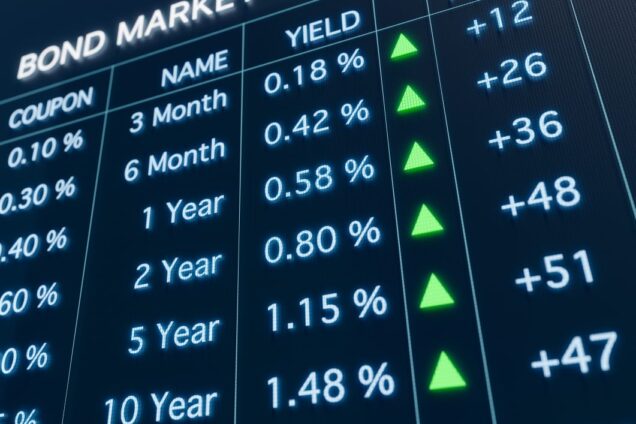
Ghana's secondary bond market experienced a significant surge in activity last week, with turnover climbing 77.13% week-on-week to reach GH¢2.76 billion. The sharp increase signals renewed investor confidence in the fixed-income market, though analysts caution that broader momentum may be limited as market participants brace for critical economic data.
The trading pattern reflected a clear investor preference for medium-term securities. Bonds maturing between 2027 and 2030 dominated activity, accounting for 70.08% of total turnover and trading at an average yield of 12.37%. This segment has consistently attracted the most interest as investors seek a balance between near-term maturities and longer-term yield opportunities.
The slightly longer-dated 2031-2034 segment captured 25.83% of turnover, with securities trading at an average yield of 14.09%. Post-2035 maturities remained largely on the sidelines, representing just 4.08% of activity at yields averaging 14.79%. The September 2030 bond saw particularly limited movement, with only GH¢1.12 million in turnover at a weighted-average yield of 11.75%.
Market outlook: Waiting for inflation signals
Market analysts at Databank Research expect bond market momentum to cool in the coming days as investors adopt a cautious stance ahead of the inflation print scheduled for Wednesday, 7th October. This hesitation is typical ahead of major economic data releases, as traders seek clarity on price pressures before committing significant capital to new positions.
The upcoming inflation figures will be particularly important for determining the future direction of treasury yields across all maturity segments. If inflation data comes in hotter than expected, it could pressure yields higher, whilst softer-than-anticipated figures may provide relief to bondholders. This dynamic underscores how closely Ghana's fixed-income market responds to monetary policy signals and economic fundamentals.
Why it matters for Ghana
Bond market activity is a critical barometer of investor confidence in Ghana's economic stability and debt management. Strong turnover indicates that both domestic and foreign investors remain willing to finance government operations and provide capital to the financial system. The current concentration in medium-term maturities reflects a pragmatic view that yields are attractive relative to inflation risk, but not yet compelling enough to lock in longer-dated investments.
The weakness in post-2035 bonds suggests investors remain concerned about longer-term macroeconomic risks, including persistent inflation and debt sustainability. This pattern of trading behaviour can influence government borrowing costs and the central bank's monetary policy stance. If investors demand progressively higher yields for longer maturities, it signals anxiety about Ghana's economic trajectory and forces the government to pay more to attract capital.
The market's sensitivity to the October inflation print reflects broader economic uncertainty. With annual inflation a key focus for both policymakers and investors, the data will likely inform expectations about interest rate decisions ahead. Market participants are essentially betting that inflation data will provide clarity on whether current yields adequately compensate them for holding government debt in an environment of persistent price pressures.
Source: The Ghana Report



Comments (0)
Be the first to comment.