
Ghana Must Shield Judges From Political Retaliation, Says Former Unilever Executive
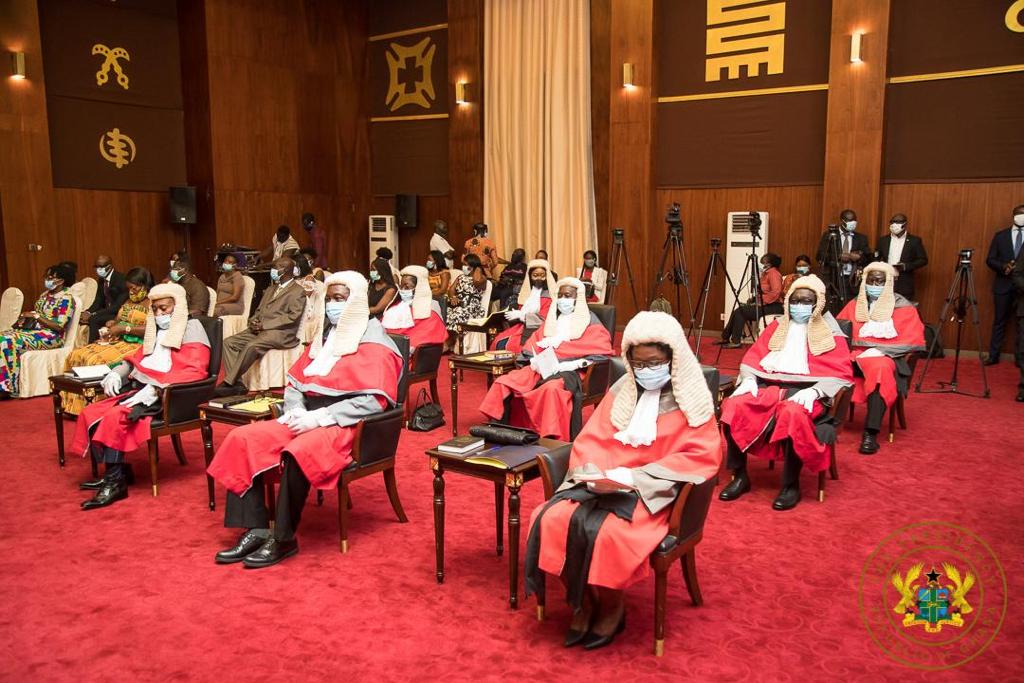

Former Unilever Ghana and Nigeria Executive Vice President Yaw Nsarkoh has called for urgent institutional reforms to protect judges from arbitrary transfers and career sabotage when their rulings displease powerful political interests, arguing that Ghana cannot expect judicial officers to uphold the rule of law whilst remaining vulnerable to political retaliation.
Speaking at a JoyNews and An Amalgam of Professionals event in Accra on Tuesday, October 20, Nsarkoh highlighted a fundamental tension in Ghana's judicial system: judges, like all professionals, have families, mortgages and careers that depend on their employment security. Yet the expectation is often that they should fearlessly deliver judgments against powerful figures regardless of personal consequence.
"The possibility that independent judges that give judgments which rub the political classes and their lackeys the wrong way can end up being victims of arbitrary and illogical transfers, or see their careers ruined by being parked in a sinecure exist as signposts of danger," he stated, using the phrase "Even Judges Must Eat" as his central theme.
The Career Cost of Independence
Nsarkoh argued that when judges recognise these risks, it naturally encourages a culture of professional self-preservation. Rather than delivering uncomfortable but legally sound judgments, some may avoid decisions that could attract political attention, gradually eroding the independence that the judiciary requires to function effectively.
He extended this challenge beyond the bench, questioning whether other professional groups—lawyers, civil servants, academics, journalists—were genuinely prepared to stand up to powerful interests when doing so carried real personal risk. The problem, he suggested, is not unique to the judiciary but represents a broader crisis of professional courage in Ghanaian institutions.
However, Nsarkoh rejected the notion that declining professional standards should be accepted as inevitable. "We cannot accept and endorse a race to the bottom by professional groups, so we must discuss needed reforms," he insisted.
Why It Matters for Ghana
Ghana's judiciary is foundational to democratic governance and the rule of law. When judges fear political consequences for independent decisions, the entire justice system weakens. Citizens lose confidence that cases will be decided on merit rather than political calculation. Investors question legal certainty. Opposition parties lose faith in impartial tribunals. Over time, this erodes both democracy and economic stability.
Nsarkoh's intervention is particularly timely given recurring concerns about judicial independence in Ghana. High-profile cases involving political figures have periodically raised questions about whether outcomes reflected legal principles or political pressure. His argument for structural safeguards—rather than relying on individual judicial courage—points to a pragmatic solution: create conditions where judges can act independently without heroic personal sacrifice.
This could involve tenure protections, transparent promotion processes, security guarantees, and mechanisms to prevent arbitrary transfers based on unpopular judgments. Other stable democracies have implemented such measures precisely because they recognise that institutional design matters more than character alone.
A Broader Social Contract
Nsarkoh also connected these concerns to wider social stability, warning that persistent poverty and inequality threaten Ghana's security. A society that fails to provide dignity for citizens cannot guarantee lasting peace, he argued. The implication is that professional independence, rule of law, and social equity are interconnected—all essential to sustainable national development.
His remarks invite Ghana's policymakers, civil society, and professional bodies to think seriously about structural reform rather than simply appealing to individual integrity.
Source: MyJoyOnline





Comments (0)
Be the first to comment.