
Chief Justice must fix judiciary before touring state agencies, says Arthur Kennedy


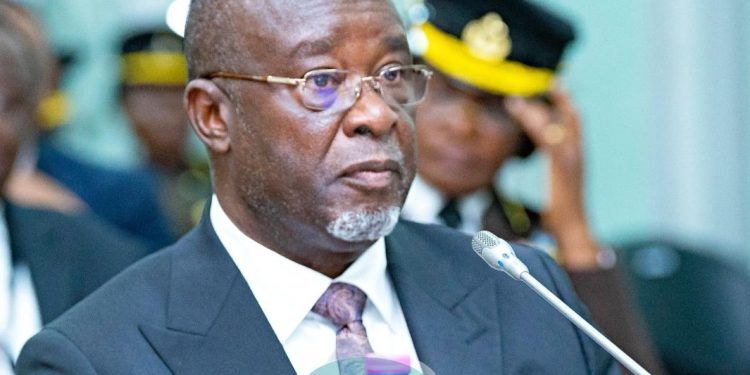
Political activist and social commentator Dr Arthur Kobina Kennedy has challenged Chief Justice Paul Baffoe-Bonnie to redirect his focus inward, tackling deep-rooted problems within Ghana's Judiciary instead of touring state-owned enterprises and making comparative remarks about their performance.
The criticism follows controversy sparked when Justice Baffoe-Bonnie visited the Social Security and National Insurance Trust (SSNIT) and the Minerals Income Investment Fund (MIIF) on 2 September, during which he praised these institutions' performance and questioned what Ghana had accomplished over the previous eight years—comments interpreted by some as veiled political commentary comparing current and past administrations.
The core argument: jurisdiction and priorities
Dr Kennedy argues that the Chief Justice's involvement in assessing state agency performance falls outside the proper remit of the judiciary's head. "Your place as Chief Justice is not to be touring state-owned enterprises and making the remarks that you made," he stated, emphasising that such commentary risks blurring the constitutional boundary between the Judiciary and political branches of government.
More significantly, Dr Kennedy contends that if the Chief Justice seeks meaningful work, Ghana's judicial system offers plenty. He identified several critical issues demanding urgent attention: the "serpentine appellate process" that delays justice; prisoners languishing in custody for years with lost case dockets; documented instances of judicial corruption highlighted in Afrobarometer reports; irregular assignment of judicial panels; and other systemic failures undermining public confidence in the courts.
"If you are looking for things to do, there are a lot of things you can do to improve in our judiciary," Dr Kennedy said, suggesting that addressing these institutional challenges would yield a more positive legacy than commenting on SOEs.
Why it matters for Ghana
This dispute reflects a broader crisis of confidence in Ghana's Judiciary. Public perception of judicial impartiality has been damaged by perceived corruption, lengthy appeals processes, and high-profile cases of missing case files. When citizens lose faith in courts, the rule of law itself erodes—undercutting democratic institutions and economic development.
The Chief Justice's remarks also triggered an unusual political fracture. The opposition New Patriotic Party (NPP) called for his resignation, accusing him of partisan commentary, whilst the National Democratic Congress (NDC) defended him. The Ghana Centre for Democratic Development (CDD-Ghana) separately urged restraint, noting that public statements risk compromising judicial credibility and independence.
Dr Kennedy's criticism highlights a fundamental truth: the Judiciary cannot credibly defend impartiality while its leadership comments on government performance, however innocuously intended. For Ghana's justice system to rebuild trust, the Chief Justice must demonstrate that the Judiciary operates on principle, not politics. That requires visibly tackling internal dysfunction—lost dockets, corrupted officials, appellate backlogs—before commenting on what other institutions are doing.
The Judicial Service's response
The Judicial Service responded to controversy by stating the Chief Justice's remarks were made in good faith and not intended to undermine independence. It affirmed Justice Baffoe-Bonnie's commitment to integrity and equal justice. However, such statements, whilst reassuring, do not address Dr Kennedy's substantive argument: that symbolic gestures like SOE visits distract from urgent, tangible reforms needed within the courts themselves.
The Chief Justice's tenure will ultimately be judged by whether Ghanaians can access justice swiftly, fairly, and with confidence that the courts operate free from corruption and political influence. Touring state agencies does little to advance that objective.
Source: MyJoyOnline




Comments (0)
Be the first to comment.