Ghana launches real-time bed tracking system to end hospital 'no bed' crisis
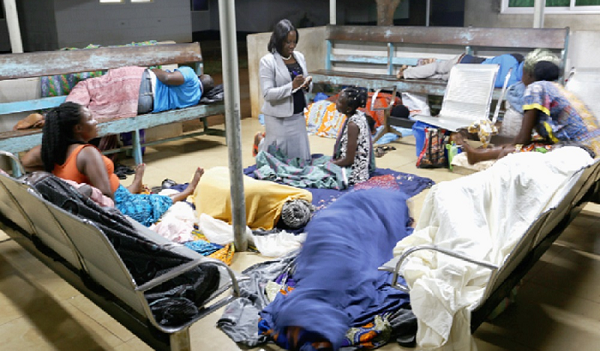
Ghana's health sector is taking a technological leap forward in addressing one of its most persistent challenges: the crisis of patients being turned away from hospitals due to lack of available beds. The Health Ministry has begun piloting a national emergency bed management system designed to provide real-time visibility of bed availability across major medical facilities, marking a significant shift in how the country manages its hospital capacity.
Health Minister Kwabena Mintah Akandoh announced the initiative during an appearance on Joy News' PM Express, revealing that a command centre has been established at Ridge Hospital to oversee the coordinated system. The minister described the system as a game-changer that would allow authorities to monitor emergency bed availability instantly, even from their offices. "I have a screen in my office, so that if Korle-Bu says there's no bed, I'm able to see how many beds are available, how many patients are in the emergency," Mr Akandoh explained.
The pilot programme currently encompasses selected regional hospitals and teaching hospitals across the country. Each bed has been barcoded, and designated facility commanders are responsible for updating patient data in real time. This infrastructure allows the system to track not just availability, but also how long patients remain in emergency wards—a critical metric for identifying inefficiencies in patient flow and management.
How the system works and what it can do
The bed management system operates as an integrated network rather than simply adding capacity. The Ministry has barcoded all emergency beds and assigned data managers at each facility to input information continuously. This creates a live picture of the health system's emergency capacity across the country.
One significant feature is the system's ability to challenge claims of bed shortages. If a hospital reports having no available beds but the system shows extended patient stays in emergency wards, authorities can now investigate whether the issue is genuine scarcity or poor management. "If you've been there for more than 24 hours, and they see you are still there, and they say there is no bed, I will be able to ask questions because there's a whole command centre in charge of that," the minister stated.
The ambulance service has also been integrated into the system, enabling more intelligent patient routing decisions. Rather than ambulances delivering patients to the nearest hospital, dispatchers can now direct them to facilities with available capacity, reducing treatment delays and preventing unnecessary congestion at popular hospitals.
Why this matters for Ghana
Ghana's hospitals have long struggled with what locals call "no bed syndrome"—a phenomenon where critically ill or injured patients are turned away because emergency wards are full, even when beds exist but are occupied by patients awaiting ward admission. This system does not solve the underlying problem of bed shortages, but it offers a practical management solution while the government pursues capacity expansion.
The government is simultaneously investing in expanding emergency infrastructure. Korle-Bu Teaching Hospital, one of Ghana's largest medical facilities, currently operates approximately 67 emergency beds out of over 1,000 total beds. A new 400-bed facility is under construction as part of a hospital-wide redevelopment project, with contractors already on site. Similar expansions are underway at Komfo Anokye Teaching Hospital in Kumasi, Tamale Teaching Hospital, and 37 Military Hospital.
Additionally, the ambulance fleet has received attention. Over 200 ambulances are currently operational after the government insured the entire fleet in 2025, and plans are in place to add 100 new vehicles by 2027, addressing the critical need for better patient transport infrastructure.
For ordinary Ghanaians, these developments signal a recognition that healthcare management requires both technology and investment. While the bed management system is not a cure-all, it represents a step toward reducing preventable delays in emergency treatment and ensuring that the beds Ghana does have are used efficiently. As the pilot expands, the real test will be whether improved information translates into faster access to care when it matters most.
Source: MyJoyOnline




Comments (0)
Be the first to comment.