Galamsey devastation and reckless driving: Ghana at a crossroads on environment and road safety
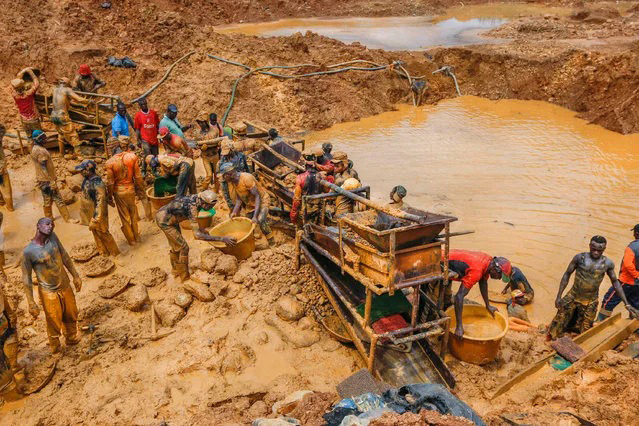
Ghana faces a critical moment as two interconnected crises threaten the nation's future: the relentless destruction caused by illegal small-scale mining, known locally as galamsey, and the alarming death toll from reckless driving on roads across the country.
The galamsey crisis has reached alarming proportions, particularly in Northern Ghana, where illegal mining operations have scarred the landscape and poisoned vital water sources. The River Volta, Ghana's lifeline, now receives dangerous tributary flows contaminated with lead, cyanide, arsenic and mercury—poisons that threaten both human health and agricultural productivity across the nation. Yet despite repeated warnings and regulatory efforts, enforcement remains weak, suggesting that leadership has ceded ground to illegal miners rather than confronting them decisively.
The road safety emergency
Compounding these environmental concerns, Ghana's roads have become killing zones. Recent accidents, including a deadly crash at Ofankor that killed 11 people and injured 13 others, underscore a troubling pattern. The Accra-Tema Motorway, in particular, has earned a grim reputation for dangerous driving practices that rival wartime hazards.
Multiple factors contribute to this carnage. Commercial motorcycle riders operate with impunity, weaving through traffic without helmets and running red lights while police appear to tolerate the behaviour as routine. Drivers of private vehicles compound the problem through one-handed driving whilst using mobile phones, trading insults with other motorists, and performing roadside repairs that create traffic hazards.
The transition from manual to automatic transmission vehicles has inadvertently reduced the cognitive demand of driving, allowing operators to adopt reckless habits. Parked or broken-down vehicles left unlit at night become death traps on unlit roads.
Why it matters for Ghana
Both crises—environmental destruction and road deaths—reflect a common thread: a breakdown in discipline, enforcement and leadership accountability. Ghana's gross domestic product and public health depend on both environmental stewardship and safe infrastructure.
Internationally, countries address driving offences through punitive insurance premium increases and licence revocation for repeat offenders. The BBC reported in 2017 that Ivorian footballer Yahaya Touré received an $80,000 fine and 18-month driving ban for driving under the influence—a standard that Ghana has yet to enforce consistently.
A related scandal involves the importation of decommissioned ambulances from advanced countries, repurposed as passenger vehicles with welded metal seats. When crashes occur, these metal fixtures become lethal projectiles. The Driver and Vehicle Licensing Authority should refuse registration of such vehicles, yet lax oversight permits the practice.
The path forward
Reducing road casualties requires a three-pronged approach: enforcement against reckless drivers, roadworthiness inspections for vehicles, and prosecution of traffic offences. Simultaneously, environmental authorities must strengthen galamsey enforcement with adequate resources and political will.
Both issues demand leadership willing to sacrifice short-term political convenience for long-term national wellbeing. Without intervention, Ghana risks losing its natural inheritance and suffering preventable deaths on its roads—failures that no nation can sustain indefinitely.
Source: The Ghana Report

.jpg)

Comments (0)
Be the first to comment.