
From Political Bystander to NPP Advocate: How Bawumia's Economic Vision Won Over Dr Ekua Amoakoh

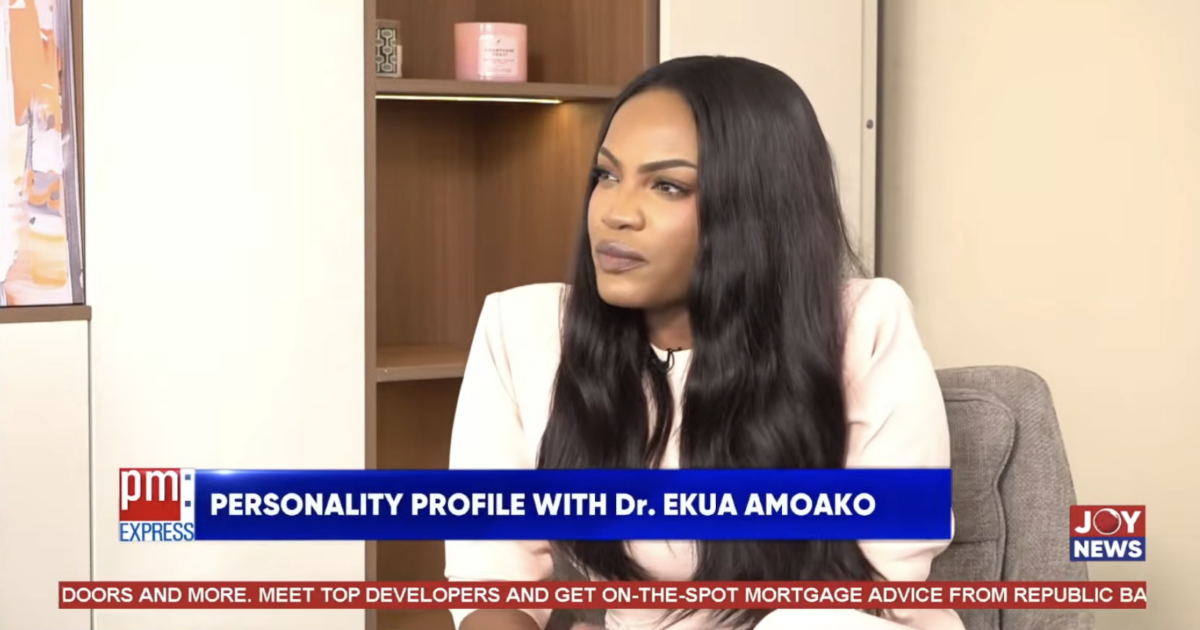
Dr Ekua Amoakoh, spokesperson for Dr Mahamudu Bawumia and chair of the New Patriotic Party's Health Committee, has disclosed how a combination of policy research and direct engagement with the flagbearer's vision shifted her from political detachment to committed party activism ahead of the 2024 elections.
In a candid interview on JoyNews' PM Express, Dr Amoakoh explained that her journey towards deeper NPP involvement was not instantaneous. She acknowledged that prior to 2024, her social media presence and political engagement reflected minimal interest in the party's direction, describing herself as fundamentally "disconnected" from its messaging and campaigns.
The turning point came through systematic examination of the party's health sector achievements. As Dr Amoakoh delved into research on this portfolio, her perspective shifted. "When I started going to do the research, I saw how much we had actually achieved," she recalled. This evidence-based review appears to have rebuilt her confidence in the NPP's track record and laid the groundwork for deeper engagement.
The Bawumia Briefing: Policy Innovation as Political Catalyst
The decisive moment in Dr Amoakoh's political transformation occurred during a briefing session that Dr Bawumia conducted for NPP communicators shortly before the party's 2024 manifesto launch. Her account suggests that the Vice President's presentation of policy solutions—particularly his unconventional approaches to economic challenges—demonstrated a problem-solving mindset that resonated with her intellectual concerns.
She was particularly struck by his explanation of the domestic gold purchase programme, which she interpreted as evidence of creative, outside-the-box thinking applied to economic constraints. "He was talking about how he came up with the domestic gold purchase programme, about how MTN needed some money," she explained, before reflecting: "I thought that whole ability to think of something out of the box to fix a problem was maybe the type of person whose leadership could get us to a point of some prosperity."
This narrative reveals an important shift in her political calculus—from passive observation to active support based on perceived competence and economic vision rather than partisan loyalty alone.
Why This Matters for Ghana: Leadership, Prosperity and National Direction
Dr Amoakoh's public conversion offers insight into how Ghana's political conversation framed itself in the run-up to the 2024 elections. Her emphasis on the distinction between anti-corruption messaging and proactive wealth-generation strategies highlights a broader debate within Ghanaian politics about the nation's developmental trajectory.
She articulated a concern that Ghana appears to be advancing more slowly than comparable developing economies. Drawing on examples of South Korea and China, she argued that deliberate, intentional policy approaches to economic growth—not merely punitive responses to corruption—are necessary for Ghana to accelerate its development. "I don't think it's just punishing corruption. It's also being intentional about generating prosperity," she stated, before adding: "If you look at Ghana, it looks like we are marking time. We're walking slowly when we could have been maybe galloping or jumping at the pace of Singapore."
This perspective is significant because it reflects how some educated Ghanaians evaluate political leadership: not solely on rhetorical commitment to anti-corruption but on demonstrated capacity to devise and implement innovative solutions to structural economic problems. The domestic gold purchase scheme, though controversial in some quarters, represents exactly this type of unconventional policy thinking that appeals to voters seeking evidence of creative governance.
Dr Amoakoh's transformation from political bystander to active advocate also underscores the role that internal party research and direct leader engagement play in mobilising informed supporters—particularly professionals in healthcare and other sectors who can speak credibly about sectoral achievements and policy direction.
- Dr Amoakoh moved from political detachment to active NPP engagement through evidence-based research into the party's health sector record.
- A direct briefing by Bawumia on policy innovation—particularly the domestic gold purchase scheme—convinced her of his economic problem-solving approach.
- She argues Ghana requires intentional wealth-generation strategies, not just anti-corruption measures, to accelerate development like Singapore and South Korea.
Source: MyJoyOnline

Comments (0)
Be the first to comment.