
Food Suppliers Hold Off Protest Action as NAFCO and GCX Seek More Time to Clear Debts
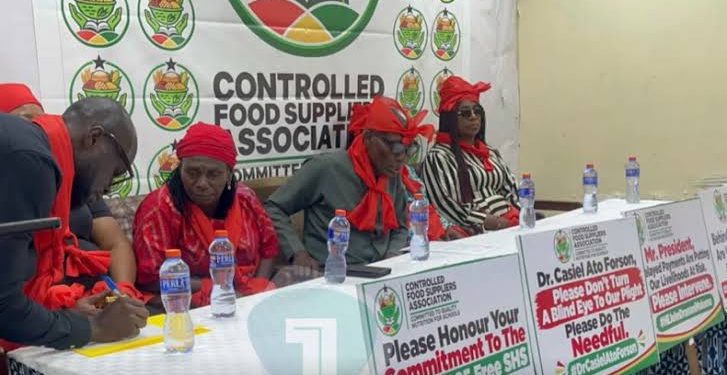

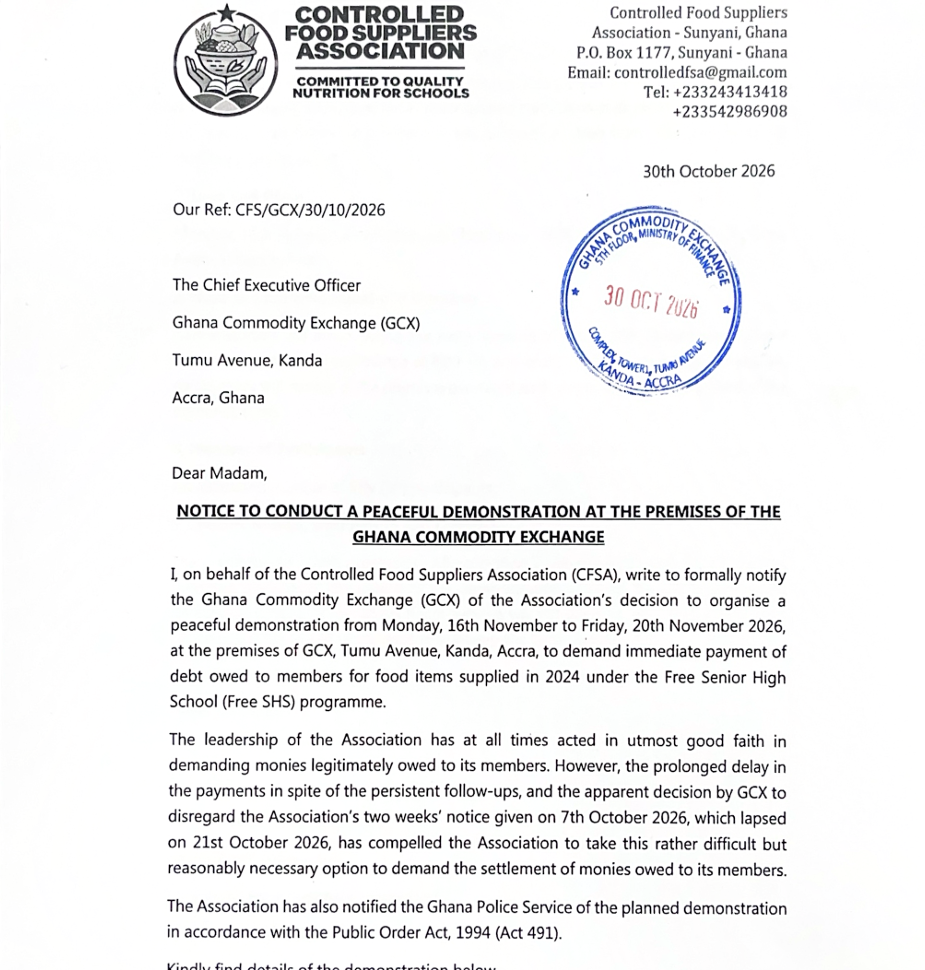
Ghanaian food suppliers who had been on the verge of staging a public protest against two key state institutions have agreed to stand down — at least for now. The Controlled Food Suppliers Association announced on 20th November that it had suspended its planned picketing of the National Food Buffer Stock Company (NAFCO) and the Ghana Commodity Exchange (GCX), following urgent talks with the leadership of both organisations.
What led to the standoff?
The Association's members have been owed outstanding payments by NAFCO and GCX, and frustration over the delays had pushed the group to the point of organising a formal protest action. Such a move would have drawn public attention to what suppliers describe as a serious cash-flow problem affecting their businesses.
The situation came to a head on 19th November, when the Association's leadership sat down with the chief executives of both NAFCO and GCX. At that meeting, the two institutions acknowledged the payment delays and appealed for additional time, asking suppliers to hold off on the planned protest so that a broader engagement involving the Minister of Education could take place the following week.
It is worth noting that NAFCO has historically operated under the supervision of the Ministry of Food and Agriculture, but its work intersects with school feeding and educational supply chains, which explains the proposed involvement of the Education Ministry in resolving the financial dispute.
Why it matters for Ghana
NAFCO was established to stabilise food supply and protect both farmers and consumers from extreme price fluctuations. It does this partly by procuring food commodities from suppliers — the very businesses now owed money. When payments are delayed, suppliers face serious liquidity problems that can affect their ability to continue operations, restock or pay their own workers.
The Ghana Commodity Exchange, launched to bring structure and transparency to agricultural trading in Ghana, is also implicated in the arrears. The involvement of both institutions points to a wider challenge of timely settlement within Ghana's public procurement and commodity management systems — a persistent concern raised by businesses that work with government agencies.
If the payments remain unresolved, it risks discouraging private sector participation in government food programmes, which could have knock-on effects on food security initiatives, including school feeding schemes that depend on steady supply chains.
What happens next
Under the terms of the suspension, the Association's executives are expected to participate in a follow-up meeting after the ministerial engagement takes place. That subsequent meeting will review the outcome of the consultations and chart a path forward for settling the arrears.
The Association made clear in its statement that the suspension of the protest is conditional — tied directly to the proposed engagements going ahead and producing concrete results. Should those meetings fail to yield satisfactory progress, the threat of picketing remains very much on the table.
- Suppliers had planned to picket both NAFCO and GCX over unpaid arrears owed to members.
- A meeting with the Minister of Education was proposed as the next step towards resolution.
- The protest suspension is conditional on the planned engagements producing meaningful outcomes.
Source: MyJoyOnline

Comments (0)
Be the first to comment.