NAFCO upgrades Northern Region food storage to strengthen Ghana's food security grip
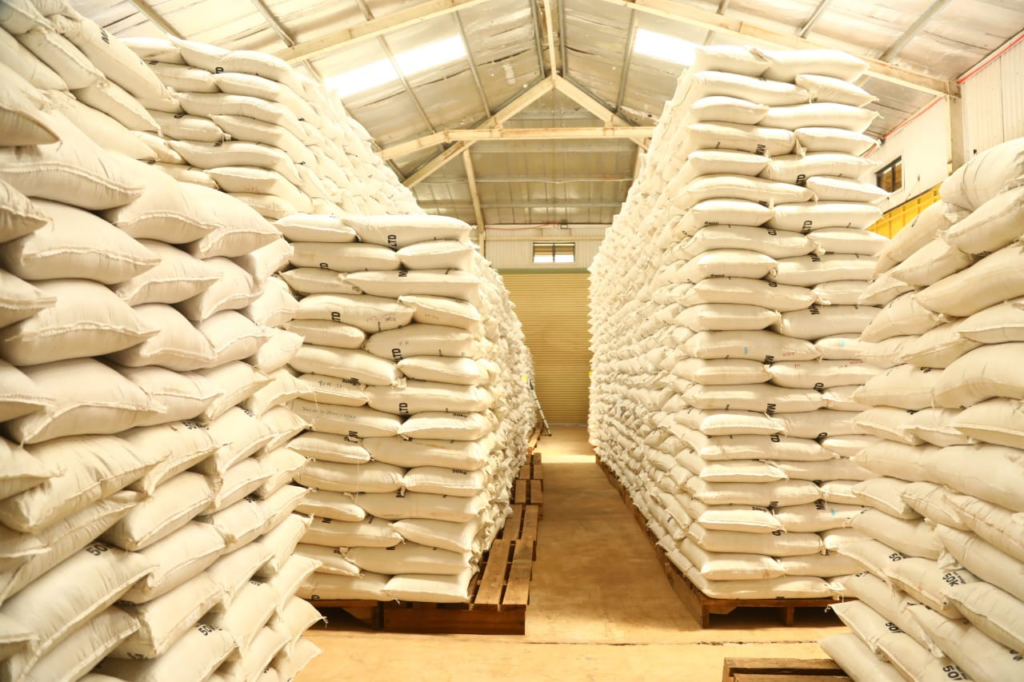
Ghana's food security infrastructure has received a significant boost with the completion of rehabilitated warehouse facilities across the Northern Region. The National Food Buffer Stock Company (NAFCO) has taken delivery of upgraded storage centres at Yendi, Kumbungu and Wovogu as part of the broader National Food Security Reserve Programme, a strategic move to enhance the country's ability to buffer food supply shocks and stabilise agricultural markets.
The three facilities represent a critical investment in Ghana's food resilience. The Yendi warehouse, the largest of the three, now holds approximately 40,000 bags of mixed grains including rice, maize, gari and millet, and has received two Mobile Storage Units donated by the United Nations World Food Programme to expand operational flexibility. The facility's capacity has been increased by 250 metric tonnes, bringing total storage to at least 4,400 metric tonnes. Meanwhile, the Kumbungu warehouse currently stores around 15,000 bags of rice, whilst the Wovogu facility in Sagnarigu Municipality provides an additional 1,000-metric-tonne capacity.
What the upgrades mean for Ghana's food system
Beyond simple storage expansion, these rehabilitations address critical infrastructure gaps that have historically undermined Ghana's food security efforts. Each facility has been equipped with modern safeguards: rodent-proof windows, automated water systems, CCTV surveillance, fire alarm systems and drying platforms with proper drainage. The Wovogu warehouse now operates a 24-hour automated water supply, whilst Yendi's perimeter wall and drainage systems protect against environmental contamination and pest infiltration. These upgrades ensure that stored grains maintain quality over extended periods, reducing post-harvest losses that have long plagued African agricultural systems.
NAFCO Chief Executive George Abradu-Otoo emphasised the strategic importance during facility inspections, noting that expanded storage capacity directly incentivises farmers. When government can reliably purchase and store surplus harvests, farmers gain confidence in market demand and are encouraged to increase production. This creates a virtuous cycle: more reliable markets lead to greater investment in farming, which strengthens food availability across the country and reduces Ghana's vulnerability to seasonal supply gaps or regional crop failures.
Why this matters for Ghana
Food security remains a persistent challenge across West Africa, with Ghana vulnerable to price volatility, climate variability and supply disruptions from neighbouring countries. The Northern Region, Ghana's agricultural heartland responsible for significant portions of the country's rice, maize and legume production, requires robust storage infrastructure to function as a reliable supplier to southern markets. Without adequate facilities, farmers are forced to sell immediately after harvest at depressed prices, creating artificial scarcity during lean seasons when prices spike—a dynamic that destabilises household food security and contributes to inflation.
The timing of these upgrades reflects growing recognition within government of the link between agricultural infrastructure investment and broader economic stability. By maintaining strategic grain reserves, NAFCO can intervene during supply shortages to stabilise prices and protect vulnerable households from food inflation. This is particularly important given that food constitutes a large proportion of household spending for low-income Ghanaians.
The involvement of the UN World Food Programme in donating mobile storage units signals international confidence in Ghana's food security approach and provides access to portable capacity that can respond to localised supply disruptions. The rehabilitation works, funded entirely by NAFCO, demonstrate commitment without immediate dependence on external financing for operational expansion.
These three facilities represent incremental but meaningful progress towards a more resilient national food system. However, agricultural experts note that storage expansion must be paired with investments in transport infrastructure, market information systems and support for smallholder productivity to achieve comprehensive food security gains.
Source: MyJoyOnline

.jpg)


Comments (0)
Be the first to comment.