
Ghana needs dedicated agriculture fund to tackle climate shocks, says Wa East MP
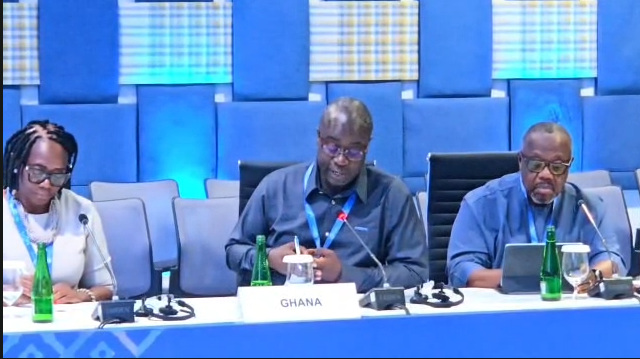

Ghana must establish a dedicated National Agriculture Development Fund to protect farmers from climate shocks and ensure agricultural financing reaches those most vulnerable to environmental risks, according to Dr Godfred Seidu Jasaw, MP for Wa East and Chairman of Parliament's Food and Agriculture Committee.
Speaking at the International Monetary Fund and World Bank annual meetings in Bangkok, Dr Jasaw emphasised that Parliament should take a lead role in designing the institutions and mechanisms through which agricultural financing flows into the economy. His call comes amid growing concern about the impact of drought and climate variability on Ghana's farming communities, particularly in northern regions like his constituency.
Why this matters for Ghana
Climate-related shocks pose a significant threat to Ghana's agricultural sector and food security. Prolonged droughts can devastate crop yields, force increased food imports and strain the country's foreign exchange reserves—a challenge Ghana has faced repeatedly in recent years. A structured national fund would create a reliable financing mechanism specifically designed to support smallholder farmers, women and young people in agriculture, groups often excluded from conventional credit arrangements.
Dr Jasaw's proposal reflects a broader recognition that agricultural investment must be linked to climate preparedness. The fund could direct resources toward both immediate production support and longer-term climate adaptation measures, ensuring that farming communities have the financial tools to weather seasonal disruptions.
More than money: Infrastructure and systems matter
Dr Jasaw stressed that financing alone is insufficient. Using examples from Wa East, he illustrated how agricultural investments fail without complementary infrastructure. Irrigation schemes, for instance, deliver limited benefit if farmers cannot access feeder roads to transport produce to markets. Similarly, protecting shea trees—a key income source for women—creates little economic value without local processing facilities that allow communities to capture more of the value chain.
He called for an integrated approach that combines agricultural financing with investment in:
- Irrigation infrastructure and water management systems
- Rural feeder roads and market access routes
- Storage and post-harvest handling facilities
- Local processing capacity
- Skills training and market linkages
Preparing for the worst
A critical aspect of Dr Jasaw's proposal involves pre-season climate stress testing. Finance and agriculture authorities should conduct scenario analyses to identify what would happen if agricultural production fell sharply due to drought or other climate shocks. This would clarify which inputs and services must remain available during crises, who is responsible for delivering them and what decisions need prior authorisation.
Such preparation could prevent the chaos that often follows climate-related crop failures—when urgent decisions must be made under pressure, creating delays and inefficiency. Clear protocols established in advance would ensure faster response and more effective use of emergency resources.
Dr Jasaw also recommended that the CVF-V20 (Climate Vulnerable Forum), a coalition of climate-vulnerable nations, engage with Ghana's parliamentary committees while designing financing proposals. This would ensure that international financing mechanisms reflect Ghana's actual priorities and constraints, rather than imposing external frameworks that do not fit local needs.
The ultimate measure of success, Dr Jasaw noted, is practical impact on farmers: Does financing arrive during critical planting seasons? Do investments remain functional after construction? Do resilience measures actually generate income for communities exposed to climate risk? For Ghana's farming communities, these are the questions that determine whether policy translates into improved livelihoods.
Source: MyJoyOnline


.jpg)

Comments (0)
Be the first to comment.