
Fitch Solutions Warns Ghana's Inflation Could Surge Past 10% by Late 2027 as El Niño Bites


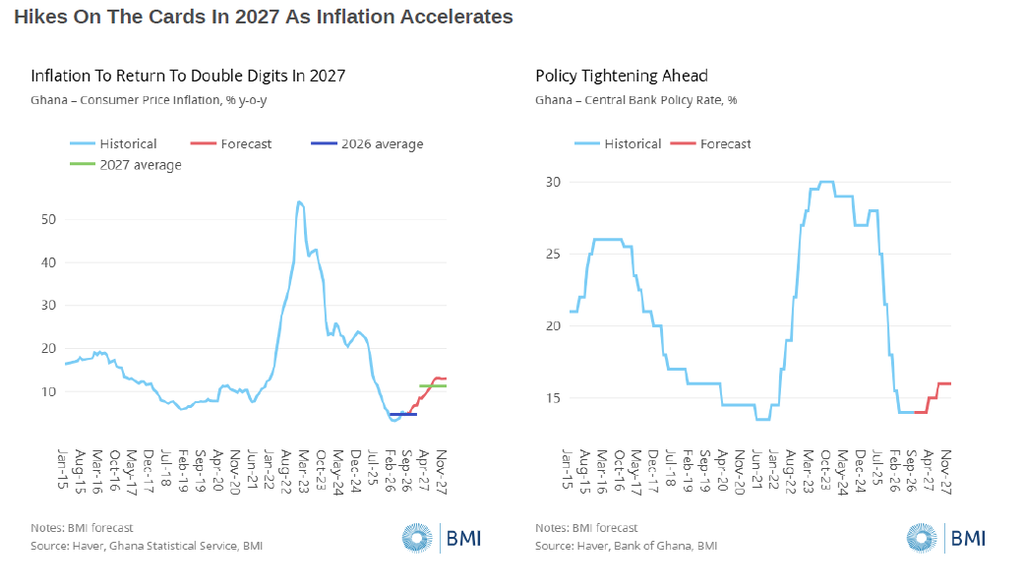
Ghana's hard-won progress in bringing down inflation could face a serious setback by late 2027, according to research and analytics firm Fitch Solutions. Speaking at PwC's 2027 Post-Budget Forum in Accra, the firm's Associate Director Mike Kruiniger warned that a combination of rising global food prices and the intensifying El Niño weather phenomenon is likely to push Ghana's inflation rate back above 10% in the second half of next year — threatening household budgets and consumer spending just as the economy appeared to be finding its footing.
From Stability to Renewed Pressure
The forecast represents a notable shift from the relatively calm inflationary environment Ghana experienced through much of 2026. Kruiniger acknowledged that low inflation had been one of the key forces driving economic activity this year, acting as a tailwind for businesses and consumers alike. However, he cautioned that this favourable trend is unlikely to hold.
"One of the big tailwinds for the economy this year has been that very, very low inflation, but we expect it to gradually reverse in 2027, with inflation moving back above 10% in the second half of 2027," he said. The projected rise, he added, "is going to put a little bit more pressure on real incomes and a bit more pressure on household budgets."
Fitch Solutions also revised its broader economic outlook for Ghana, projecting that GDP growth will slow from an estimated 6% in 2026 to around 5% in 2027 — a sign that the economy, while still expanding, may be entering a more challenging phase.
El Niño and Global Food Markets: The Key Drivers
The primary forces behind the anticipated inflation uptick are external. Kruiniger pointed to surging global food prices, with rice already under significant upward pressure and wheat prices running more than 10% above year-earlier levels. He described the current El Niño weather event as shaping up to be among the strongest on record, with potentially severe consequences for agricultural production worldwide.
El Niño — a periodic warming of the central and eastern Pacific Ocean — typically disrupts weather patterns across the globe, bringing droughts to some regions and excessive rainfall to others. This erratic climate behaviour tends to reduce harvests in key producing nations, tightening global food supplies and driving up prices on international markets.
For Ghana, the concern is especially acute because the country depends heavily on imported staples such as wheat and rice. Any supply disruption or price spike in global markets feeds directly into domestic prices, and with food comprising a substantial share of Ghana's Consumer Price Index (CPI) basket, the pass-through effect on headline inflation can be swift and significant.
Why It Matters for Ghana
Ghana has experienced the devastating effects of runaway inflation in recent memory. The country's economic crisis in 2022 saw inflation peak at historically high levels, eroding the purchasing power of ordinary Ghanaians and contributing to a painful IMF-supported recovery programme. While conditions have since improved markedly, the Fitch Solutions warning serves as a reminder that price stability remains fragile and highly vulnerable to external shocks.
For households — particularly low- and middle-income families who spend a large proportion of their earnings on food — a return to double-digit inflation would mean tighter budgets, reduced nutritional choices and increased financial stress. For businesses, higher input costs and weaker consumer demand could dampen investment and hiring plans.
Policymakers at the Bank of Ghana will need to monitor global commodity markets closely and weigh their monetary policy responses carefully. Raising interest rates to combat inflation can slow economic growth, while doing too little risks allowing inflationary expectations to become entrenched once again.
- Fitch Solutions projects Ghana's inflation will exceed 10% in the second half of 2027.
- El Niño and rising global food prices, especially wheat and rice, are the main drivers.
- Ghana's economic growth is forecast to ease from 6% in 2026 to 5% in 2027.
Source: The Ghana Report



Comments (0)
Be the first to comment.