
Cedi's Historic 40.7% Gain Came at a Cost — Here's What Ghana's Central Bank Paid for Stability
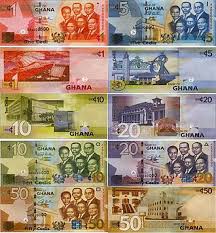

The cedi's remarkable 40.7 per cent appreciation against the US dollar in 2025 — its first annual gain in over three decades and the strongest performance of any African currency according to IMF data — did not come free. The Bank of Ghana's (BoG) audited accounts, released on 30 April 2026, reveal a net operating loss of GHS 15.63 billion and a further GHS 19.32 billion loss in other comprehensive income. Together, the combined loss of GHS 34.95 billion pushed the central bank's cumulative negative equity to approximately GHS 96.3 billion. For many Ghanaians watching the cedi strengthen and inflation fall from its catastrophic peak, the balance sheet figures may seem puzzling. They are not a sign of failure — they are the documented cost of a job done alone.
What the numbers actually mean
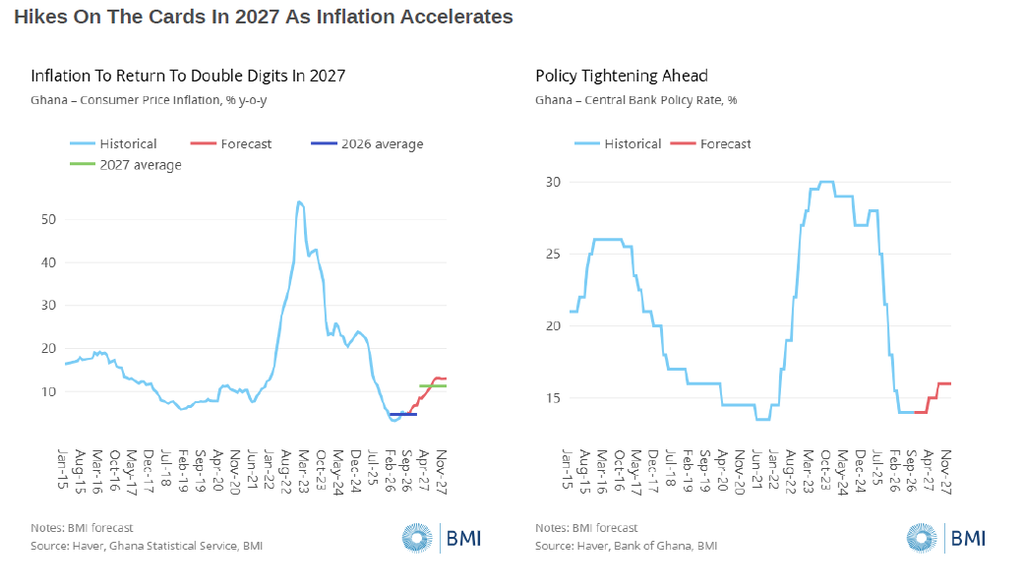
To understand why a central bank can simultaneously achieve its finest monetary hour and record its largest losses, it helps to look at what the BoG was actually doing between 2022 and 2025. After headline inflation peaked at 54.1 per cent in late 2022 — the worst cost-of-living crisis Ghana had experienced in a generation — the BoG moved aggressively to stabilise the exchange rate and bring inflation under control. By the end of 2025, inflation had fallen to 5.4 per cent, and gross international reserves had climbed to a record US$13.83 billion.
Achieving this required sustained intervention in the foreign exchange market: buying and selling reserves, managing liquidity, and maintaining interest-rate differentials wide enough to deter speculative attacks on the cedi. Each of these operations carries a direct financial cost recorded on the central bank's balance sheet. In essence, the BoG was spending institutional capital to deliver national economic stability. The loss figures are not evidence of mismanagement — they are the accounting expression of that expenditure.
Why it matters for Ghana: the burden of going it alone
Economic historians point to the Plaza Accord of September 1985 and the Louvre Accord of February 1987 as the gold standard of exchange-rate management. When the major industrialised economies — the United States, Japan, West Germany, France and the United Kingdom — needed to correct a severe misalignment in the US dollar, they acted together. Their coordinated intervention, worth roughly US$10 billion in dollar sales, derived its power not primarily from the volume of transactions but from the credibility of a joint, public commitment by several sovereign governments. The costs were shared across multiple treasuries with deep fiscal capacity.
Ghana had no such partnership. The BoG operated under a US$3 billion IMF Extended Credit Facility, which provided an anchor of external credibility and surveillance, but the financial burden of intervention fell on a single institution. Where the G-5 nations socialised the cost of exchange-rate stabilisation across their collective fiscal resources, Ghana's central bank absorbed it alone — and the balance sheet reflects exactly that.
This distinction matters enormously for how Ghanaians and their policymakers should read the BoG's reported losses. Exchange-rate operations are, by their nature, quasi-fiscal activities: they redistribute income and impose costs in ways comparable to taxation or public spending. The IMF's own research acknowledges that such losses are either absorbed from equity buffers or met through government transfers. Ghana's negative equity position signals that those buffers are now deeply strained, raising legitimate questions about the long-term institutional resilience of the central bank and what mechanisms exist to recapitalise it.
What comes next
The BoG's achievement in 2025 is genuinely historic, and Ghanaians have concrete reasons to feel its benefits — a stronger cedi means cheaper imports, lower fuel costs, and reduced pressure on household budgets. The fall in inflation from over 54 per cent to 5.4 per cent represents a dramatic restoration of purchasing power for ordinary families.
But sustaining these gains will require policymakers to confront the structural question the losses expose: Ghana's central bank cannot indefinitely absorb the full cost of currency defence without a credible plan to restore its balance sheet. That may involve government recapitalisation, continued IMF programme support, or a combination of both. Without addressing the institutional health of the BoG, the very credibility that underpinned the cedi's recovery could come under pressure.
- The cedi rose 40.7% against the dollar in 2025 — Ghana's first annual gain in over 30 years.
- Bank of Ghana recorded a combined loss of GHS 34.95 billion, pushing negative equity to GHS 96.3 billion.
- Inflation fell from a peak of 54.1% in 2022 to 5.4% by end of 2025, with reserves hitting a record US$13.83 billion.
Source: MyJoyOnline



Comments (0)
Be the first to comment.